
The teacher-student relationship comes with many challenges, especially when the students are teenagers. Alexandra Chirea is a French teacher and conductor at the “Gheorghe Şincai” National College. She doesn’t have magic formulas, but she learned how to bring her students closer together and does her chosen job with love. ,,I think if you’re authentic in the classroom and you really care about the kids, they feel it“, says the teacher, in an interview given to the newspaper Adevărul. She also spoke about the relationship she has as a director with the students’ parents: “ÎPlease don’t make a parallel WhatsApp group, the one they have with me is enough“.
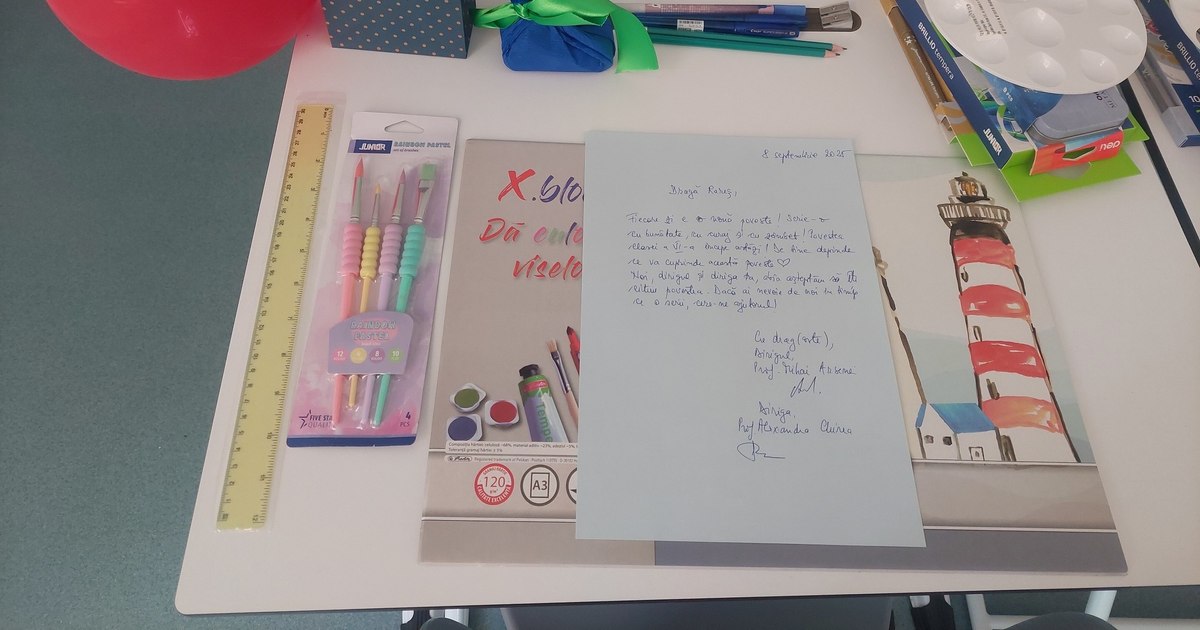
The letter that awaited Alexandra Chirea’s students on the bench at the beginning of the school year
“Children can forgive a lot when they feel seen and heard by teachers”
How does a teacher manage to get close to students, especially if they are teenagers?
Alexandra Chirea: I think if you are authentic in the classroom and you really care about the children, they feel it. If you do these things with effort, if you’re just trying to appear tolerant or good, children sense and automatically reject you. Everyone likes genuine people. And being authentic means also imposing rules, being firm with them and not breaking your promises. Specifically, when you’ve said a rule, you have to apply it no matter what.
What are the three big qualities you need to have to work with children/adolescents?
Alexandra Chirea: I think that the most important quality of a teacher is to be ok with himself, to be balanced. Adolescence is often complicated (absolutely normal!), and we have to be there a point of balance. And beyond all that, you have to love what you do. Because then the children will forgive you even when you yell at them sometimes, and when you scold them, and when you have a bad day. You must know, children can forgive a lot, when they feel seen and heard by teachers. Interest, empathy, a sincere desire to know them make your work much easier and make children follow you. They learn best by example. It’s no use talking to them about integrity, if you yourself are not of integrity. It’s no use telling them to have the courage to stand up for their point of view if you scold them when they do. It’s no use telling them to stand up and take a stand when injustice happens, if you don’t have the courage to do it yourself.
“I think teachers should go through a process of psychotherapy”
On the other hand, what should a teacher never do?
Alexandra Chirea: Don’t get angry at the students and don’t humiliate them. Humiliating someone smaller than you just because you can seems to me unspeakably cruel. If you have a bad day, it’s not the banks people’s fault because you have a personal problem or because you can’t manage yourself. If you can’t manage yourself, how can you manage a few hundred more children? I have a theory since I was a student: I think that teachers should go through a psychotherapy process that is included in the psychopedagogical module. A frustrated teacher who takes everything personally, who differentiates between children based on their own prejudices and traumas, a teacher who humiliates just to feel important and powerful has no place in the classroom. And psychotherapy would regulate these behaviors, unfortunately, often in the classroom.
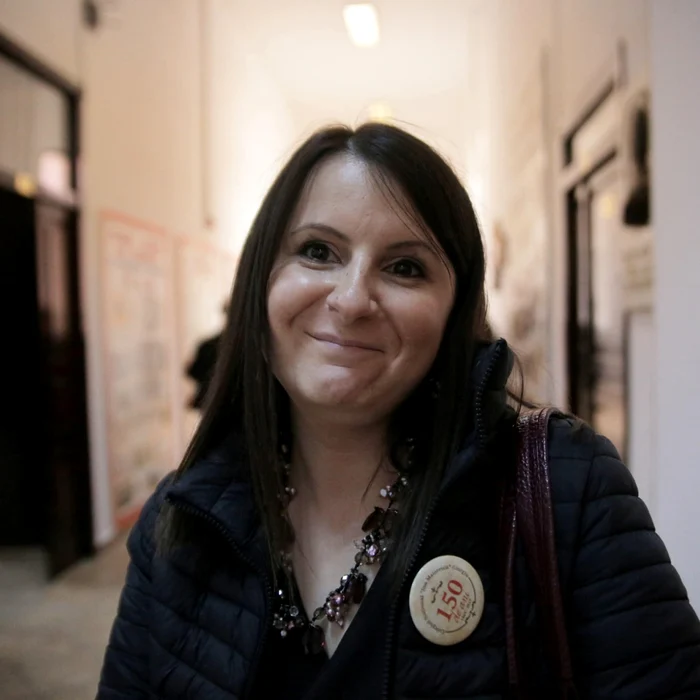
Alexandra Chirea, French teacher
“The teacher is the one who sets the tone in the relationship with the parents”
I saw the “survival” kit handed out to parents at the first meeting. What does it represent?
Alexandra Chirea: I came up with this idea with the survival kit this summer, I had once seen a colleague who, at the first meeting, had given the parents of the 8th grade a coffee bag, telling them that they had a difficult year ahead and that they would need it. So I thought about making a survival kit and thought about what I could put in it. I remember that at home, as a teenager, I used to answer with a dry “Okay” to the question “What did you do at school today?”. I know that, just like us, at the department, it is sometimes difficult for us to work with the “tones” of teenagers, parents also face the same problems at home. It’s kind of like saying, “I understand, I know it’s hard, but we have to get through this together.”What did we put in this kit in the end?
- Coffee bag – for the energy parents need this year
- Candy – to sweeten the bitter moments of parenting
- Tissue – to wipe the tears when they feel like they’re not getting it done
- Paper clip – to keep one’s thoughts in order, because adolescence means a lot of chaos
- Band-Aid – to heal the inevitable little wounds of parent or child
- Chewing gum – to keep calm during conversations with the teenager in the kit
- Notebook and pencil – to write down all the good and crazy moments they will go through with the child, because these will be unforgettable memories
- Glue – to stick the fragile pieces of the relationship together. Often a small gesture can rebuild a bridge of understanding and trust.
- A pawn – not to step on pawns; this is what the realm of adolescence looks like: one must tread carefully, but also firmly. I asked them not to use words as pawns, because they can leave deep traces.
- Eraser – to erase all the mistakes of the child, as well as the parents, and have the chance to start over. Nothing is irreparable.
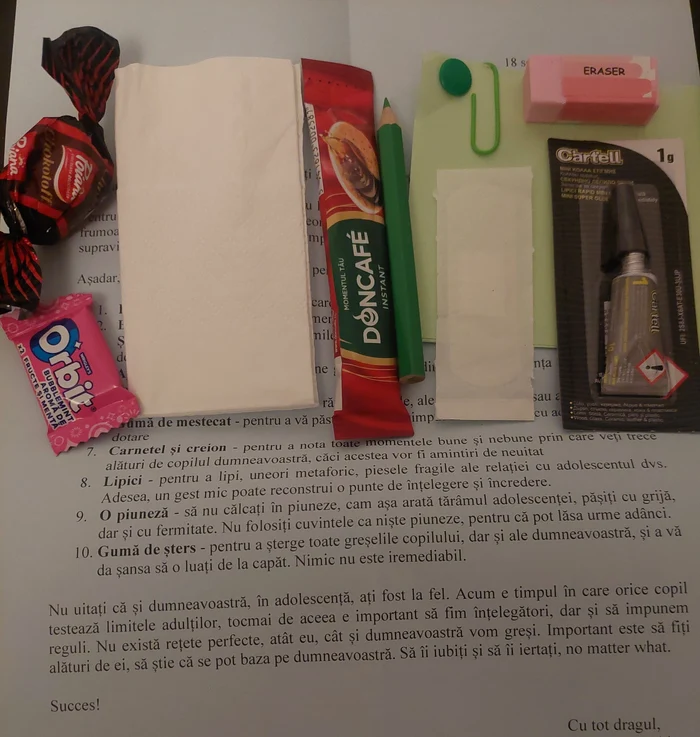
The “survival” kit for parents PHOTO Facebook/Alexandra Chirea
How can there be balanced communication between principals and parents?
Alexandra Chirea: The teacher is the one who sets the tone in the relationship with the parents. He must impose the limits, he is the specialist in education. This does not mean, however, that we reject every idea or suggestion that comes from a parent. I return here to what I said above: parents also feel if you want the best for their children and if you really care about them. Of course, that doesn’t mean we’ll never have a more difficult parent in our classroom. Unfortunately, teachers are afraid of the more difficult parents and, for fear of a complaint, give in. I am the teacher, I know that I am doing what is right and what is right, so I invite the father to advertise me wherever his lordship wants. The teacher is at school in the best interest of the child, not the parent.
What are the limits you impose on parental involvement?
Alexandra Chirea: In general, I clarify these things from the first meeting with the parents. Please don’t make a parallel WhatsApp group, the one they have with me is enough. Whatever grievances they have, they must own them and say them publicly. Another WhatsApp group would be a gossip group. I tell them from the start that I don’t get gifts, I forbid them to collect money for such things, and I ask them not to get upset—I know sometimes it’s because that’s the only way we know how to show our gratitude. I explain to them that I am the leader of this class, not a parent or a group of parents, that I know what I am doing and that I am not their enemy. I tell them that I’m not upset, that they can come and tell me absolutely anything, and that I can accept that I make mistakes too sometimes. I tell them that my expectations of them are the same. We all make mistakes, what differentiates us is the attitude towards the mistake.
What do you think makes teaching really beautiful?
Alexandra Chirea: The hustle and bustle of the school hallways, the little dramas of teenagers in love, the tears of a breakup, the squeals of joy when they succeed in an exam, the thanks they sometimes receive, the hugs — you can find all these experiences in a school. But you find them only and only if you want to find them and if you are interested in knowing those to whom you teach them. Because, you know, kids don’t learn from teachers they don’t like.

Alexandra Chirea’s letters for students
