
A study published Monday provides new evidence that the H5N1 virus currently causing a bird flu epidemic in U.S. cattle may have been adapted to infect humans better than other circulating strains of the virus.
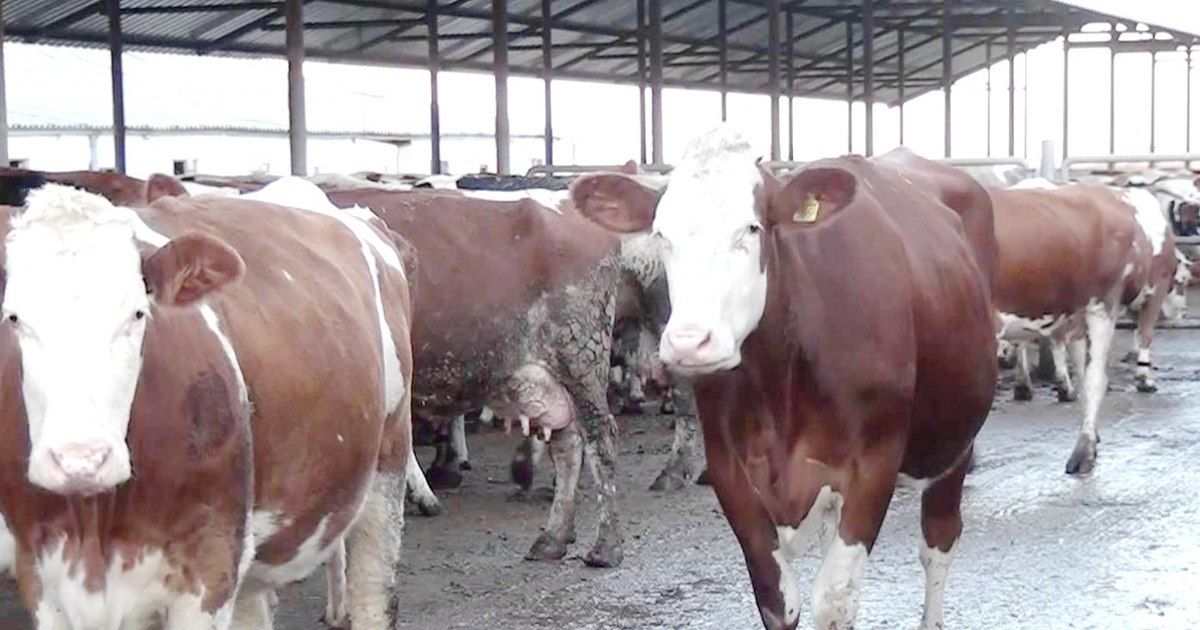
The bird flu that sickened US cows could also be transmitted to humans PHOTO The Truth Archive
This result is already causing controversy among the world’s leading influenza and infectious disease researchers.
Around the world, different influenza viruses are constantly circulating in many different types of animals. One of the elements that determines what kind of animal can be infected by a particular influenza virus is the type of receptors present on the outside of the tissues with which the virus comes into contact.
Influenza viruses that commonly infect birds have an affinity for attaching to the special shape of a receptor commonly found in the intestines of avian species. Human influenza viruses, on the other hand, prefer the shape of a receptor that lines the upper respiratory tract.
The new work, published in Nature, showed that the bovine H5N1 virus can bind to both receptors.
“The virus has an ability to bind to human receptors,” said the study’s lead author, Yoshihiro Kawaoka, in an interview with STAT.
However, he cautioned that it is too early to tell whether this ability means the newly emerged bovine branch of the H5N1 evolutionary tree has increased potential to become a significant human pathogen.
“Binding to human-like receptors is not the only factor required for an avian flu virus to replicate well in humans” said Kawaoka, a top influenza virologist at the University of Wisconsin-Madison who has studied H5N1 for decades.
The work on the predicted binding provides new evidence for a broader attachment, including to the cells lining the human upper respiratory tract, but requires further study to understand the underlying factors, said Ian Brown, former head of virology at
The UK’s Animal and Plant Health Agency, who is now a group leader at the Pirbright Institute, said in a statement to reporters. “Overall, the study’s findings are not unexpected, but this report provides additional scientific insight into an evolving situation that emphasizes the need for strong monitoring and surveillance among affected or exposed populations, in both animals and humans, to track future risks”.
The result is sure to fuel fears that the H5N1 virus now circulating in dairy cows has already adapted to spread more efficiently to humans. But this issue is complicated by the fact that other scientists, who have examined the same molecules that the H5N1 cattle virus uses to infect cells, have obtained different results.
