
A vacation on the Romanian coast offers travelers the opportunity to discover the ancient history of the region by exploring some emblematic places, located on the Black Sea shore and in its vicinity.
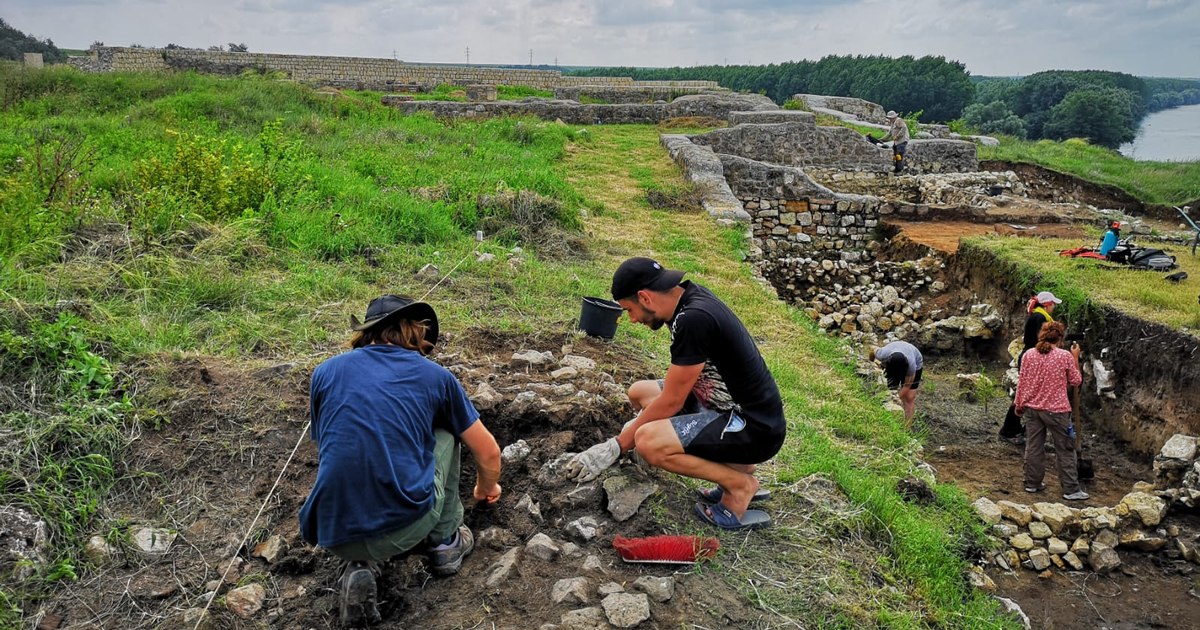
Capidava. Source: Capidava archaeological site. Capidava.ro
The Black Sea coast is not only the beach and fun opportunities, but also the opportunity to explore mysterious, emblematic places for the ancient history of Romania.
Not far from the city of Constanța, erected on the ruins of the old Tomis, travelers can discover the ruins of the oldest cities in Dobrogea, former Greek, Getic and Roman settlements, but also a special triumphal monument reminiscent of Dacians and Romans.
The aforementioned fortress of Herodotus
About 60 kilometers north of Constanța, on the shore of Lake Sinoe, the village of Istria preserves the ruins of the oldest urban settlement on the current territory of Romania: Histria Fortress, according to historians, by colonists from Milet in the 7th century BC.
“The Danube, after crossing the whole of Europe, flows into the sea, namely in the Euxin tip, near Histria, a fortress inhabited by Milesian colonists”, The High Herodotic historian recorded, in the 5th century BC.
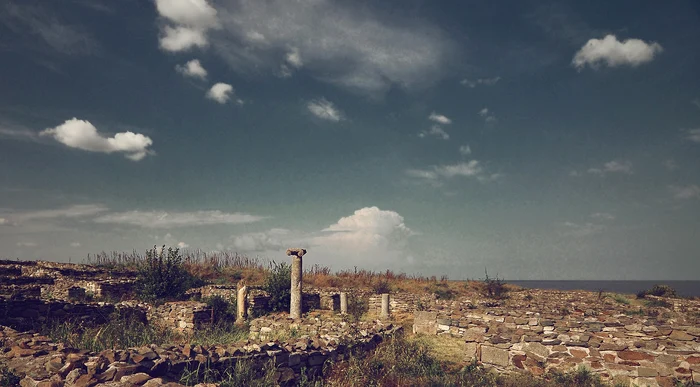
Histria. Photo: Wikipedia
The name Histria comes from the old Greek, from the hyster, the ancient name of the Danube. Initially Greek colony at the mouths of the Danube, the fortress on the shore of Lake Sinoe later passed under Roman rule and was abandoned after the invasions of the migratory peoples. In Histria were beaten the first coins on the current territory of Romania, around 480 BC, having on the obverse an eagle on the dolphin, and on the reverse two adjacent and reversed human ends.
“Once upon a time in a marine bay, today Lake Sinoe, not far from the mouths of the Danube, a river to which its existence has linked, the fortress of the Histrians has contributed decisively, for 14 centuries, to defining an interculturality in the northwest of the Euxin tip.”states the Museum of National History and Archeology Constanța.
In over a century of systematic archaeological research, ancient enclosure walls, the tumor necropolis of the Greek era, the Greek area, four temples (including the temple of Zeus and Aphrodite), numerous altars and votive bases, civil neighborhoods with modest or sumptuous residential, as well as a well -preserved, the fortress.
Two thermal baths, six paleocreștine basilics and several Christian cult buildings were also discovered, of which the Episcopal Basilica is noted.
According to archaeologists, necropolis, inscriptions, sculptures, architectural and ceramic fragments and coins complete the image of one of the most prosperous Greco-Roman fortresses.
Currently, the defense wall with towers, the ruins of Greek temples, paved streets, housing neighborhoods, Termes, Civil and Christian Basilici, as well as one of the largest Christian basilics in the region, dating from the 6th century, can be visited.
TROPAEUM TRAIANI MAUSOLE
About 60 kilometers southwest of Constanța, Adamclisi is known for the triumphal monument Tropaeum Traiani, erected in the second century AD, in honor of the victory of Emperor Trajan on the Dacians.
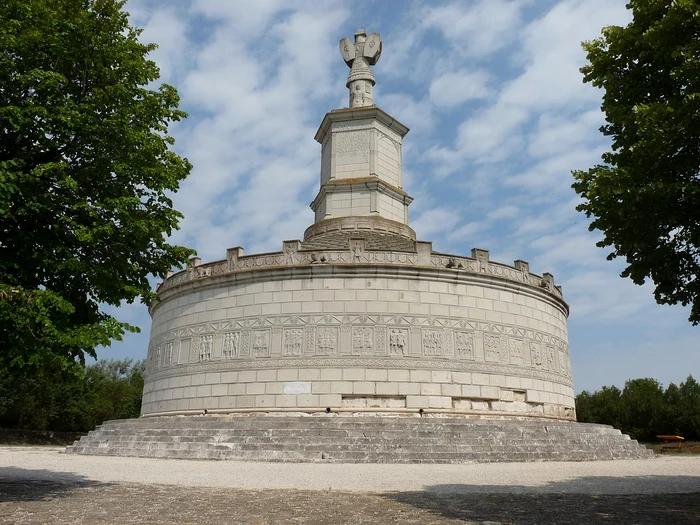
TROPAEUM TRAIANI. Wikipedia
Tropaeum Traiani, built between 106 and 109, commemorates the victory of Romanians over the coalition made up of Geto-Dacians, Buri and Sarmati, in 102 AD. The monument was reconstituted in 1977, after one of the hypothetical models of the ancient edifice, in ruins.
“The monument, in the variant in which it was reconstituted by archaeologists, is made up of a cylindrical base, which is based on several rows of circular steps, and at the top a conical roof, with scales on concentric stone rows, from which the hexagonal superstructure rises. cylindrical.”, Shows the history of the monument, presented by Adamclisi City Hall.
Around, the 54 metopes of the Deleni limestone depict the war scenes in the bas -relief.
“The metopes were rectangular slabs with a height of 1.48–1.49 meters. Of the 54 initial methods, there is still 48. Above the metopes is a frieze with 26 claims, of which only 23 were kept, also carved in the bas-relief, which make up the coronation of the circular nucleus”shows the history of the site.
The ensemble from which the monument was also included in a funeral altar, on whose walls were the names of the approximately 3,800 Roman soldiers probably fallen in the battle of Adamclisi, but also a mausoleum, with three concentric walls, in which the commander who, with the price of his life would have been buried.
The Adamclisi Museum retains original parts of the monument. Two kilometers west of the triumphal monument was founded by Traian the Roman Fortress Tropaeum Traiani, mentioned in the inscriptions for the first time as a municipality in 170. It was part of the system of the offensive limes created at the Danube de Jos.
The ancient city of Tomis
Known as the city of the exile of the poet Ovidiu, the ancient Tomis was one of the largest ports of the Black Sea. The ruins of the ancient city of Tomis are in the peninsular area of Constanța, near the tourist port and Ovidiu Market.
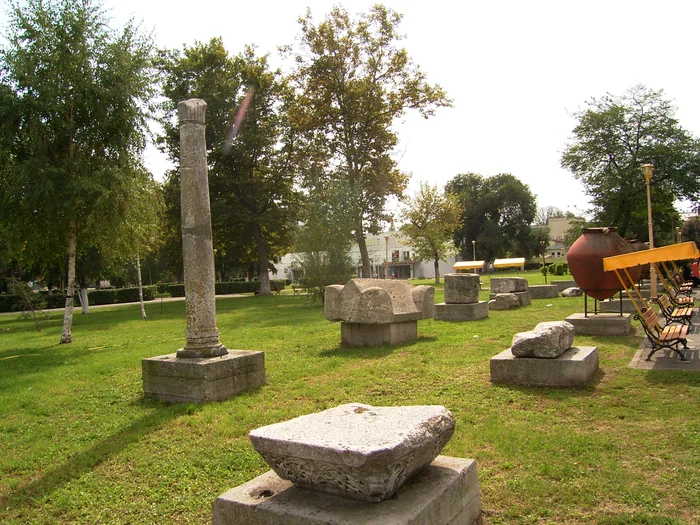
Vestiges of Tomis. Photo: Wikipedia.
“Located in the heart of Constanța, the archaeological park is the place that emanates the perfume of the history of Tomis, being an oasis of tranquility. Here are dozens of ancient vestiges. Columns, amphoras, heads, sarcophagi, enclosure walls, next to the map of ancient settlements in this region, I make the new city,”informs Constanța City Hall.
Tomis fortress was founded in the 6th century BC, by the Greek merchants and navigators of Miletus. The largest development of the fortress took place in the 1st -3rd centuries AD, when Tomis became one of the most important urban centers in the Black Sea basin.
At Tomis, the Romanian poet Publius Ovidius Naso was exiled, by the order of Emperor Octavian Augustus, and here he wrote the first literary works on the current territory of Romania, “Epistolae Ex Ponto” and “Tristia”. In 601 the fortress Tomis was destroyed by damage, and later it remained under the Byzantine administration.
Capidava, the fortress on the Danube
The ruins of the Capidava fortress are on the right bank of the Danube, near the village of Capidava in Constanța county, about 50 kilometers from Constanța. Former strategic Roman-Byzantine fortress on the Danube, Capidava defended the border of the empire and housed a garrison of soldiers.
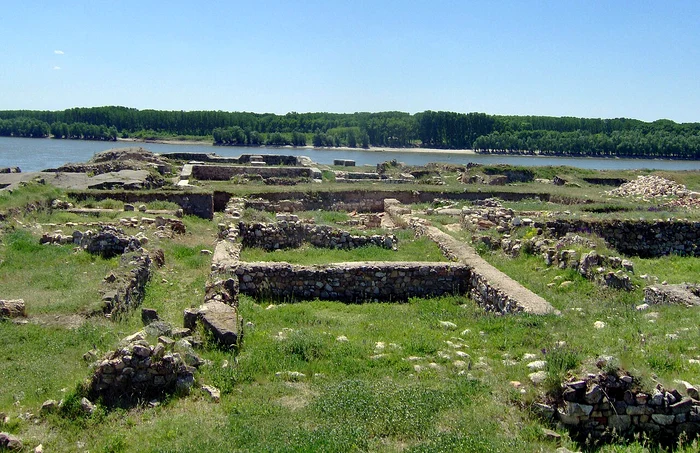
Capidava. Source: Wikipedia
“The fortress occupies an important place in the Roman defensive system being part of the series of castles and fortifications during the Emperor Trajan, at the beginning of the second century, within the measures of organizing the Danube Limes.informs the archaeological sources.
The fortification was destroyed by the Goths in the third century, restored in the fourth century and became even the episcopal center, according to the springs of the 4th-4th centuries. In the middle of the 5th century, the fortress was abandoned, being restored by the Byzantines in the tenth century. In 1036, following a fire caused by Pechenegs, Capidava was definitely abandoned.
“Research without major interruptions since 1924, the monument is preserved perimeter. Exception makes the side from the Danube, affected before the archaeological excavations in which the limestone massif on which the fortress was raised. Defense of the Danube in the ford from Capidava, the monument has imposing enclosure walls, kept from ancient times, and which (before the restoration) reached up to 6 meters ”, Show archaeologists on the website capidava.ro.
Callatis fortress, raised at the command of an oracle
Former Greek colony, later Roman city, Callatis is on the current territory of Mangalia, about 50 kilometers from Constanța. It was founded by Dorian colonists from Heraclea Pontic, most likely at the end of the 6th century or the beginning of the fourth century BC.
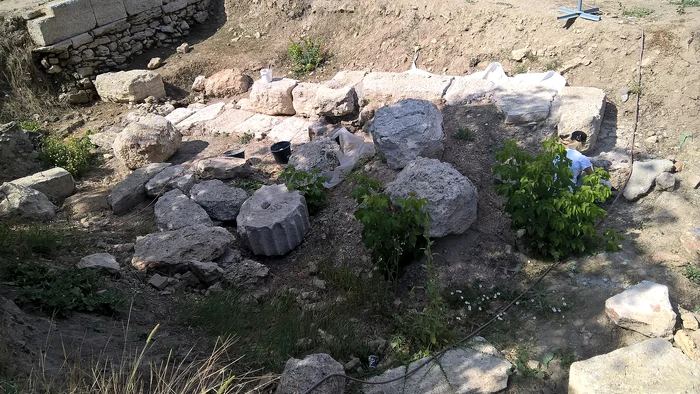
Callatis. Wikipedia
“The fortress was erected at the command of an oracle on the site of a Getic settlement called Cerbatis or Acervetis. About the foundation of Callatis Fortress we have information from a series of ancient writers, among which we mention: Ptolemy, Strabo, Memnon, Ovidiu, Pliniu the Elder, Arian, Pseudo-Skymnos, Demetrios from Caliad. The epigraphic inscriptions discovered in Mangalia strengthen the hypothesis that the foundation of the Callatis fortress was made as a result of the command of the Delphi oracle ”shows the history of the fortress, published by Mangalia City Hall.
In the first centuries of its existence, Callatis went through several periods of domination: Macedonian, Geto-Dacian, Roman and Roman-Byzantine.
The fortress experienced a flowering during the Roman rule, but was affected by the repeated invasions of the migratory peoples. Definitely destroyed in the 7th century, Callatis remains an important historical landmark of Dobrogea.
