
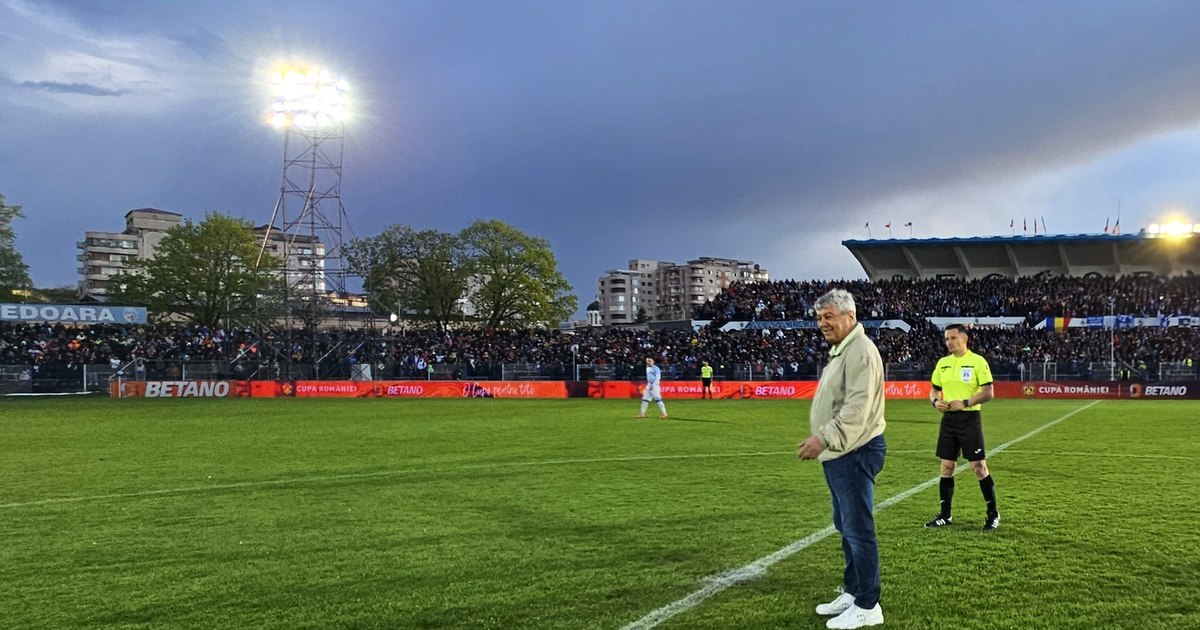
Mircea Lucescu transformed Corvinul Hunedoara from a provincial team into a phenomenon of Romanian football, and the years he spent “under the furnace” remained the brightest era in the club’s history.
Corvinul Hunedoara, a football club with a long history, tied its best performances in the 20th century to the period in which it was managed by Mircea Lucescu (1945 – 2026). The former coach had a special connection with Hunedoara, a city of which he is an honorary citizen. Here he ended his playing career and began his coaching career in the late 70s, managing to take a team from League Two to the European Cups.
Day of mourning in Hunedoara
In the Lucescu era, Corvinul played in the Honduran national team’s equipment, brought by Lucescu from the national team, and was supported at every match in an archipelago stadium. The Lucescu family lived in a modest apartment in Hunedoara, but lived here the first glorious years of the late coach’s career.
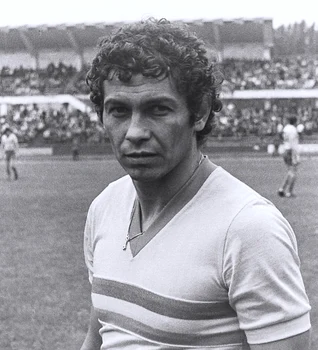
“Mircea Lucescu completed his remarkable career as a football player at Corvinul Hunedoara, a club he joined in 1977. Also here, Mircea Lucescu began his unparalleled career as a coach, managing to create not only an extraordinary team, but also an extraordinary emulation within the community, quickly becoming a landmark both from a sporting and human point of view. His reign’s relationship with Hunedoara did not stop at the moment the termination of his mandate as coach of the Corvinul team. Mr. Mircea Lucescu permanently promoted and supported the Hunedoara sports movement, including in his last years of life. For his special merits, Mircea Lucescu was declared “Honorary Citizen of Hunedoara” in 2013.notes the Hunedoara City Hall, which announced that April 10 will be a day of local mourning in Hunedoara, in memory of the coach.
Corvinul Hunedoara, a history of over a century
The first football team in Hunedoara was founded in 1921, and in the following decades it bore several names: CS Fero Sport, at the time of its establishment, UFH (Uzinele de Fier Hunedoara) and Iancu Corvinul, in the interwar years, Metalul, Energia i Siderurgistul, in the first decades of communism, and Corvinul Hunedoara, in the last half century.
From the beginning of the 60s, with the construction of the Corvinul stadium, football became the main attraction for thousands of Hunedoara residents, who filled the stands of the arena with over 16,000 seats in Hunedoara on weekends.
In the 60s, Corvinul Hunedoara was active both in the first football league of Romania and in the lower leagues, but from the end of the 70s, with the arrival of Mircea Lucescu in Hunedoara, it would become one of the most loved football teams in Romania.
In 1976, Corvinul returned to Romania’s first football league, and for almost two decades it was one of the most loved teams in Romania. In 1977, Lucescu moved to Hunedoara with his family and became the captain and later the coach of the local team. The football team of Hunedoara was relegated at the end of the 1978-1979 season.
Its captain, however, remained the hero of Corvinu, and at the end of the last match played that season in Hunedoara, Mircea Lucescu was carried out of the stadium by the supporters and led home in cheers, even though the team had just been relegated.
From 1979, Lucescu returned to the management of Corvinu, this time as a coach and player, staying here, with his family, until 1982, when he was appointed coach of the Romanian national football team.
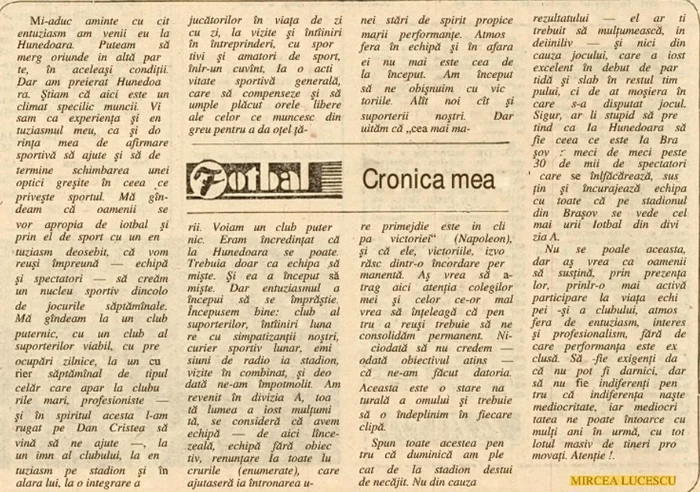
“I remember with how much enthusiasm I came to Hunedoara. I could have gone anywhere else, under the same conditions. But I preferred Hunedoara. I knew that here is a specific climate for work. I dreamed that my experience and enthusiasm, as well as my desire for sports affirmation, would help and determine the change of a wrong perspective regarding sports. Lacking a pronounced and traditional cultural activity, I thought that people would approach of football and, through it, of sports, with great enthusiasm, that we will succeed together – team and spectators – in creating a sports nucleus beyond the weekly games”he wrote in 1980, in the local newspaper “Drumul Socialismului”.
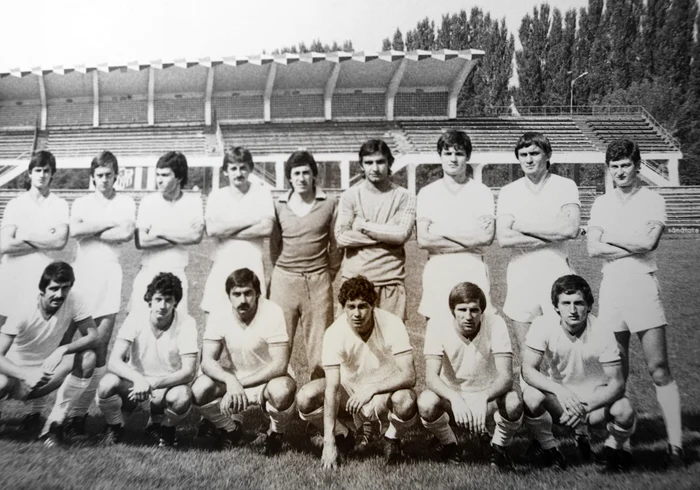
In the 80s, the team led by Mircea Lucescu included Klein, Gabor, Andone, Nunweiller, Lucescu, Văetuş, Petcu, Dumitrache, Rednic and other footballers who would play for the Romanian national team and for teams like Steaua and Dinamo. The secret of success, after an unparalleled performance, was work, love of football and seriousness, Mircea Lucescu recounted in an interview from 1981:
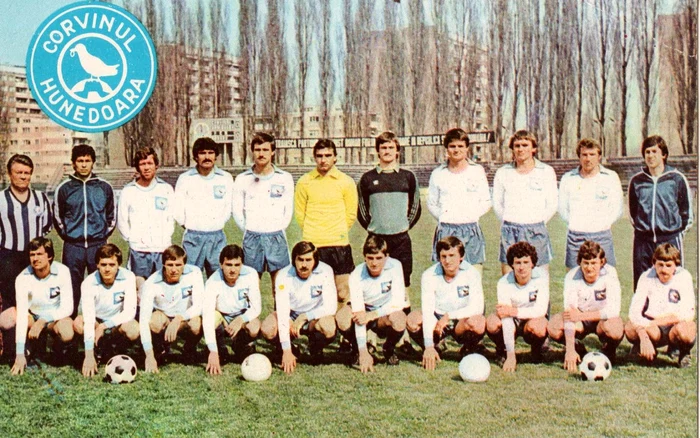
“Playing well, you can lose once or twice, but with time, you will win. Playing badly, you win once or twice, but with time, you lose,” he said.
Many of the young people who played for FC Corvinul Hunedoara were students at the Engineering Institute in Hunedoara, and Lucescu was interested in their studies.
Corvinul played with the Honduras national team jerseys
The “blue ravens” team, as Corvinul Hunedoara was called in the Lucescu era, played in blue-white equipment, with the logo represented on the shirt by a raven with a ring in its beak – the emblem of the medieval Corvin family.
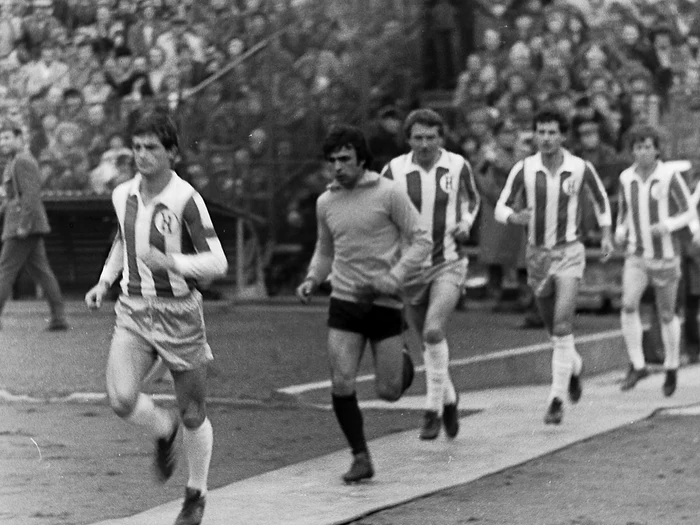
At the beginning of the 80s, in the last season in which Mircea Lucescu coached Corvinul, for a while, the raven on the players’ jerseys was replaced by the letter H, not from Hunedoara, but from Honduras.
At the beginning of 1982, the national team of Romania and Honduras played a friendly match at the stadium in Tegucigalpa, in front of 25,000 spectators, and among the members of the Romanian national team were several footballers from Corvinul Hunedoara: Rednic, Andone, Klein and Gabor.
“According to tradition, the players exchanged shirts with each other. Ours gave away the tricolor ones, in red, yellow and blue, instead of which they received ones with white and azure stripes. As there were many players from Corvinul in the Romanian team, and the shirts were inscribed with the letter H, I suggested to the others to give them to the ones from Hunedoara to use in the championship. They all agreed, and Klein and Ando collected them and took them to Hunedoara. They were not made of extraordinary material, but they were much better than what we had in the country.”reported Mircea Lucescu, in an article published by former Hunedorian journalist Sami Tamaş.
Mircea Lucescu remained connected to Hunedoara
In the autumn of 1982, the “blue crows” were active in Romania’s first football league and qualified for the second round of the UEFA Cup, where they were eliminated by FK Sarajevo from the former Yugoslavia.
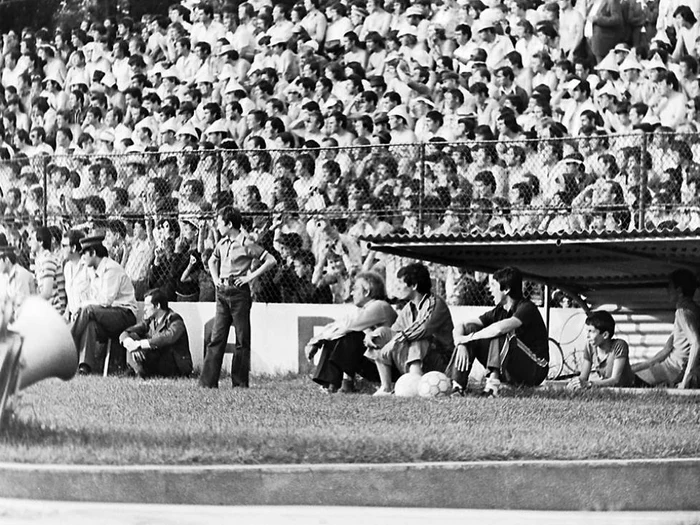
Mircea Lucescu, coach and player of Corvinu, until the end of the 1981 – 1982 season, had meanwhile been appointed as the selector of the Romanian national football team, but remained connected to the “city under the furnace”, where he had spent over six years. In Hunedoara, Mircea, Nelly and Răzvan lived until 1982 in a two-room apartment, located in Piaţa Florilor, not far from the steel plant and the stadium.
The Lucescu family lived in an ordinary house, for which they paid a small rent, just like the other tenants of the block, most of them athletes. The Lucesti’s former neighbors from the “football players’ block” remembered them as decent people and were proud to have known them.
After 1990, with the decline of the Hunedoara steel plant, Hunedoara sport also declined, and Corvinul was relegated to the second football league. The former coach of Corvin has returned to Hunedoara in recent years.
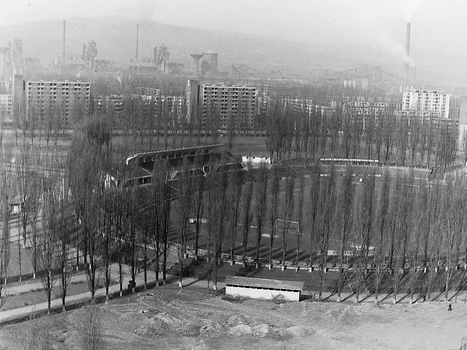
“I came back to Hunedoara after a very long time, with a lot of love and pleasure and I was delighted with what I saw. Of course, I am haunted by the memories, especially the extraordinary ones I had with that terrible team and I hope that one day it will be revived, because the performance that Corvinul did in that period was a very special one. It is no coincidence that 7-8 players played for the national team, and many of them later evolved across the country’s borders, in very good conditions. I want to see the Hunedoara team reborn again because I am convinced that you will find it here. I am nostalgic, as a person should be after so many years, I saw my boys, my friends, my children and I am glad that they are healthy and that they are carrying on this history of a fantastic period for football. I hope that football will become a specific event for this area, because people loved football and especially Corvinul Hunedoara. I would like to see Corvinul Hunedoara reborn”. reported Mircea Lucescu, in 2019.
Currently, Corvinul Hunedoara, to whom Mircea Lucescu has remained close in recent years, is close to returning to the Romanian Football Super League.
