
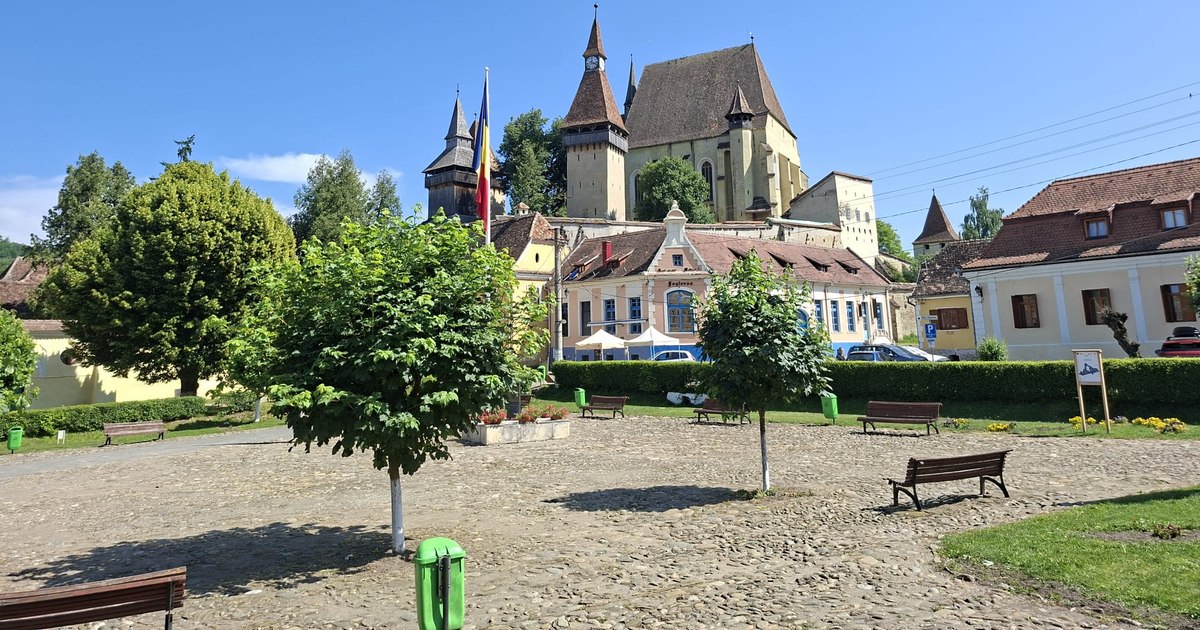
Only 67 kilometers from Sibiu, in the heart of Transylvania, is one of the most impressive historical jewelry on the territory of Romania. Included in the UNESCO heritage since 1993, the fortified church in Biertan is one of the objectives to be seen at least once in life.
The fortified church from Biertan PHOTO Cosmin Zamfirache
Halfway between Mediaș and Sighișoara, 67 kilometers from Sibiu, there is one of the most impressive historical tourist objectives on the territory of Romania. It is about the fortified church in Biertan, a work of art of the late Gothic architecture, surrounded by three rows of fortifications, with towers and bastions that slip you in a true capsule of time. Fortifications hide a number of unique elements in the world, of rare beauty and hygiene. Located in the center of a picturesque Saxon city, the church in Biertan is one of the places you have to see at least once in life.
The Gothic pearl that is watching the beautiful town of Francon
Biertan is the village of residence of the commune with the same name in Sibiu county. As soon as you pass the indicator with the names of the localities and the first rows of houses you can not ask yourself if you have not succeeded in time or you accidentally arrived in another country. On both sides of the road, on narrow streets that turn and wear you in a medieval paradise side by side, there are hundreds of Saxon houses. Most of the 17th-19th centuries have no way of attracting you with their charm.
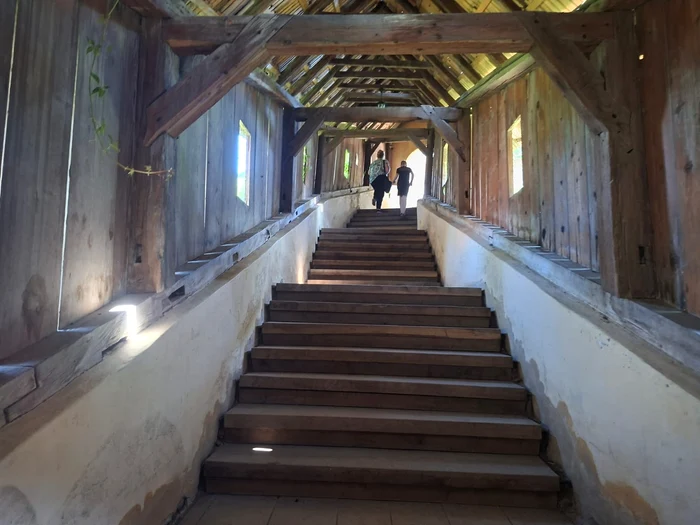
The Cosmin Zamfirache photo covered staircase
The inner courtyards, the huge gates and the tile on the roofs are missing. Although, from an administrative point of view, today, Biertan is a rural settlement, in the Middle Ages it was a powerful Saxon city. For three centuries, it was the headquarters of the Evangelical Bishopric (1572-1867), a fair with an effervescent and prosperous urban life. After we lose controlled on the medieval streets over a two -kilometer distance we inevitably reach the center of the old Burg. You can’t even miss it. From the first curve you see a fortification with impressive towers that call you. The car can be parked in the park area, right next to the fortified enclosure, on specially arranged places. The fare is almost the same as in every city equipped with parkometers.
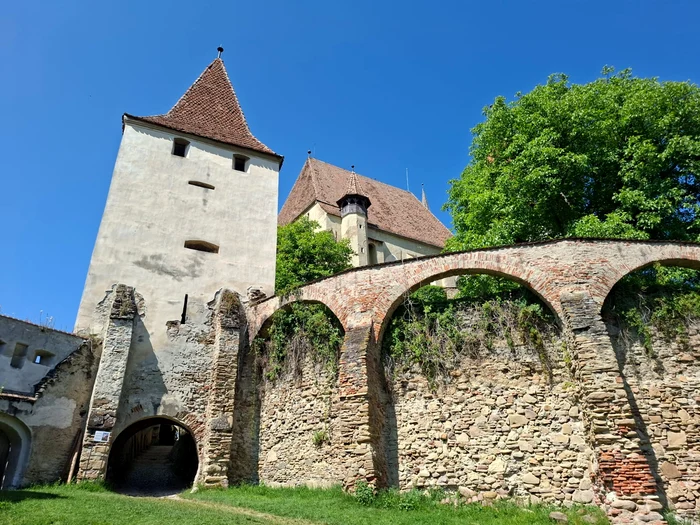
View of which second fortified premises PHOTO COSMIN ZAMFIRACHE
It is not a special parking fee to visit the fortified church. Once in the park near the church it is impossible not to lose at least 15 minutes, admiring, at a step, the outer enclosure and the impressive fortification that rises above the old Francon city in the heart of Transylvania. The entrance to the fortified area is made directly from the central market on a side gate. Here is the ticket office and an area with souvenirs. After purchasing the tickets and receiving the green wave, we pass the first line of fortifications and climb the hill on which the church is through a 100-meter covered wooden staircase.
The last Gothic church in Transylvania and its miracles
Once at the end of the hill we give the imposing church that represents the heart of the whole fortified complex. It is a hall -type church, with three vaulted ships, built between 1492 and 1516 in late Gothic style with Renaissance elements. It is the last church in Transylvania built in style.
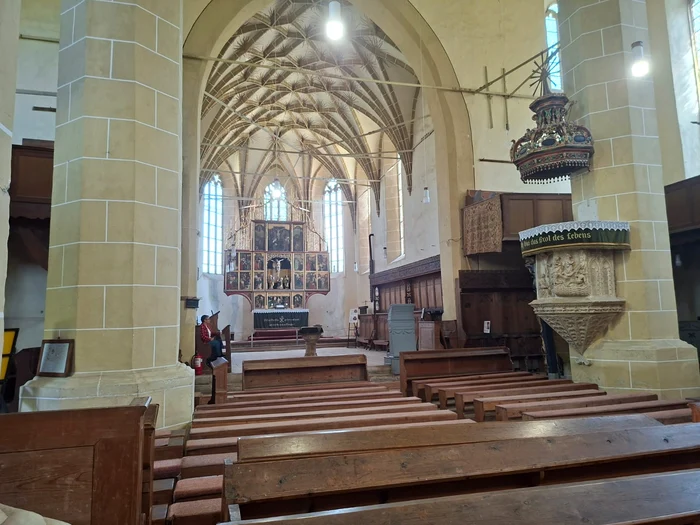
The Altar of the Church PHOTO COSMIN ZAMFIRACHE
The walls are painted with medieval scenes and biblical or paisane messages written in German. You have no way of noting the impressive organ and, above all, the altar, a unique piece of invaluable value, made in the form of a triptych, made up of 28 icons painted by the masters from Germany, between 1483-1513.
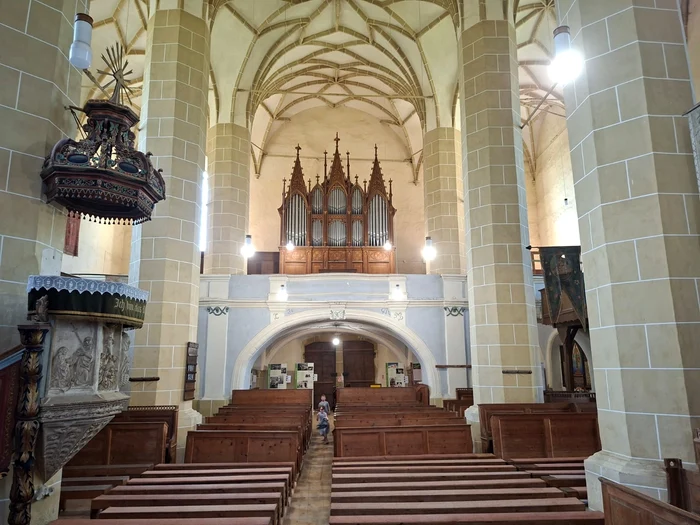
Interior of the Church of PHOTO Cosmin Zamfirache
The 28 icons represent scenes from the life of Jesus Christ and is unique in Transylvania. In the middle of the altar is an impressive crucifix. In his place, during the time the church was a Catholic, it was a status of the Virgin Mary. In fact, the Church also dedicates to Saint Mary. The pulpit, in turn, impresses with the biblical scenes represented in a transition style from Gothic to Renaissance.
The most complicated lock in the world
As you go to the altar, admiring the beautiful icons that make up the triptych, keep your eyes on the left, a massive door with a mechanism that has no way to escape. A combination of levers and mechanisms meant to close the massive oak door without cure. It is considered the most complicated lock in the world. At least that’s how the World Record Academy considered in 2022. It opens with a special key and a crank. Only those who know the way of opening can perform this operation. The lock secured the door of the sacristy, the room in which the priest was preparing for the service of the service and kept his eternity and objects of worship.
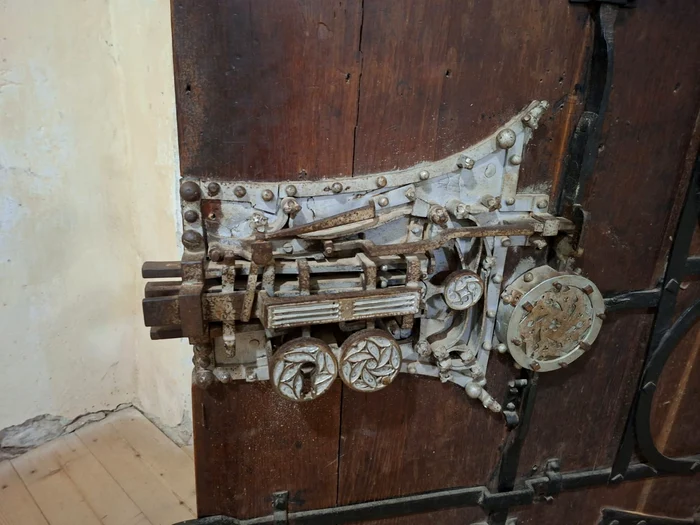
Mechanism of photo locks Cosmin Zamfirache
In Biertan, the sacristy was used by Saxons to shelter his assets, especially in case of invasion and war. That is why, in 1515, they gave the master Johannes Reichmuth in Sighisoara to make the lock. The door has 19 metal locks, all connected. Inside the sacristy, the treasures of the merchants and craftsmen are no longer today. For tourist purposes, a room with household objects from the eighteenth century was arranged, including a beautiful stove. The door, obviously, remains open. Around the church you can admire incredible architectural details and medieval mural paintings.
From the Tower of the Balnins to the Bastion of reconciliation
After spending enough time admiring this impressive church and its unique treasures, a walk through the fortified enclosure should not be missed. Stairs and narrow alleys take you through the galleries with stone arches on both sides of the church descending and climbing from one enclosure to another. First of all, the one near the church. There are three towers and a bastion. In the northern part there is a clock tower from 1508.
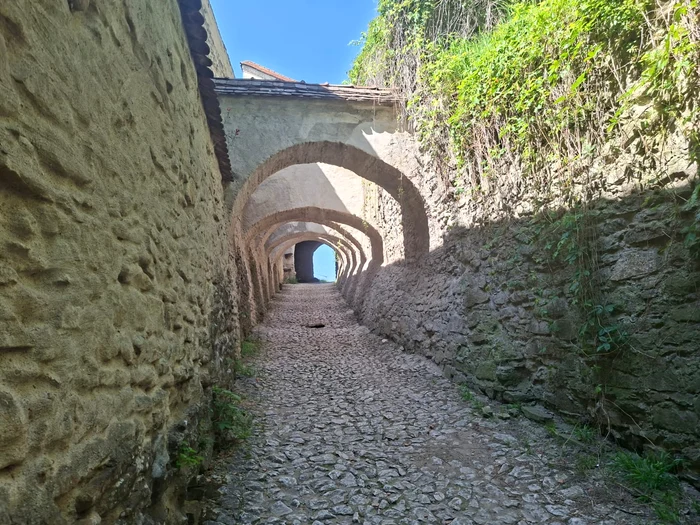
The road of the Cosmin Zamfirache photo wall
Something further, in another tower, a mausoleum was set up with the tombstones of the priests, bishops and stars. An impressive place. On a side ramp on the right side of the church it descends through the second line of fortifications (from where you can admire the medieval town) to be reached in an inner courtyard, at the base of the hill.
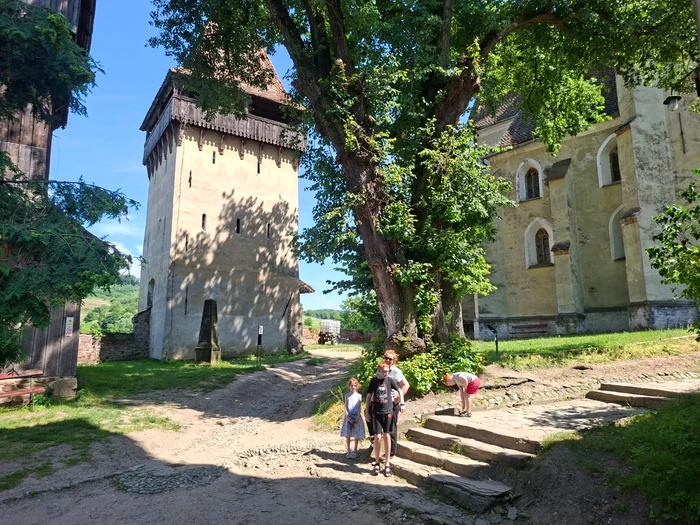
Here you can admire the gate tower and the beautiful gallery with arches that guard the road to the church. You should not miss the Tower of Balnins and the bastion in which the spouses were able to reconcile. Specifically, an old Saxon tradition from Biertan said that if two spouses are not understood then they will be put in Bastion. There a single spoon, one bed, a single plate and a single mug must use for 30 days. After 30 days to learn the common living, most did not divorce. It is said that in three centuries in Biertan there was only one divorce.
A powerful shopping center
Biertan was first attested in the Andrean diploma of 1224, offered by King Andrei II of the German Hungary to colonize Transylvania. These Germanic populations, generic Saxons, were brought by Hungarian kings after the conquest of Transylvania, to economically develop the area through urbanization, crafts and trade. Biertan was mentioned alongside six other villages. Over time, the Saxon settlement has developed especially due to the German craftsmen. And today, inside the church there are also flags of the old guilds attesting that in Biertan there were workshops of weavers, rotators, tailors, leather and cojocari.
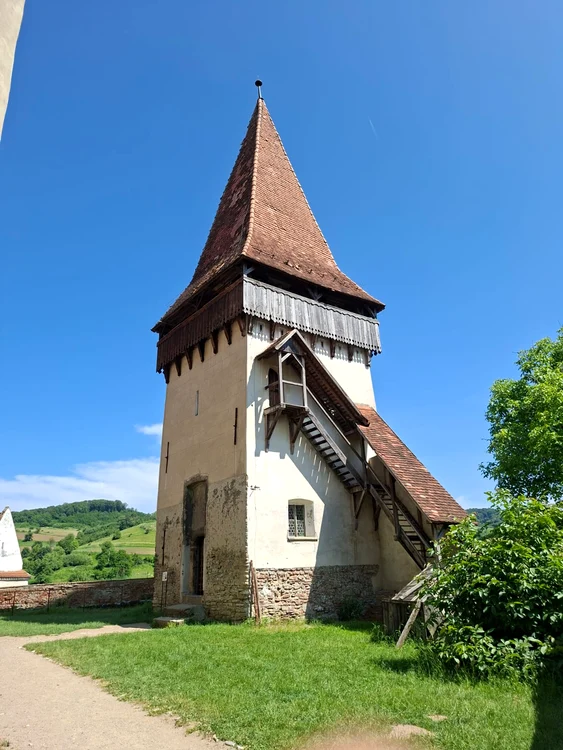
Biertan Tower Tower PHOTO COSMIN ZAMFIRACHE
Each guild had a tower to be defended in the fortification ensemble. Most likely, most of them had Franconian origin. As proof and the disposition of the city, especially from the fifteenth century, in rows of houses in Franconic style, around a central market, above which is a church with a fortified enclosure. In order to protect themselves from the invasions of the Tatars or the incursions of the Turks, plus other internal confections, the Saxons built the fortifications network around the church. With the sixteenth century, most inhabitants go to the reformed worship. The fortified church in Biertan has been included in the UNESCO World Heritage since 1993.
