
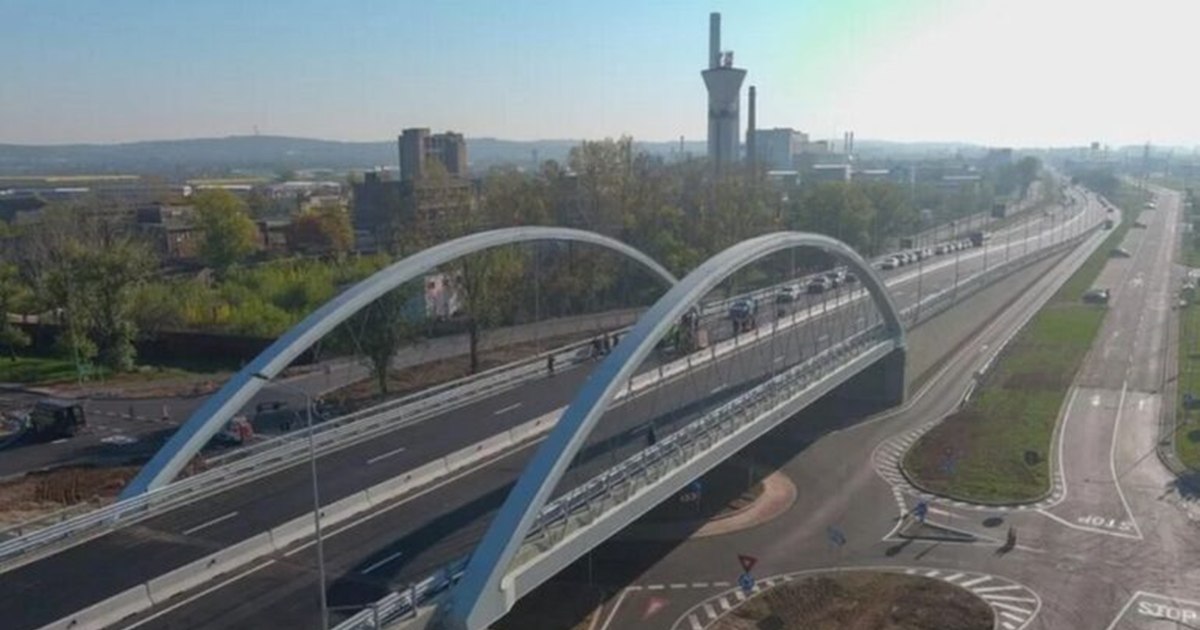
The danger of losing over four billion euros from the PNRR brings into question the efficiency of state institutions, from employees in ministries to county councils and town halls. The main problems pointed out by Prime Minister Ilie Bolojan are with regional and local hospital and infrastructure projects. The completion of the milestones assumed by the Romanian state at the beginning of the PNRR program is at one third of the total, just one year before the deadline.
The substantive question is a simple but uncomfortable one: was Romania prepared, from the beginning, to manage such large volumes of European funds? Especially in the context where the administrative problems are well known, and the undertaken projects were extremely ambitious.
Economist Bogdan Glăvan explained for “Adevărul” what is the economic impact of missing the assumed deadlines. He says that not all projects affect the national economy, but this depends on the field of financing:
“In general, you have to be very cautious when assessing the positive effect of these programs. It does not happen as trumpeted from the beginning. The impact on economic growth is much smaller than the accounting shows.
According to accounting, if you get 5 billion from the EU, you should have an increase of 5 billion. But you don’t have that. You have a much smaller growth.“
Reduced administrative capacity
The economics professor says that previous experiences should have led the decision-makers to make reforms at the level of the institutions that were responsible for implementing the programs assumed by the Romanian state:
“We are referring to a country whose administrative incapacity is well known. So if we know how the Romanian state spends local money, how do we expect it to spend the European ones? The answer is: the same, we just don’t expect them to spend it efficiently. Of course there are different procedures and there are some who come to beat us over the head. But in principle, in the sea, from the satellite, the efficiency of spending public funds will be the same, no matter if they are from Brussels, that they are international or that they are local. So it is an illusion to imagine that things can be different.“
Among the main criticisms that specialists bring are related to excessive bureaucracy, timely payments, payments to beneficiaries, the application guide for programs sent late, mechanisms that are strictly related to the functioning of the state:
“So here too, because many did not launch themselves to do the projects, to start them, until they had a certainty, that they are not starting blindly. One thing that I can support from my own experience, even several times, not just from theory, is that Romania confuses, makes things harder than they should be. Our own bureaucracy makes them harder, more complicated, complicates them over time.
Because who gets assistance? Poor countries, backward countries, countries that have poor administrative capacity. They receive external aid. This observation is valid for all. So there is no way for you in Romania to function as in France or as in Germany.”

The economy will not be affected if the funds are not earmarked for impact investing
The big fear is that the fund losses will affect the math of the budget that is calculated for 2026 in an optimistic scenario. But not all programs that are financed from the PNRR have an impact on the annual economic growth that is closely related to the efficiency of investments:
“One is absorption, the other is efficiency. You can spend the money, you can settle it, but it depends on what you do with it. Let me take an extreme example. Let’s forest. So I take a billion and use it to reforest. How will this turn into economic growth? Well, it won’t transform at all. It may be a spending spree. So if I spend the money on projects that do not bring economic growth, that do not help to accumulate capital, then the effect is zero.“
Another problem is that, at least in the implementation of mammoth projects such as hospitals or highways, an environment prepared to work with large volumes of employees and deadlines would also have been needed. Bogdan Glăvan says that external companies would have been found to compensate:
“We all know that big projects are published in the journal of the European Union and foreign contractors come. That is, the Greeks, the Turks come to you and make your hospitals, IT systems. So you don’t have to have companies in Romania.
Obviously, any backward country, by definition, will not have companies with the capacity to meet these criteria or really have the capacity to assure you that they can make such large investments. It doesn’t matter what you have to do there. So, by definition, when you ask the question, I don’t expect anything like that. And then they can only be done in cooperation with foreign companies. But this is not a problem, I repeat. That’s not what gives me the degree of absorption“.
The governors make too optimistic calculations
The consequences of some losses also depend on the quality of the budgeting, which in 2026 was made based on the best scenario, the one in which we will collect the PNRR installments. The problem may arise when the calculations do not correspond and the deficit could rise above that assumed by Romania, i.e. to over 7%.
“I mean, if you, as a state, have budgeted all these things down to the last line and you have a report, and you built your 6.5% deficit on that, then it will certainly be very possible to have a surprise and the deficit will be 7% or I don’t know how much. We are going with some optimistic scenarios that if nothing else happens on the planet and everything goes as we think, we will have 3% inflation at the end of the year. Well, yes, but look, it still happens on the planet and about every year and every now and then. I mean, you can’t always go on the scenario that nothing bad happens. That bad things still happen. And when we try to drive the car on the street, another one crashes into you, causes another accident. That’s why there is insurance content. I cannot stop with the presumption that this is why we systematically fail to achieve the targets. Because, in fact, we do not recognize that they are related to optimistic scenarios“, says the economist.
European funds lobby: engine or problem?
The economist also brings into discussion the role of interest groups around European funds that promote the start of the plans assumed by each beneficiary state but not their completion.
“There is an industry of European funds, a nomenclature, a group of interests. On the one hand, it’s good that they push you to do projects. On the other hand, their interest is not to finish the investment, but to start the projects. Their interest conflicts with the public interest. They want to collect, the state should want completed projects. Otherwise, the taxpayer remains with the losses.
Because they did these things with his money and he will no longer be able to compensate them from Brussels. So here again a discussion and this nuance is necessary. If society had interest groups, who each see their interest and they campaign for that interest, and we have to recognize that.”
On the reform side, Romania only managed to make small stage changes that will lead to new negotiations in order not to lose the promised funds. The pension reform or the salary reform are the most eloquent examples:
“You did the law just to buy votes. The pension reform was compromised. You did not do the salary reform. I understand that they would want it done. In my opinion it is the most delicate subject. Because it is a leap in the dark, that is, it is by definition a sample of socialist central planning. That’s it. When a wage law essentially means that you establish some relations between wages. Between salary in various fields.“
Perhaps the least discussed in the public space is related to the context in which genuine reforms occur.
“Real reforms are made when you get sick of everything. In Germany after the war, in Bulgaria in the 90s, in Argentina recently. This will not happen in Romania, because we have everything. There is money, there is stability, we are kept alive. Stability is exactly what we don’t need. It is the stability of bad institutions. As long as Romania receives funds and is kept afloat, it is an illusion to believe that the reforms will become reality”concludes Bogdan Glăvan.
