
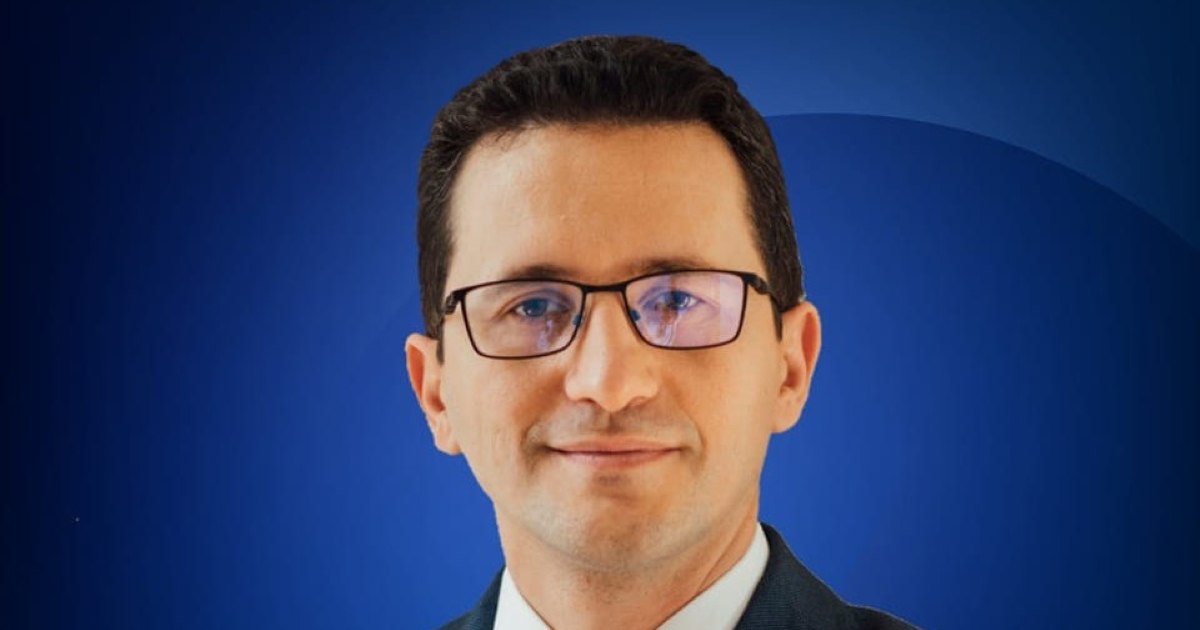
Judge Alin Ene, member of the Superior Council of the Magistracy, qualifies President Nicusor Dan’s approach to organize a referendum in the Judiciary as inadmissible in a democratic state.
The recent statements of President Nicușor Dan regarding the organization of a referendum in the Judiciary generated the first official reaction from within the Superior Council of the Magistracy. Judge Alin Ene, member of the CSM, harshly criticized the idea launched by the head of state, arguing that it goes against the fundamental principles of the rule of law and the separation of powers in the state.
“There was no legal basis that would allow the president of the country to organize a “referendum within the body of magistrates” for the “departure of the CSM”.
he wrote.
In a message shared on Sunday, December 21, on his Facebook page, the magistrate begins his post with the question: “Romania – RULE OF LAW or NOT?”, pointing out from the beginning the seriousness of the situation he sees in the context of the presidential statements.
Judge Alin Ene emphasizes that there is no legal basis that would allow the President of Romania to organize a consultation among the magistrates to change the leadership of the CSM and draws attention that such an approach would represent an obvious violation of the separation of powers in the state, making a suggestive comparison.
“To understand more easily the violation of the separation of powers in the state, it is as if the Judiciary were to organize a national referendum for the dismissal of the President of Romania or for the dissolution of the Parliament”, he explained.
Beyond legality, the magistrate questions the effectiveness of such a referendum, even if it were to take place. According to him, such a consultation would only confirm the lack of real support for the presidential initiative.
“Even if such a consultation were to take place, it would only lead to a new disappointment for the president, already disappointed that out of 885 (not 1000) signatories of a petition supporting freedom of expression (of which the overwhelming majority are prosecutors and retirees), only 20 wanted to meet with him”, says Alin Ene.
In his opinion, the situation would have been erroneously presented to the president by his advisors, which would have led to unrealistic expectations and wrong conclusions regarding the dissatisfaction of the magistrates with the SCM: “Probably the judicial advisers presented him with that distorted list, as magistrates dissatisfied with the CSM, and hence the blind trust and vain hopes”.
In this context, Alin Ene also reminds the clear legal framework in which the members of the Superior Council of the Magistracy can be revoked, stressing that such a decision belongs exclusively to the General Assemblies of judges, not to the President of Romania.
“The members of the CSM “leave urgently” only if the General Assemblies of judges (we are not talking about prosecutors, relegated to the background by the president) decide to revoke them. So certainly not when he wants a man, be he even the President of the country”he points out, insisting on the fact that the lack of powers of the president in the organization and administration of Justice is one of the essential guarantees of the rule of law.
At the end of the message, judge Alin Ene launches a broader reflection on democracy and the relationship between the powers of the state, proposing, in an ironic note, the extension of the referendum idea to the other institutions as well.
“If we’re still going down the plebiscite road, maybe we should give up discrimination and treat all state powers similarly.
So, when will a referendum be held to determine whether the Government, the Parliament and the President of Romania still enjoy the support of the people?”,he asks he ironically, continuing: “Until then, note that such statements and actions are absolutely unacceptable in any democratic state.”
So the question is very simple: what future do we want for Romania? Do we want democracy, rule of law, EU? Or do we take it in the opposite direction? There is no correct answer. The majority decides, while we are still a democracy”, Alin Ene concludes his plea.
Judge Alin Ene’s reaction comes after, during a conference organized on Sunday, December 21, before the consultations announced for Monday, President Nicusor Dan declared that he would organize a referendum dedicated to magistrates. He motivated his decision by the fact that, after the Recorder’s disclosures regarding abuses in the judiciary, at his request, he received hundreds of pages of materials from people in the system in which problems related to the way the courts work in Romania were reported.
The only question of the referendum that the magistrates will have to answer is “Does the Superior Council of the Magistracy act in the public interest or does it act in the interest of a group within the judicial system?”, stated the president Nicusor Dan.
