
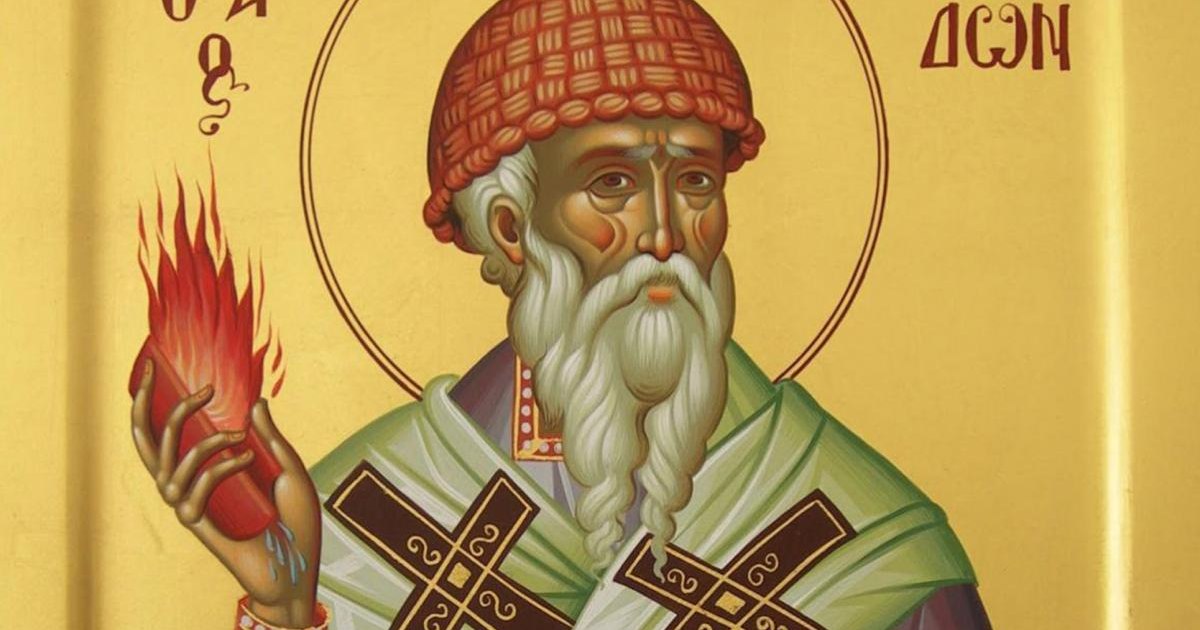
Several old hospitals and churches bear the name of Saint Spyridon, protector and miracle worker, according to religious tradition. Saint Spyridon lived in Antiquity on the island of Cyprus and is celebrated by Orthodox Christians on December 12.
On Friday, December 12, Orthodox Christians honor Saint Spyridon, a saint whose cult is widespread in the Orthodox world, especially in the Balkans. He is considered a miracle worker, and many churches and hospitals bear his name.
Bishop of the Trimitunda fortress
Saint Spyridon was born around the year 270, on the island of Cyprus, during the reign of Emperor Constantine the Great. As a child he was a shepherd and distinguished himself by his kindness and charity.
“He led a pious life, similar to the chosen ones of the Old Testament: to David, by kindness, to Jacob, by the simplicity of his heart, and Abraham, by the love of strangers. Not long after, he was also given the gift of healing and shone with good works, because he made alms from his wealth to the poor, strangers and all the afflicted. While still in earthly life, much pleasing to God, he healed all kinds of incurable diseases and cast out spirits evil from men, by the power of the Lord, only with the word. For all his merits, he was elected bishop of the famous city of Trimitunda in Cyprus”pointed out the priest Bartolomeu Constantinescu.
As bishop of the Trimitunda fortress, Spiridon participated in the first Ecumenical Council in Nicaea, in 325. However, he was among the Christians subjected to persecution ordered by the Roman emperor Maximian (Marcus Aurelius Valerius Maximianus), at the beginning of the 4th century. He died in 348, at the age of 78, being buried in the Church of the Holy Apostles in Trimitunda. In 1453, his relics were taken to Serbia, then moved to the island of Corfu in Greece, where they are still today.
The miracles of Saint Spyridon
Saint Spyridon is one of the important saints in the Orthodox Christian calendar, and popular tradition attributes many miracles to him.
“During a terrible drought, which threatened that land with famine and death, Saint Spyridon prayed, like the prophet Elijah, asking for God’s mercy, who released a long and abundant rain. The clouds that, at first, appeared only to test those who prayed, then brought, to the Saint’s prayers, the long-awaited rain, and later, also through prayer, the rains stopped and the sky cheered up”, pointed out the priest Bartolomeu Constantinescu.
In the iconography of the Orthodox Church, Saint Spyridon is depicted dressed in bishop’s vestments, wearing the bishop’s miter on his head. With his right hand he blesses, and with his left hand, as a symbol of his deeds, he carries a box in the shape of a brick, provided at the top with a torch, a symbol of the light that turns those engulfed in the darkness of evil deeds. Also, ears of wheat are represented on the box, and raindrops flow from the bottom.
On the day of St. Spyridon, fish is allowed, but Christians must not consume alcoholic beverages in excess. No work is done in the household, so that the family is healthy and well-fed; there is no washing, no sewing and no cleaning in the houses. Men do not yoke cattle as this is believed to bring harm and disease.
