
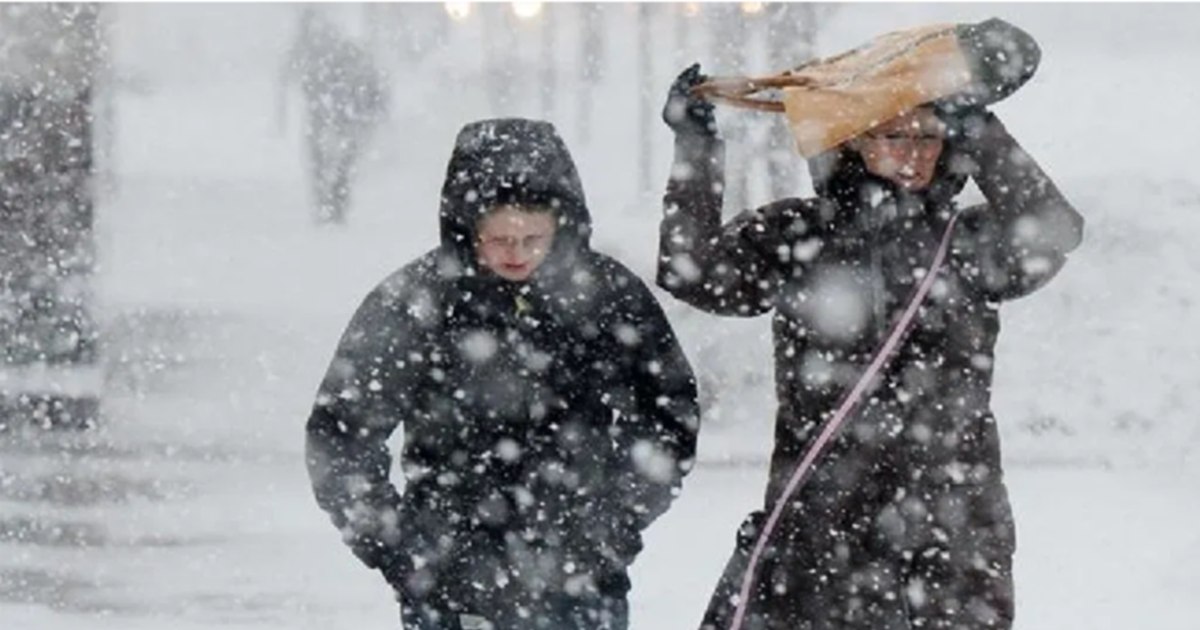
The risk of myocardial infarction increases by 2% for every drop of one degree Celsius below freezing temperature, warns doctor Tudor Ciuhodaru, who also indicates the signs that may appear and which we should not ignore.
“The polar air wave increases the risk of heart attack by more than 30%”, warns emergency doctor Tudor Ciuhodaru, in a recent post on his account on a social network. Negative temperatures, endured without serious consequences by people in very good health, can instead be “of heart attack” for the most sensitive. To prevent the occurrence of unwanted events, the doctor also indicates the signs that may indicate a major danger.
“The risk of myocardial infarction increases by 2% for every 1 degree Celsius drop in outside temperature below freezing,” notes the doctor, explaining that the combination of wind and humidity represents an additional risk, the temperature felt by the body in these conditions being lower than the one indicated by the thermometers.
Mornings and evenings, when temperatures drop, are the times of greatest risk.
“Cases occurring in young, apparently healthy men are becoming more frequent”the doctor writes, adding that the age at which myocardial infarction occurs is decreasing. The risks are even higher for sedentary people, overweight people and smokers.
“Don’t neglect classic chest pain”
Before a myocardial infarction occurs, the body gives some signs that we should not ignore, the doctor recommends.
One of these is “classic” precordial pain, that “intense anterior chest pain, characterized by constriction, pressure, burning, heaviness, squeezing or grinding radiating to the left shoulder and arm and lasting more than a few minutes”, indicates Dr. Ciuhodaru.
Three other types of non-specific symptoms (can also be found in other diseases) should also be taken seriously and possibly investigated.
These are the symptoms of DOR:
“a) Digestive: nausea, vomiting, abdominal pain, epigastric burning – often considered the consequence of food excesses or digestive ailments.
b) 🐎osteoarticular: pain or just discomfort in the arms, shoulders, neck or back, often attributed to physical exertion or osteoarticular conditions.
c) 𝑑Respiratory: feeling of lack of air, of suffocation or fainting, jerky breathing, palpitations, dizziness, fatigue or profuse sweating that appear out of nowhere or unrelated to the degree of effort.
To prevent thermal stress, it is enough to follow simple advice: to dress thickly, with waterproof clothes, protecting our face and hands; to consume warm liquids; to avoid unjustified journeys and night and morning journeys, when it is the coldest. If we are forced to do so, the ideal is to spend a few minutes of recovery in heated spaces (eg shops, institutions, etc.).
At the appearance of worrisome signs, we must call the environment, because self-medication is to be avoided, therapy after the ear in heart attack, warns Dr. Ciuhodaru, can be lethal.
How cold affects the body
Exposure to the cold has effects not only on patients with heart disease, but also affects a healthy body if the period spent in the cold is long.
Here is how low temperatures affect the body. If we are faced with low temperatures, the body tries to adapt and keep warm by vasoconstriction. Metabolism increases to produce heat and shivering (shaking) occurs to generate muscle heat. Such adaptive reactions are effective in the short term, however, with prolonged exposure to cold producing problems. The effects set in even faster in the case of organisms weakened by disease, age, medication, etc.
Prolonged exposure to the cold can cause hypothermia, i.e. a drop in temperature below 35 degrees Celsius, which can even be fatal. In case of hypothermia, signs appear such as: weakness, confusion, loss of coordination, drowsiness. Without rapid intervention, hypothermia can be fatal.
Other risks of prolonged exposure to sub-freezing temperatures can be: blood thickening and increased risk of clot formation; decreased immunity and higher risk of respiratory infections; irritation of the respiratory tract, with exacerbation of asthma (asthmatic patients feel the cold acutely), risk of frostbite, etc.
The narrowing of blood vessels caused by exposure to cold causes an increase in blood pressure, thereby increasing the risk of heart attack and stroke (CVA).
Another category very sensitive to exposure to very low temperatures is diabetic patients. In their case, the peripheral circulation is also compromised, and the cold accentuates the problems. In their case, the risk of frostbite is very high.
Exposure to severe cold also affects brain metabolism, increasing the risk of stroke. Reactions such as drowsiness, confusion, orientation problems occur.
Young children, aged up to 5 years, are even more vulnerable than adults. Their body surface area relative to volume is greater, so they lose heat faster. Infants are particularly exposed, not having fully developed thermoregulatory mechanisms. Signs of impairment may be: unusual sleepiness, body cooling, irritability. If we notice such signs we must quickly seek a warmer environment and call a doctor if they persist.
