
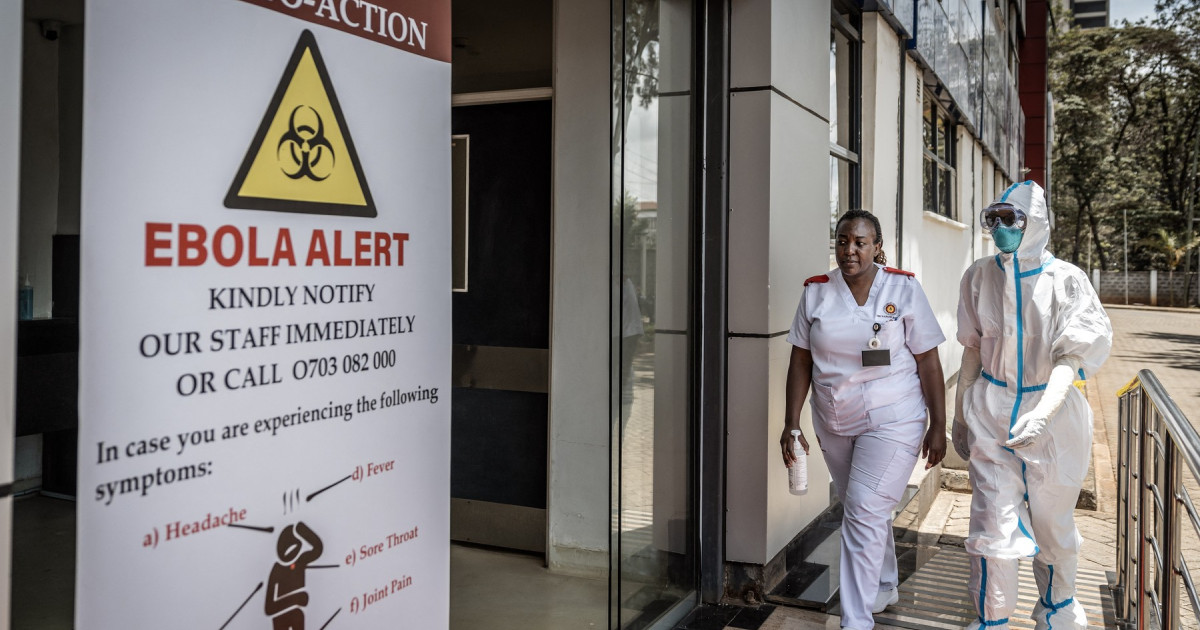
The Ebola outbreak in the Democratic Republic of Congo is spreading across Africa after cases were confirmed in Kenya and Nigeria. While the health authorities are trying to limit the spread of the virus, European experts have reassessed the risks for the EU population, including Romania. ECDC estimates that the danger remains very low, but recommends preparing hospitals for the rapid identification of possible imported cases.
The new assessment of the European Center for Disease Prevention and Control (ECDC), published on Friday, analyzes the spread of the epidemic in Kenya and Nigeria, against the background of sustained transmission of the virus in the Democratic Republic of Congo.
According to official data, nine cases of Ebola have been confirmed in Kenya, including one death. The first patient had traveled from the DRC, transiting through Uganda. The other eight cases were identified among the people who came into contact with him, namely four family members and four health workers.
All eight people were in quarantine when symptoms appeared. To date, health authorities have not identified evidence of transmission of the virus outside this group.
In Nigeria, the authorities confirmed an imported case in Abuja, in a person who had traveled from Uganda. The patient is in isolation and receiving medical care, and 44 contacts are being monitored to identify possible infections.
According to the epidemiological update published by the World Health Organization (WHO), 9,704 confirmed cases and 4,687 deaths were reported in the DRC as of October 20, which corresponds to a mortality rate of approximately 48% among confirmed cases. The epidemic affects 66 sanitary zones in eight provinces, and the transmission of the virus continues in several regions of the country.
What risk exists for Romania and the European Union
According to the ECDC, the probability of infection for people from the European Union (EU) and the European Economic Area (EEA) living or traveling to the affected areas of Kenya and Nigeria is low, provided that the recommended precautions are followed. Romania falls under the same risk assessment as the rest of the member states of the European Union.
The overall risk to the EU and EEA population is assessed as very low. The agency assesses that the probability of secondary transmission and sustained spread of the virus in the EU following a possible imported case is very low, due to the capacity of the health systems to identify, isolate and manage cases.
ECDC recommends that health authorities maintain laboratory diagnostic capacity, inform medical staff and prepare hospitals for rapid identification and safe management of suspected cases.
Currently, the European agency has not recommended travel restrictions to or from Kenya and Nigeria.
A form of Ebola for which there is no licensed vaccine
The epidemic is caused by the Bundibugyo virus, one of the viruses that can cause Ebola disease, a severe infection characterized by fever, fatigue, muscle pain and, in severe forms, damage to several organs.
The virus is transmitted through direct contact with the blood or other biological fluids of infected persons, as well as through contact with contaminated materials. The incubation period varies between two and 21 days, and infected people become contagious after symptoms appear.
There are currently no approved vaccines or specific treatments for Ebola caused by the Bundibugyo virus. Patient care is based on supportive care, and epidemic control depends on rapid case detection, patient isolation, and contact tracing.
WHO and ECDC continue epidemiological surveillance and collaboration with African health authorities to limit the spread of the virus and prevent new outbreaks.
Read also A new clinical trial for Ebola vaccines has begun in Congo, in the midst of the epidemic. Over 4,600 deaths reported