
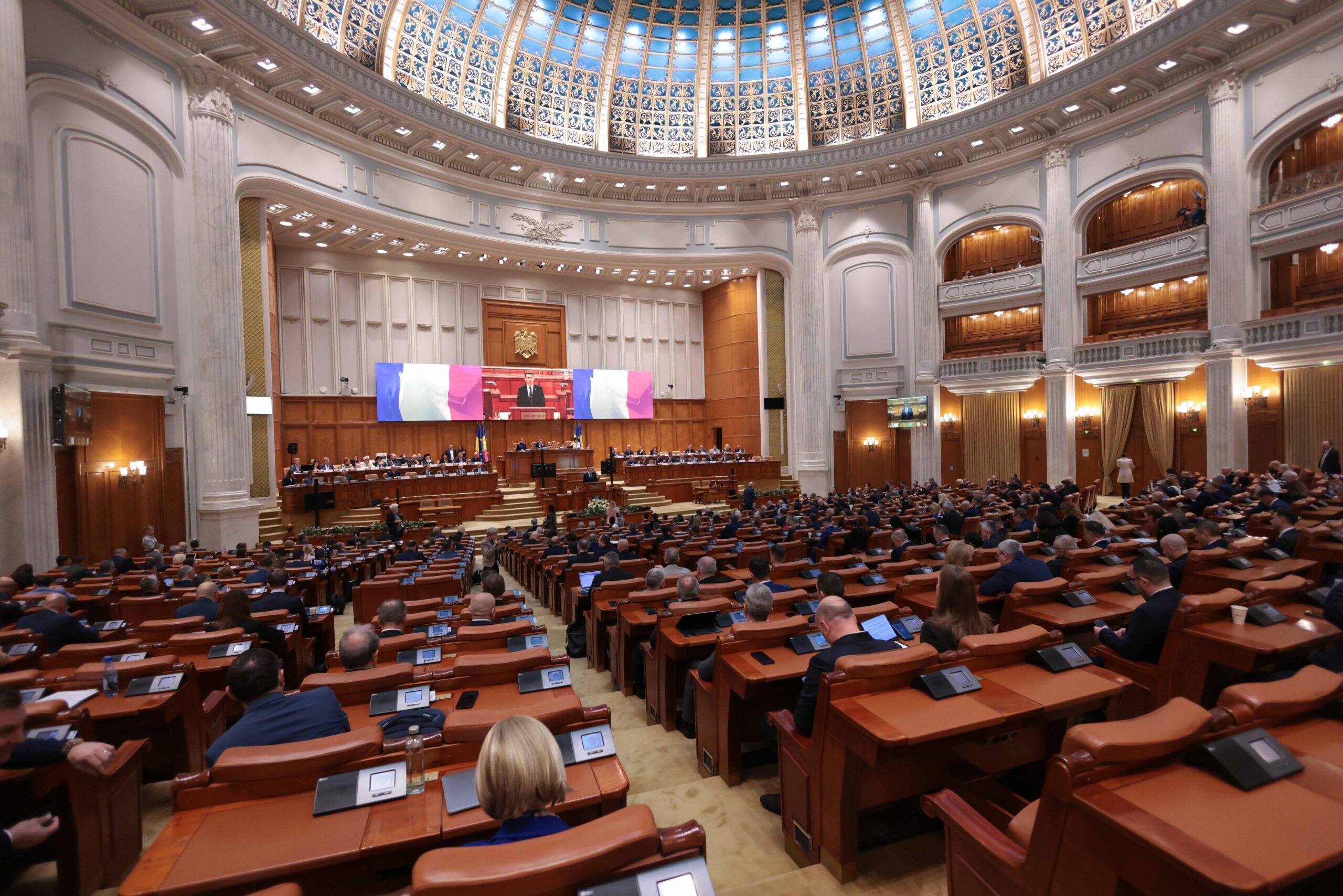
The ratification of the controversial agreement between the European Union and the Mercosur bloc is not just a formality from Brussels, but a decision that will necessarily reach the table of the Romanian Parliament. Although the legislature in Bucharest theoretically has a right of veto over the final treaty, the European Commission has activated a complex procedure through which free trade can begin before the Romanian parliamentarians can decide.
In a response to “The Truth”, the European Commission clarified the mechanism by which the Romanian Parliament is involved in the process, as well as the limits of this involvement.
The vote in Bucharest: Decisive for the Partnership Agreement (EMPA)
The Romanian Parliament will have a key role in the final stage of the process. Unlike other simple trade agreements, the treaty with Mercosur (Brazil, Argentina, Paraguay, Uruguay) was framed in a Partnership Agreement (EMPA). This type of document goes beyond the commercial sphere, including political and cooperation components, which makes it an agreement of mixed competence.
“The Partnership Agreement (EMPA) will require the consent of the European Parliament and ratification by all Member States, according to their own national procedures. After that, the Agreement can enter into force.”, a spokesman for the European Commission declared for “Adevărul”.
Therefore, without the favorable vote of the Romanian Parliament (and the other 26 national parliaments), the full Partnership Agreement cannot enter into force. Romanian elected officials basically have the right to block the final political validation of the EU-Mercosur relationship.
How the Romanian Parliament is bypassed on the economic side
Although the vote in Bucharest is binding for the final treaty, the European Commission decoupled the economic part (customs duties, import quotas) in a separate document, called the Interim Trade Agreement (iTA). For this specific document, the Romanian Parliament will not be called to vote. The reason is a legal one: trade is an exclusive competence of the European Union.
The European Commission explained to “Adevărul” the sequence of events:
- The Interim Trade Agreement (iTA) only requires a vote of the European Parliament and a decision of the EU Council.
- Member states (through their governments in the Council) vote, but ratification in national parliaments is not required.
- Once approved in Brussels, the iTA comes into force and South American products can enter the market.
Parliamentarians vote only after trade has begun
The paradox of the situation lies in the fact that, when the file will reach the plenary of the Bucharest Parliament for final ratification (EMPA), the economic component could already be applied through the interim agreement.
“The Interim Trade Agreement (iTA) will expire when the Partnership Agreement (EMPA) enters into force”, sent the representative of the community executive for Adevărul.
Basically, the interim agreement will allow trade to be carried out over the heads of national parliaments until they can mobilize for a final vote on the big deal.
So, the Romanian Parliament can theoretically block EMPA, which would mean that the entire long-term legal framework of the relationship with Mercosur would be called into question. However, by splitting the agreement into two parallel legal instruments, the European Commission has ensured that a possible negative vote or a postponement in the Parliament in Bucharest will not block commercial flows.
For Romanian farmers and producers, this means that the economic effects will be felt as a result of the vote in Brussels, while the vote in Bucharest will determine the political and diplomatic aspects that follow.
PSD and AUR criticized the Romanian diplomacy’s decision to support the EU-Mercosur Agreement, while UDMR raised several questions. Under these conditions, it remains to be seen what the Bucharest legislature will decide on such an important issue for the European Union.
