
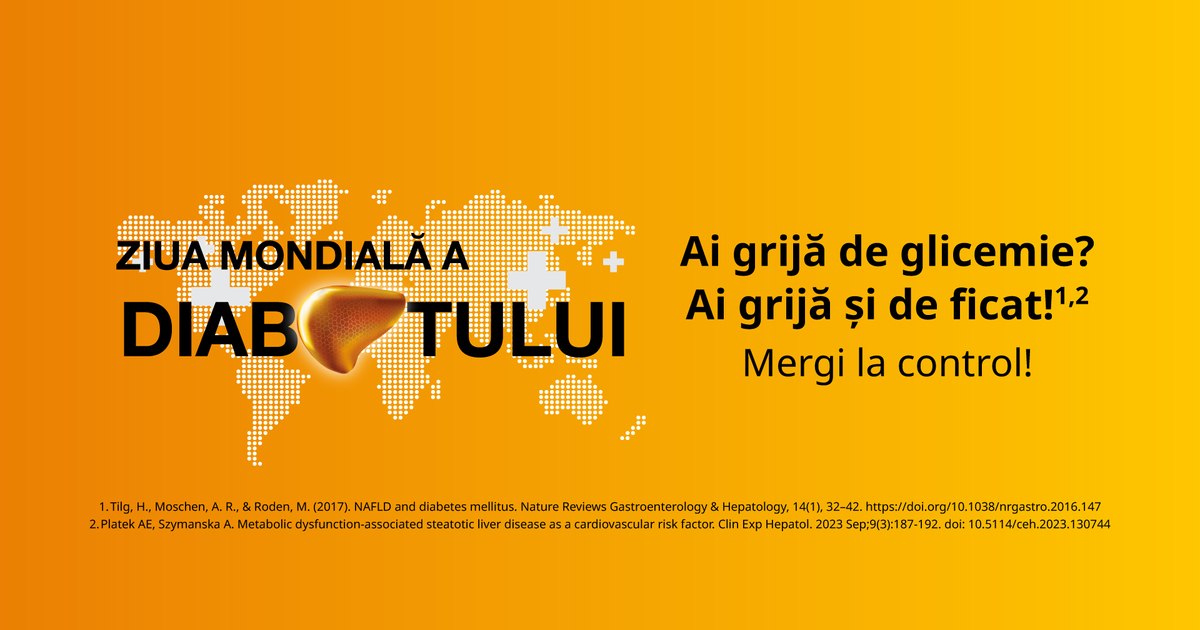
On November 14th, World Diabetes Day, we’re turning our attention to an organ often overlooked in conversations about metabolic health: the liver.
World Diabetes Day is not only a time dedicated to awareness of this chronic disease, but also an opportunity to better understand the complex system that underlies our metabolism. At its center is the liver1 – an essential but often ignored organ2which performs over 500 functions vital to overall health3.
Although rarely mentioned in the same sentence as blood sugar, the liver plays an important role in the metabolism of excess glucose and in maintaining the body’s energy balance4. And when the liver suffers, the entire metabolic system is affected3,4.
A multitasking organ: the liver and its essential roles
The liver is the largest internal organ and acts as a veritable metabolic command center. It plays an important role in regulating blood glucose levels, produces bile for digestion, synthesizes important proteins, converts drugs into usable or excretable forms, and neutralizes toxins. In addition, it stores vitamins and minerals, intervenes in the regulation of hormones and supports immunity4.
All of these functions intertwine with glucose and insulin metabolism, making the liver an essential partner in the prevention and management of diabetes. Normally, the liver takes glucose from the blood after meals and stores it as glycogen. Between meals or during the night, the gradual release of stored glucose helps maintain a stable blood sugar level3,4. In the presence of impaired liver function – as in the case of hepatic steatosis associated with metabolic dysfunction (MASLD), also known as fatty liver disease – this balance is affected5-7.
Diabetes and fatty liver – a bidirectional relationship
A healthy liver is essential for a balanced metabolism. When the liver is damaged, its ability to store and release glucose is compromised, which can lead to glycemic imbalances, increased insulin resistance, and increased risk of type 2 diabetes5,6. Data shows that people diagnosed with MASLD are 5 times more likely to develop type 2 diabetes7. At the same time, approximately 70% of people diagnosed with type 2 diabetes also have MASLD8. In other words, these conditions often coexist and form a bidirectional relationship, and their effective management requires a comprehensive approach that addresses common risk factors and potential complications6.
In addition, recent studies show that this dual condition significantly increases the risk of cardiovascular and liver complications, such as fibrosis, cirrhosis or hepatocellular carcinoma, but the risk of premature mortality9-11.
Why does the liver need our attention?
Because, despite its essential importance, the liver remains an invisible organ. Although its health is echoed throughout the body, the diseased liver does not hurt. Instead, he suffers in silence, and symptoms only appear in the advanced stages of the disease12. According to recent data, approximately one-third of adults currently suffer from fatty liver disease13and estimates show that by 2040, this proportion could exceed 55% of the adult population14.
That’s why regular screening for MASLD – through blood tests and abdominal ultrasound15-16
– but also the adoption of concrete preventive measures are important for maintaining everyone’s general state of health17-18. Early diagnosis can make the difference between effective intervention and difficult-to-manage complications such as metabolic imbalances, hormonal disturbances, chronic inflammation and the development of type 2 diabetes6-7.
How can you protect your liver and prevent MASLD?
Despite the risks associated with the disease and its ever-faster spread19however, there is also good news: 8 out of 10 cases of MASLD are reversible if identified and treated in time13. So, the first step is correct information and constant health monitoring. Regular doctor visits and routine check-ups are an important step in the early detection of MASL15, 16, 20.
Adopting a balanced lifestyle also plays an important role: a healthy diet, low in sugars and saturated fat, together with regular physical activity, can prevent the accumulation of fat in the liver and support the overall metabolic balance17,21-23. In certain cases, the doctor may also recommend the use of hepatoprotective supplements, such as essential phospholipids, which have been shown to be useful in supporting liver cell regeneration and reducing inflammation24.
Last but not least, it is essential to limit alcohol consumption and avoid self-medication2,18,19,25-27. Certain substances can worsen liver damage, especially in the presence of a pre-existing condition2,18,25-26. Caring for your liver starts with small but conscious decisions made every day.
A call for responsibility and information
On World Diabetes Day, it’s the right time to look beyond blood sugar and insulin, and understand that metabolic balance is also closely related to liver health. In a context where diabetes affects more and more people19it is essential to talk about prevention in broad terms – and the liver must be part of that equation. Through information, prevention and active monitoring, we can reduce not only the risk of diabetes, but also the severe consequences of an ignored liver disease.
Ask your doctor for more information about liver health and how you can assess your risk of MASLD.
Bibliographic sources
1. Kaldis, Philip. Metabolic dysfunction: The liver and beyond. Research Outreach, 136 (2023). https://researchoutreach.org/articles/metabolic-dysfunction-liver-beyond/. DOI: 10.32907/RO-136-4664566638
2. Karlsen, T. H et al. (2024). The EASL–Lancet Commission on liver health in Europe: prevention, case-finding, and early diagnosis to reduce liver-related mortality. The Lancet, 403(10436), 1522–1546. https://doi.org/10.1016/S0140-6736(24)00204-6
3. Columbia University’s Department of Surgery – The liver and its functions; https://columbiasurgery.org/liver/liver-and-its-functions. DOA: 2021.03.02.
4. Johns Hopkins Medicine. Liver: Anatomy and Functions. Published 2019. Accessed on 28th Nov 2022. https://www.hopkinsmedicine.org/health/conditions-and-diseases/liver-anatomy-and-functions
5. Mantovani, A., Byrne, CD, Bonora, E., & Targher, G. (2018). Nonalcoholic fatty liver disease and risk of incident type 2 diabetes: A meta-analysis. Diabetes Care, 41(2), 372–382. https://doi.org/10.2337/dc17-1902
6. Tilg, H., Moschen, AR, & Roden, M. (2017). NAFLD and diabetes mellitus. Nature Reviews Gastroenterology & Hepatology, 14(1), 32–42. https://doi.org/10.1038/nrgastro.2016.147
7. Hazlehurst JM, Woods C, Marjot T, Cobbold JF, Tomlinson JW. Non-alcoholic fatty liver disease and diabetes. Metabolism. 2016 Aug;65(8):1096-108. two: 10.1016/j.metabol.2016.01.001.
8. Qadri, S., Yki-Järvinen, H. Surveillance of the liver in type 2 diabetes: important but unfeasible?. Diabetology 67, 961–973 (2024). https://doi.org/10.1007/s00125-024-06087-7
9. Tomah, S., Alkhouri, N. & Hamdy, O. Nonalcoholic fatty liver disease and type 2 diabetes: where do Diabetologists stand?. Clin Diabetes Endocrinol 6, 9 (2020). https://doi.org/10.1186/s40842-020-00097-1
10. Targher, G et al. “MASLD: a systemic metabolic disorder with cardiovascular and malignant complications.” Gut vol 73.4 691-702. 7 March 2024, doi:10.1136/gutjnl-2023-330595
11. Kim, KS et al. (2024). Co.‑occurring MASLD and diabetes is associated with increased cardiovascular disease and mortality: a population‑based study. Gastroenterology, 166(6), 1520–1532. https://doi.org/10.1053/j.gastro.2024.01.023
12. National Institute of Diabetes and Digestive and Kidney Diseases. nd Definition & Facts for NAFLD & NASH. US Department of Health and Human Services. Accessed July 17, 2025. https://www.niddk.nih.gov/health-information/liver-disease/nafld-nash.
13. Allen, Alina M et al. “Healthcare and socioeconomic costs of NAFLD: A global framework to navigate the uncertainties.” Journal of hepatology vol. 79,1 (2023): 209-217. doi:10.1016/j.jhep.2023.01.026
14. Younossi, Zobair M et al. The global epidemiology of nonalcoholic fatty liver disease (NAFLD) and nonalcoholic steatohepatitis (NASH): a systematic review. Hepatology 77(4):p 1335-1347, April 2023. | DOI: 10.1097/HEP.0000000000000004
15. EASL–EASD–EASO. (2016). Clinical Practice Guidelines for the management of non-alcoholic fatty liver disease. Journal of Hepatology, 64(6), 1388–1402. https://doi.org/10.1016/j.jhep.2015.11.004
16. National Institute for Health and Care Excellence. (2016). Non-alcoholic fatty liver disease (NAFLD): Assessment and management (NICE Guideline NG49). https://www.nice.org.uk/guidance/ng49
17. Zelber-Sagi, S., and Moore, JB “Practical Lifestyle Management of Nonalcoholic Fatty Liver Disease for Busy Clinicians.” Diabetes spectrum: a publication of the American Diabetes Association vol. 37,1 (2024): 39-47. doi:10.2337/dsi23-0009
18. Zelber-Sagi, S., et al. (2023). Lifestyle interventions in nonalcoholic fatty liver disease. Nature Reviews Gastroenterology & Hepatology, 20(11), 708–722. https://doi.org/10.1038/s41575-023-00800-4
19. Riazi K. et al. (2022) “The prevalence and incidence of NAFLD worldwide: a systematic review and meta‑analysis.” The Lancet Gastroenterology & Hepatology, 7(9), 785–801.
20. Chalasani, N., Younossi, Z., Lavine, JE, et al. (2018). The diagnosis and management of NAFLD: Practice guidance from the American Association for the Study of Liver Diseases. Hepatology, 67(1), 328–357. https://doi.org/10.1002/hep.29367
21. Houttu, V., Csader, S., Nieuwdorp, M., Holleboom, AG, & Schwab, U. (2021). Dietary interventions in patients with non-alcoholic fatty liver disease: A systematic review and meta-analysis. Frontiers in Nutrition, 8, 716783. https://doi.org/10.3389/fnut.2021.716783
22. Keating, Shelley E et al. Exercise and non-alcoholic fatty liver disease: a systematic review and meta-analysis.” Journal of hepatology vol. 57,1 (2012): 157-66. doi:10.1016/j.jhep.2012.02.023
23. American Diabetes Association. (2016). Physical activity/exercise and diabetes: A position statement. Diabetes Care, 39(11), 2065–2079. https://doi.org/10.2337/dc16-1728
24. Dajani AI, Popovic B. Essential phospholipids for nonalcoholic fatty liver disease associated with metabolic syndrome: A systematic review and network meta-analysis. World J Clin Cases. 2020 Nov 6;8(21):5235-5249. two: 10.12998/wjcc.v8.i21.5235
25. Tacke, F et al. EASL–EASD–EASO Clinical Practice Guidelines. (2024). EASL–EASD–EASO Clinical Practice Guidelines on the management of MASLD. Journal of Hepatology.
26. Jarvis, H et al. (2022). Does moderate alcohol consumption accelerate the progression of liver disease in NAFLD? A systematic review and narrative synthesis. BMJ Open, 12(1), e049767. https://doi.org/10.1136/bmjopen-2021-049767
27. López-Pascual, E et al. (2024). Drug-induced fatty liver disease (DIFLD): A comprehensive analysis of clinical, biochemical, and histopathological data for mechanisms identification and consistency with current adverse outcome pathways. International Journal of Molecular Sciences, 25(10), 5203. https://doi.org/10.3390/ijms25105203
