
For many Romanians, moving to the new blocks high at the outskirts of big cities has become a challenge that has diminished their initial enthusiasm. Invited to tell their experiences, some talked about the shortcomings of the recently built apartments.
New homes are considered future investments, but they also have shortcomings. Photo: freepik.com
For many Romanians, moving to the homes of the new blocks built on the outskirts of the big cities has become a challenge, in front of which they lost their initial enthusiasm. Invited to tell their experiences, many Romanians spoke about the shortcomings of the new apartments.
The areas on the outskirts of the big cities in Romania, in the past used in agriculture or for industrial platforms, have become attractive for real estate developers. The homes in the new blocks built in recent years have not lacks customers, and their prices have been almost continuous.
In Bucharest and Timișoara, the prices of new two -room apartments in the peripheral areas start from at least 60,000 euros. In Cluj-Napoca and Constanța, the prices of new homes, with areas of at least 40 square meters are often even more expensive, starting from over 80,000 euros. In Iasi, new two-room homes are put up for sale, according to real estate sites, at prices of at least 55,000 euros.
Neighbors remain the big problem of tenants
Many Romanians willing to pay the price to move to the new block neighborhoods of the big cities have reported on the social networks about the shortcomings that have tempered their enthusiasm.
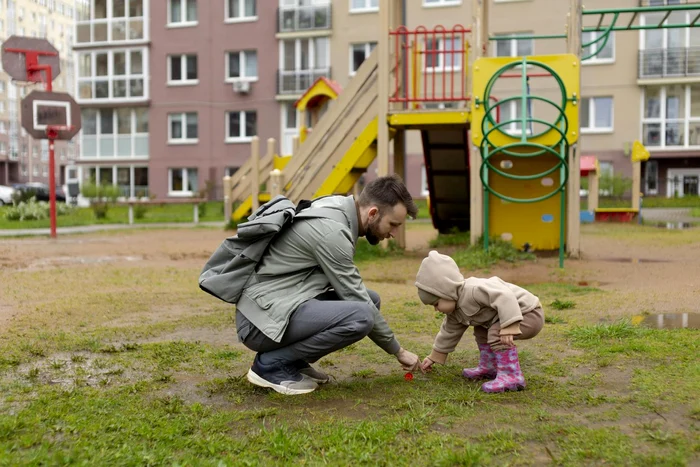
The green areas are essential in the real estate elections of many Romanians. Photo: freepik.com
One of the new tenants demands the misery, chaos and all the disadvantages caused by the developer, along with the lack or insufficiency of green spaces and sidewalks.
“In a new complex it takes about 1-2 years until things are stabilized”, He believes, in a message published on the Reddit platform.
Other Romanians say that the deficiencies of the new neighborhoods could be diminished, if their neighbors behave more civilized.
“My neighbors believe each other main characters just because they have two rooms in the military, taken in installments. Even the last days it was a guy who was crazy to have busy parking and disturbed dozens of people. I came to believe that the communist estates in the old blocks are more good than many young people of 25-35 years,” support a Romanian.
A Romanian says he moved from an old block to a new one and cannot believe how sensitive some of his neighbors are.
“The apartments have been sold in gray, it is normal to be built and renovated. But at 22:01, if a hammer is heard, the WhatsApp group of the tenants is heard. At the weekend, others are disturbed to work at 9 or 10. They would expect to start after 12, or at all, or at all, The ones without a parking place should contribute to the costs of underground parking, that “we do not need”. Tell a Romanian, on Reddit.
A Romanian says that the walls of the new homes are extremely thin and thus feels that he has less privacy.
“I do not like to hear noises when the neighbor from above starts the washing machine, the neighbors who speak loudly on the balcony and are heard in the whole complex. You give a cart of money, you invest in furniture and appliances, and you get to make calculations if it was not better in a communist block. says another Romanian.
Many new neighborhoods are away from the city center
Another Romanian says that the prices of apartments in the new blocks are expensive, and the one he could afford was in an inadequate area for him, from the outskirts of the capital.
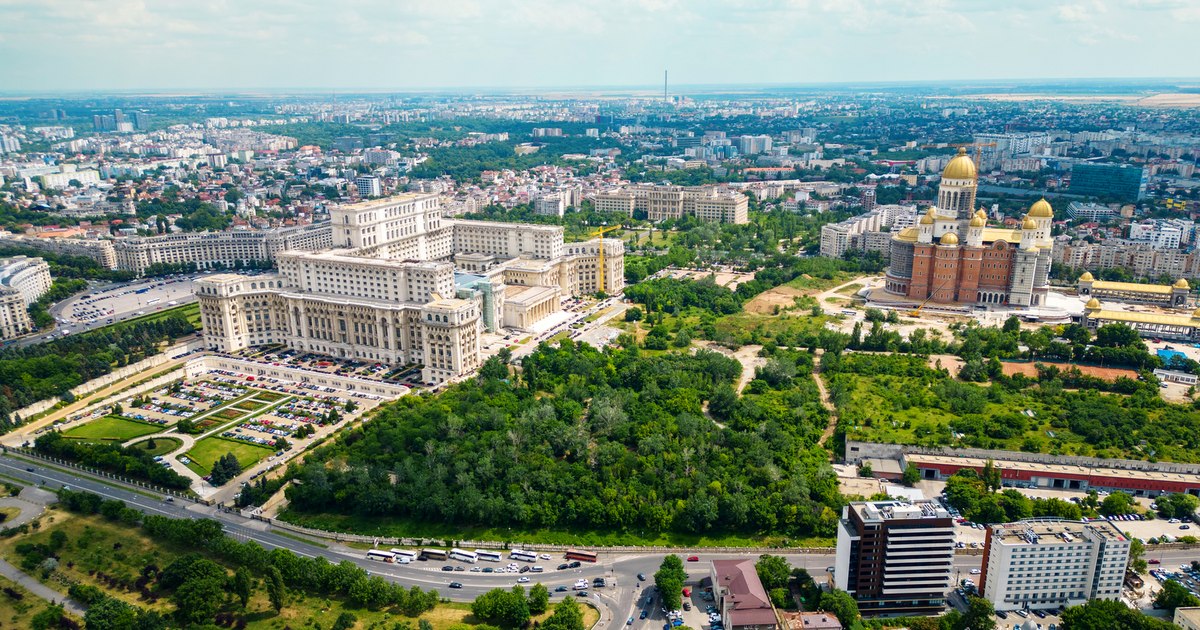
Bucharest, air images. Source: freepik.com
“New blocks, apartments at affordable prices can only find on the outskirts, in Bucharest. This means lack of sidewalks, green spaces, parks, dogs for dogs. You can’t go for a walk. You have nowhere to take your dog. Unpaved.”, He reports.
Many homes are built quickly before, notes another Romanian. This means, according to him: facades that disintegrate after 1-2 years, walls that fall, lack of waterproofing in bathrooms and balconies (which lead to infiltration), expensive finishes placed poorly by workers, non-existent sound insulation.
“Intimacy? Zero. The blocks are too close. And the neighbors, you would say that some are disturbed. Honestly, I begin to believe that it was better in the block with the estates.”he adds.
Another Romanian says that after moving to a new home he came to feel more and more isolated.
“I, since I stay in the new block, on the outskirts, in the Pipera-Voluntari area, I do not leave the house. add it.
Some complain that the price of maintenance is higher than expected.
“In February it was 440 lei: cold water, cleaning, salaries, elevators, gardener”, says a Romanian.
The advantages of purchasing a new apartment
Other Romanians admit that they have no regrets regarding the choice made.
“The block, although with many apartments, is very clean and quiet. It is very well insulated, I rarely start the central and I set it on 21 degrees. The maintenance does not jump 150-200 lei. I also have underground parking”, says one of them.
And other owners motivate their investment on their future. Some say they have their better selling perspectives.
“I chose a new block because, in Bucharest, depending on the neighborhood, there is not a difference between new or old. But I chose to have an apartment built by today’s standards, which will be 20 years old after I pay it, and I will have a better selling perspective than if I took one of the 1980s, which is almost 50 years old, and I will have 70 years,” support a Romanian.
Although they have some dissatisfaction with the new neighborhoods, other owners motivate their choice by claiming that the new homes have included parking, have increased thermal comfort, are modern, better compartmentalized constructions and with new facilities and facilities and have larger and better organized areas.
“As everywhere in Romania, people are sometimes the problem. They do not gather after dogs, leave misery in the elevator, leave bicycles or trolleys on the common spaces.” concludes an owner.
Romanians have migrated to cities since the 1950s
In numerous cities in Romania, the first big blocks of blocks were built after the Second World War, when the communist regime planned industrialization and accelerated urbanization of Romania.
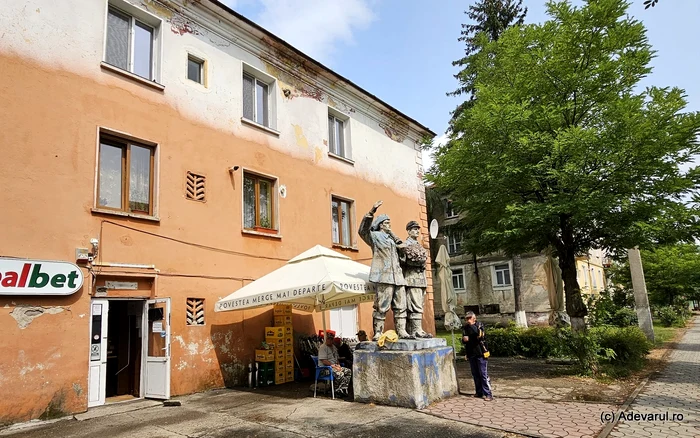
Old, workers’ blocks. Uricani, Huendoara. Photo: Truth
“The ranks of the working class were filled with peasants from villages, some as commuters, but most of them as migrants who settled in cities. In 1948, only 23.4 percent of the population lived in cities, but until 1988 had become urban inhabitants, most of them being born in the country.”The researchers from the Library of the Congress of the United States in the volume “Romania, a study of the country”, edited by Ronald D. Bachman (1947 – 2012) and published in 1991, were not forming the researchers at the volume “Romania”.
Millions of Romanians thus arrived, within four decades, to live in the new blocks raised according to the systematization plans initiated by the communist regime. In the 1950s, the beginning of the migration of the villagers to the new industrial centers, the move to the newly built blocks was viewed with many of the new tenants. They had well -founded reasons for this, the precarious conditions of life in the rural area being made to leave many villages.
“The urges of the war and the subsequent Soviet occupation had left the peasantry on the verge of hunger. Much of the animals and its capital had been destroyed. Their misery was aggravated and more than a severe drought in 1945 and 1946, followed by a hunger that killed thousands. To accept jobs in factories – which perfectly corresponded to the ambitious industrialization program ”the authors of the analysis informed.
In the following decades, other millions of Romanians left the villages to live in the more comfortable blocks. The standard of living was higher in the city than in the country, and the workers had higher revenues than the Romanians remaining in agriculture.
“In the mid -1970s, most rural households had no gas, less than half had electricity and more than a third had no running water. Even in the 1980s, washing machines, refrigerators and TVs were luxury objects, and expenses for them and other non -essential items, as well as for cultural activities, were considerably. They received pensions and allowances for younger children and had much lower educational opportunities ”, The authors of the research “Romania, a study of the country” showed.
Currently, numerous old “communist blocks”, once desired by Romanians, have become deserted.
