
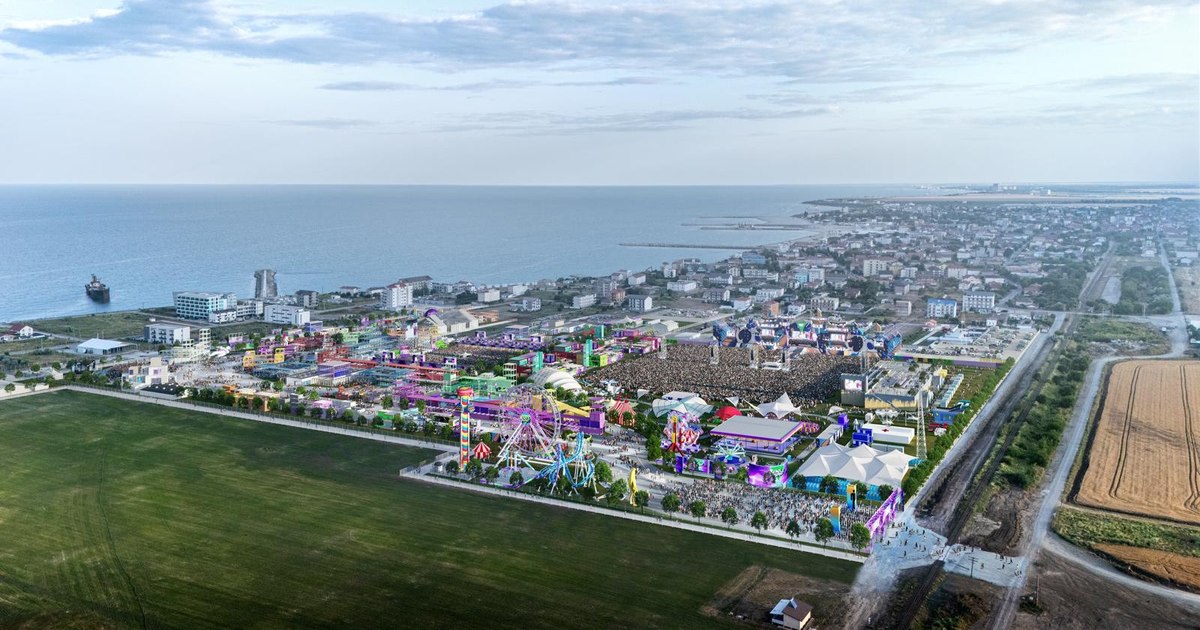
According to the official survey conducted by the National Institute of Statistics (INSE), Romania registered in August 2025 one of the most visible decreases of the last years in the tourism sector.
The data show that the number of tourist arrivals decreased by 4.6%, and the number of nights by 4.8% compared to August 2024.
2.07 million arrivals and 5.09 million nights were reported, which reflects a slight cooling of the public interest towards the classic destinations.
The Romanian tourists, representing over 85% of the total flow, generated a significant decrease (-6.3% on arrivals), while foreign tourists increased by 7.1%, partially compensating the difference.
However, while the national figures indicate a stagnation tendency, the Romanian coast – especially the Constanța -Costinești area – continued to perform above the country’s average, fueled by an unprecedented cultural phenomenon: generation Z.
Constanta remains national leader with over 1.6 million arrivals in eight months
Between January-August 2025, Constanța county registered 1.6 million arrivals and almost 5 million nights, keeping its position of absolute leader of Romanian tourism.
By comparison, Bucharest reported 1.29 million arrivals, and Brașov 924,000.
This performance is all the more relevant as it is in a general decrease context: overall, Romania has lost almost 170,000 tourists in the first eight months of the year.
The coast, on the other hand, managed to maintain a high degree of employment in full season, supported by two growth engines: major cultural events and private investments in infrastructure and entertainment.
The Beach phenomenon, please! – When a festival becomes a tourism strategy
With over 200,000 participants in the 2025 edition, Beach, please! It is no longer just a musical event-it is a case study on how a digital community turns into a real economy.
The economic impact of the festival was estimated at over 60 million euros, including accommodation, transport, consumption and retail.
In a single week, the flow of tourists generated by the festival was equivalent to over 10% of the total arrivals of August.
For Costinești, the festival became the catalyst for a deeper transformation: a resort that is repositioned from the “capital of the fun of young people” in a laboratory of creative and sustainable tourism.
“Beach, you showed that new generations do not come to the sea only for the sun and beach, but for the community, for experience and for the feeling of belonging. This is the new currency of tourism.” – The Nibiru team
Nibiru – the private investment that rewrite the map of the coast
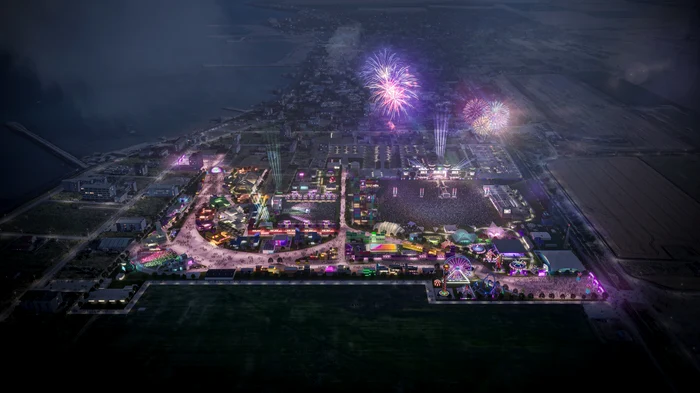
With an initial investment of 50 million euros, on a total area of 160 hectares between Costinești and Tuzla, Nibiru promises to become the first seasonal city of the creative economy in Eastern Europe.
The project includes a venue for 150,000 spectators, an outdoor nightclub for 30,000 people, an open-air mall, amusement park, fashion area and cultural spaces.
The opening is planned for summer 2026, and the estimates indicate a potential of 3 million visitors, with a daily traffic of 50,000 people during peak periods.
By comparison, in 2025, the entire tourist accommodation capacity in Romania had an average degree of use of 43.5%, decreasing by 3.1 percentage points compared to the previous year.
The Nibiru model relies precisely on the reversal of this trend – through events, brands and experiences that attract constant flow of tourists, not only on weekends or in August.
“What we build with Nibiru is not only a place, but a cultural infrastructure that offers Romania a new form of relevance. If in the 1980s Costinesti was the symbol of freedom, today it becomes the symbol of innovation.” – The Nibiru team
Conclusion: The future of Romanian tourism is written at the seaside
In a year in which almost all the tourist figures are on the minus, the coast remains on the plus.
Constanta strengthens its role as a leader, and Costinești is transformed into experimentation and creativity pole.
Which seemed like a simple cultural movement-a festival born of social media-turned into a real engine of economic development.
And with Nibiru, Romania takes a strategic step towards a new model of tourism: the one based on culture, community and intelligent private investments
