
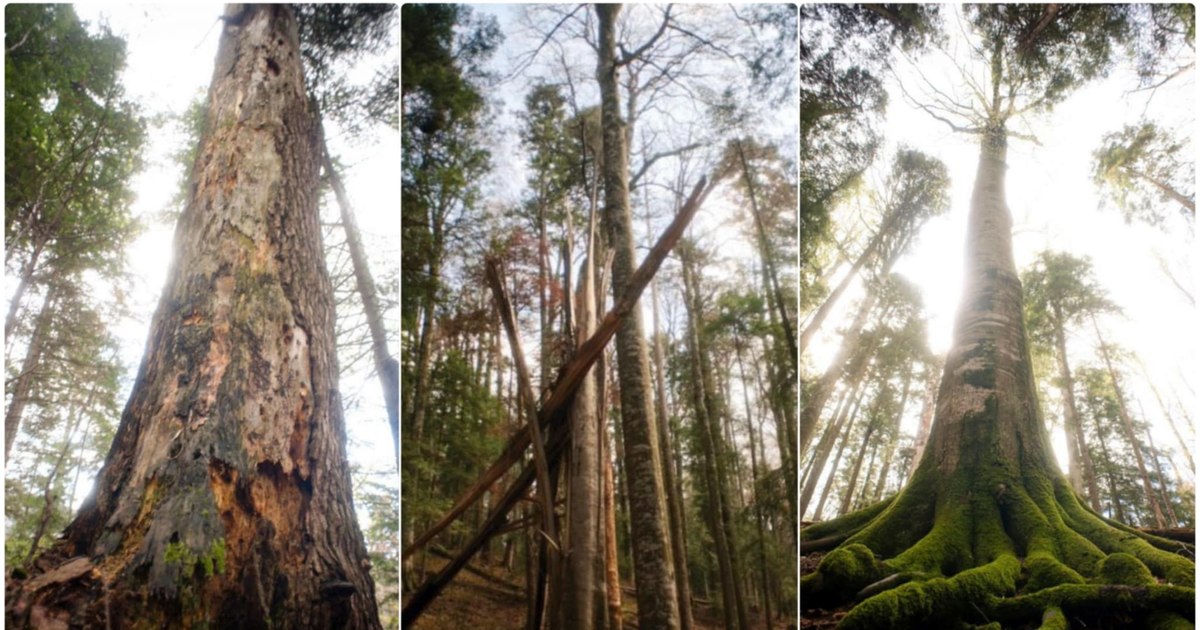
Romania has retained thousands of hectares of secular forests, untouched by people, with trees reached over half a century and unusual dimensions. The secret of their resistance was not due to people.
Șinca secular code. Source: “The virgin beech forests in the Carpathians and other regions of Europe”
Less than one third of the Romanian surface is covered with forests, but, according to specialists, large forest areas were classified as virgin and quasi -virgin forests – true sanctuaries of the wild. The relief played an essential role in protecting the most valuable forests in Romania.
Dacia, covered by forests
Two millennia ago, almost 80 percent of the current area of the country was forested, historians say. The forest covered not only the Carpathian and sub-Carpathian regions, but also a large part of the plains, giving ancient inhabitants food and shelter.
“Transylvania, whose name implies the very existence of the large forests that separated it from the vast plain of the Danube and Tisa, Moldova, where the huge codri covered the hills and descended until the sire and Prut, Muntenia or the Romanian Country, where, except for Bărăganului and the steppe, only to the country, to the country, The forest, with the huge codes. note the historian Constantin C. Giurescu in the volume “History of the Romanian Forest”.
The forested surface of Romania gradually reduced
The Romans would have initiated the first intense forestry, and from the beginning of the second century to the 20th century, the surface of the forests has been constantly decreasing.
“This vegetation has degenerated to this day or even disappeared. The cause should not be sought in a natural cataclysm, but only in devastating exploitations,” the researcher Ion Florescu said in the “Forest Magazine”.
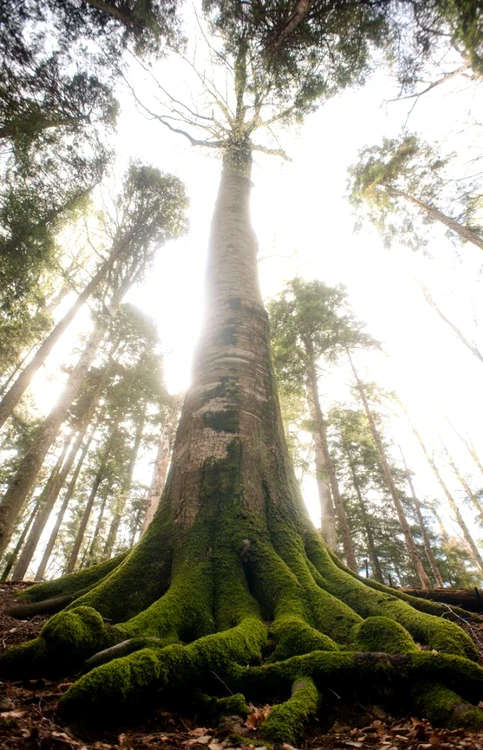
Șinca secular code. Source: “The virgin beech forests in the Carpathians and other regions of Europe”
Currently, less than 30 percent of the surface of Romania is forested, a percentage that places the country below the European average. Instead, Romania occupies an honorable place in Europe in terms of virgin and quasi -virgin forests, forest ecosystems that have never been significantly modified by human activity. In this chapter, Romania is exceeded only by Finland, Sweden and Russia.
“At the end of the nineteenth century, in Romania there were about 20,000 square kilometers (ie 2,000,000 hectares) of virgin forests, and in Slovakia, thousands of square kilometers. Recently, but due to the introduction of modern forestry technologies, the large-scale destruction of many previously unattaining. About 2,000 square kilometers (200,000 hectares), but still exploit them, legally and illegally ”estimate virginforests.eu, a site dedicated to virgin forests in Europe, based on scientific research.
Relief and isolation saved the secular forests
In the most recent edition of the Catalog of Virgin and Quasivirgin Forests, published in 2023, by the Ministry of Environment, Waters and Forests, over 72,000 hectares of virgin and quasi -virgin forests were registered, increasing the previous years.
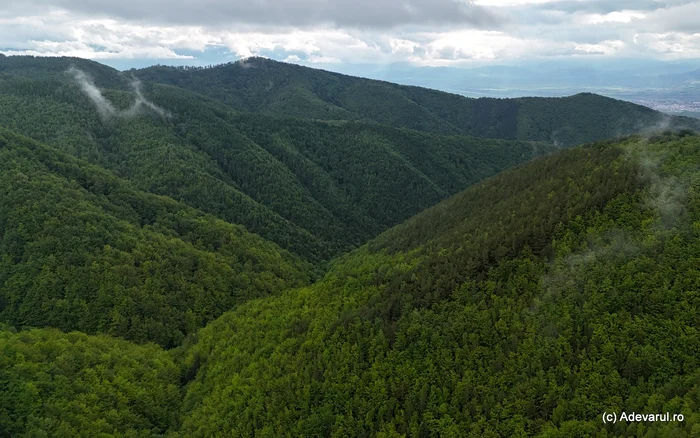
Mountains completely covered by forests. Photo: Daniel Guță. TRUTH
The largest areas of untouched forests are currently included in the national and natural parks of Romania, and the legislation provides for strict rules for their exploitation. In the past, however, valuable forests could be kept for other reasons. One of these was the rough terrain in which they were.
The steep slopes and the lack of forest roads have almost impossible to cut the trees. In other regions of Romania, the weak popular of the settlements around them has contributed to the protection of ecosystems. Other forests have been kept in good conditions to be used as hunting areas and, more recently, as is the case with the Gemenele Reserve Reserve as a scientific reserves.
Half -millennium trees in Șinca forest
The Șinca secular code, from the east of the Făgăraș Massif (Southern Carpathians) covers an area of about 330 hectares and is one of the most representative virgin beech forests in Romania.
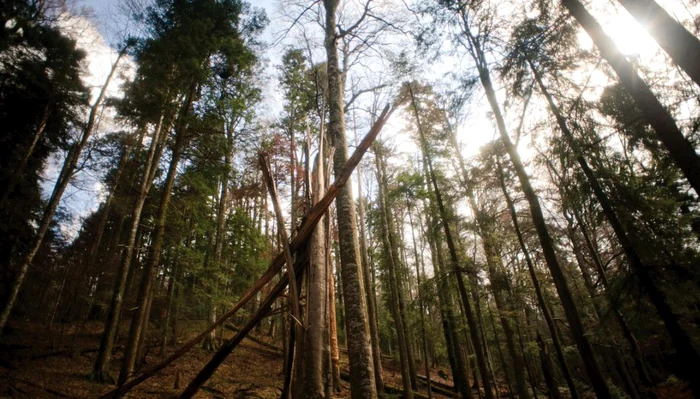
Șinca Forest. Source: “Virgin forests in the Carpathians and Europe”
“This forest is located in a natural mosaic that includes secular specimens. The frequency of trees that exceed 350–400 (up to 500) in the case of beech and 400–500 years in the case of the silver fir tree is remarkable, reaching the limits of the physiological longevity, when it starts to dry,” It is shown in the study “The virgin beech forests in the Carpathians and other regions of Europe”, the name of the natural site registered in the UNESCO World Heritage, which includes the best preserved beech forests in Europe.
The forest is famous for the impressive dimensions of the trees: the highest silver fir in Romania was measured here, 62.5 meters, and the highest beech in Europe, 55.1 meters.
Secular cods host an exceptional biodiversity, with rare and protected species, such as wolf, brown bear, laughter, black goat, mountain coconut, small eagle, as well as various species of amphibians, reptiles and orchids. Although it was nationalized during the communist period, the forest of Șinca village was bypassed by exploitations. After the 1989 revolution, it was returned to Șinca village.
The largest secular forests in Romania
In the Banat Mountains, the virgin forests cover almost 20,000 hectares, being concentrated in the Domogled Natural Park – Cernei Valley and Cheile Nerei – Beușnița National Park.
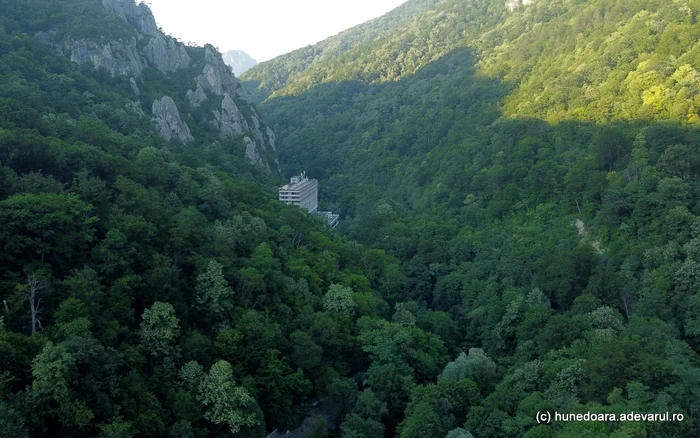
Cerna Valley. Photo: Daniel Guță. TRUTH
Half of this area can be found in the region of Cerna Valley, inhabited since ancient times and known for the Băile Herculane resort, founded at the beginning of the second century by Emperor Trajan. Until 1880, the forests on the Cerna Valley were owned by the Austro-Hungarian administration, and after 1918 they were taken over by the Romanian state, being managed by the Autonomous House of State Forests.
“Due to the steep and rocky slopes of the Cerna Valley, the area remained poorly populated, and most of the forests remained inaccessible, in the absence of roads. In 1932, the Muntele Domogled reserve was established, one of the first nature reserves in Romania. After the nationalization of the forests of 1948, they became a state property”, ” coordinated by the Institute of Ecology in Austria.
Nerei’s keys, with half -shaped trees
Another 10,000 hectares of virgin forests are found in the Banat Mountains, in the Cheile Nerei Beușnița area and the springs of Nera. The forest massif Cheile Nerei – Beușnița is considered one of the largest and well -preserved virgin forests in temperate Europe.
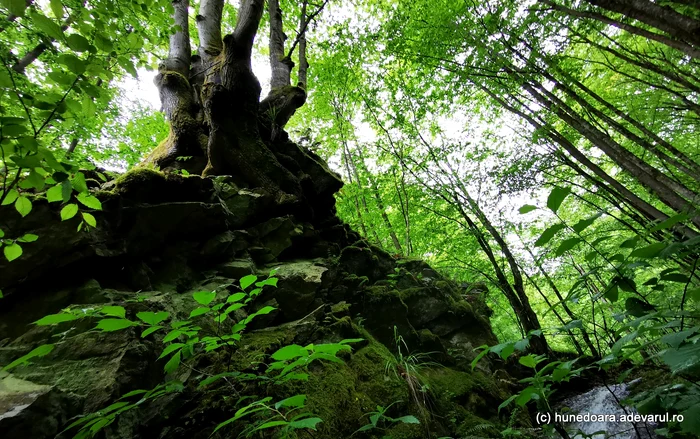
Forest. Photo: Daniel Guță. TRUTH
“Spread areas of beech forest in the Banat Mountains (southwest of Romania) remained untouched for millennia. In the Middle Ages, the first minor human impacts were generated by the inhabitants of the Middle Basin of Nera (Valea Almajului). Most forests were managed according to the Austrian forest system” “shows the same report.
Several areas of the middle basin of the Nera river have been exploited in recent decades and have gradually lost their natural character. In contrast, in the center of the Cheile Nerei Reserve, at an altitude of 1,000 meters, 16 trees over 350 years and 8 trees over 400 years per hectare were identified, the oldest being 477.
