
The Ciolacu government managed to adopt part of the reforms assumed until the middle of the term, but also to avoid major disputes between the two parties, but it still has a long list of reforms to fulfill.
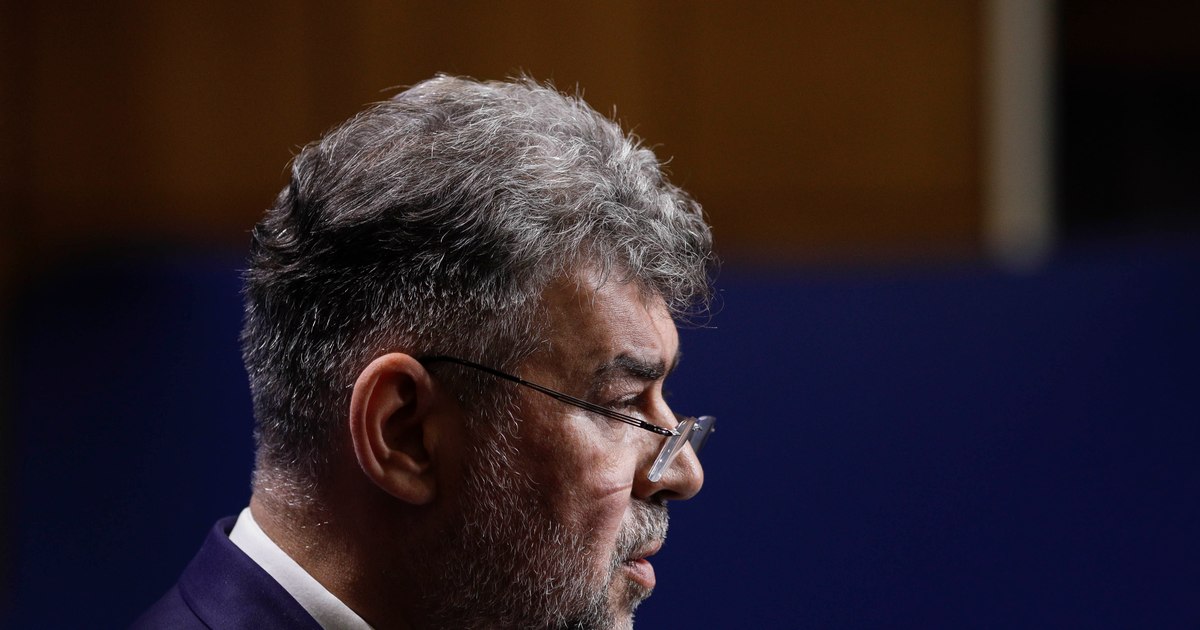
And the Ciolacu Government refrained from coming with partial elections PHOTO: Inquam Photos / Octav Ganea
Coming in a difficult context, i.e. right after the teachers' strike, Marcel Ciolacu managed to calm the situation both at the level of the Coalition, in the conditions where the UDMR was half removed from the government (that is, it was left without ministers and part of the secretaries of state), but also at the social level, preventing the cascading protests of those who are still waiting for the new wage law.
Among the reforms that the new Executive managed to pass through Parliament, one was the moderate law on special pensions, where, in fact, it did not eliminate the incomes of any of the socio-professional categories in the law, it only decreased them. The Government also passed the reform of public pensions, according to which a substantial increase should be in September, after a 13.8% increase on January 1. Also in the category of checked laws was the one related to the ban on the sale of energy drinks to minors, as well as electronic cigarettes or other vaping devices.
Government and Coalition arrears
Although it should have been ready by the end of July, the Government still does not have a draft of the new wage law, a project generating great tensions, in which all socio-professional categories want to have income as much as possible high, but the Executive must tighten the belt and limit increases to a maximum of 20% of the salary. In fact, even these days the Government is in the clarification stage regarding the payment request number three of the PNRR, in order to unlock a new installment of money.
Also, the Government has not come up with any solution related to the prohibition or voluntary waiver of the cumulation of the pension with the state salary, given that the CCR came up with a decision of unconstitutionality regarding the measure adopted last summer by the Parliament. The governors could have come up with a surgical solution to the problem, by replacing those secretaries of state who are also special pensioners, but the Executive chose to bypass the problem.
The step in place is also being taken with regard to the professionalization of state companies or directorates, by appointing with four-year mandate contracts, not temporary mandates, of 5-7 months each, which can be terminated at any time, at the will of the political factor.
At the parliamentary level, the Coalition is moving forward with regard to the project that declares war on snack bars in the center of cities or near schools, where the project with the greatest chance of success is the one assumed by Alfred Simonis and several PSD elected officials, by which they are removed to the outskirts of the towns and the licensing conditions are much tougher. Adopted on September 5 by the Senate, the initiative is still in committee at the Chamber of Deputies.
The draft law also reached the Chamber of Deputies by which micro-enterprises receive a 3% bonus from the income tax, if they have made the quarterly due payment in advance. The 3% of the bonus will be used by the beneficiary for new investments. The legislative initiative is assumed by the president of the PNL, Nicolae Ciucă, but also by his other colleagues.
Only two departures from the Government
The new Executive faced problems only in the first weeks. Following the scandal generated by the “asylums of horror”, Marius Budăi (Minister of Labor, on July 13) and Gabriela Firea (July 14) left the government team. Instead, the problems came from the echelon in the territory, where from both the PSD and the PNL, some leaders face criminal problems. For example, at PSD, Dumitru Buzatu, a veteran from the headship of CJ Vaslui, is still in custody, while at PNL, Iulian Dumitrescu, at the helm of CJ Prahova, is also under judicial control.
Also on the political level, the two parties managed to get along without major disputes to run together in the European parliamentary elections on June 9, when the local elections will also be held. And the Ciolacu Government, like the Ciucă Executive, refrained from coming with partial elections, which could have taken place until the end of September, but now they have overtaken the local ones.
Last but not least, at the parliamentary level, the Ciolacu Government is supported by a wide support, still having the Group of Minorities with it, but most of the time it also has with it the party led by Kelemen Hunor, UDMR. The union, officially removed from government, kept its prefectures and sub-prefectures, but also certain positions from other institutions, including a secretary of state for Finance and one for Education.
