
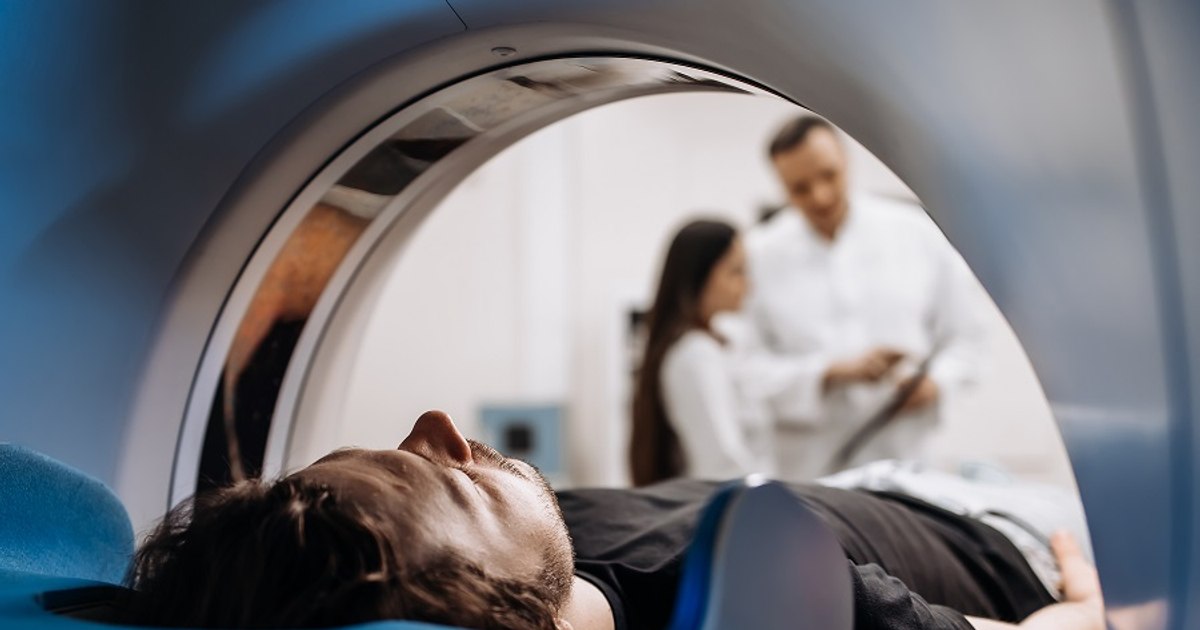
One of the major concerns of patients on medical imaging investigations is radiation exposure. Advanced technologies, however, allow the substantial reduction of exposure without compromising the quality of images, and one of the most promising innovations in this regard is low dose technology.
What are the benefits offered by low dose technology photo source of the Regina Maria Health Network
At the interviews Adevărul, Dr. Andru Lamasz, primary radiology and medical imaging doctor at Regina Maria, explains how this technology works and what impact it has on patients.
Balance between low radiation dose and a correct diagnosis
When imaging investigations are recommended, the main concern is to protect the patient from radiation exposure and obtain the best images to establish a precise diagnosis. In the case of patients who have the indication of repeated investigations, children, pregnant women and people with chronic conditions, for example, computerized tomography (CT) offers essential details, but the radiation dose remains a sensitive subject.
At this moment, the integration of intelligent algorithms, state -of -the -art imaging systems and optimized protocols are gathered in new technology – low dose to protect the patient and delivery of efficient information for clear and safe diagnoses.
Low Dose is already used successfully in the Regina Maria’s health network, and Dr. Andru Lamasz, primary radiology and medical imaging doctor detailing in the interviews Adevărul how new technology works and who are the patients who benefit from it:
“Low-Dose means a low dose of radiation, applied on CT (Computer Tomograph). With the help of artificial intelligence, the resulting images are good enough to interpret them and establish the correct diagnosis. The dose can decrease from 30% to 60%, in a standard CT – so we are talking about a significant decrease. Chronic children and patients, who come very often to the imaging and who are exposed to constant radiation through the investigations, benefit from a reduction of the radiation dose of almost 50%, at each intervention. Imagine what benefit they have. ”
Low Dose is already used successfully in Regina Maria’s health network
Low Dose technology is used mainly for patients with lung cancer, for the evaluation of pulmonary microdou and their evolution over time. The technology is also used in the investigation of certain conditions of the sinuses of the face.
“We rarely use low dose at the abdominal level, because this area, if you drop too much dose, can no longer be considered a correct interpretation. Technology is used carefully only for pregnant women. If it is a medical or surgical emergency, obviously CT is done, but otherwise the procedure is avoided ”, emphasizes Dr. Lamasz.
The protocol plays an important role in the most correct interpretation of the images, which is why it must be followed by the doctor.
Dr. Andru Lamasz warns “”to the parameters to which it must be walked and it is important to be as correct as possible the balance between reducing the dose and the resulting images. It depends a lot on the patient’s weight. Obviously you reduce the radiation dose much easier to a supple patient, everything adapts to each patient. “
Regina Maria’s health network successfully uses artificial intelligence in imaging investigations
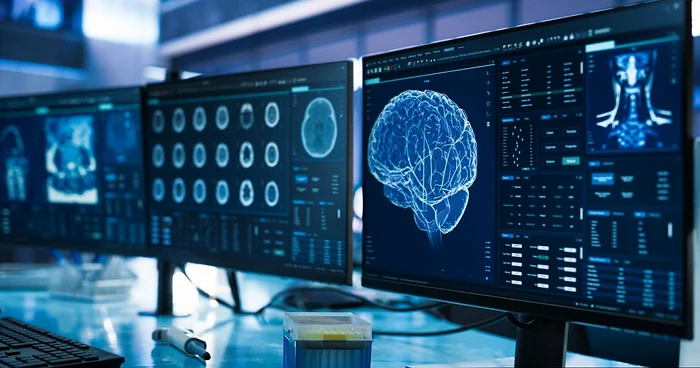
In addition to the low-dose technology applied to the Computer Tomograph to reduce radiation, Regina Maria is also used modules implemented on the MRI, which greatly make the work of the doctors. One of these provides effective results in the neurological area. Here is what Dr. Andru Lamasz, primary radiology and medical imaging, says:
“We have modules on neuro-imagistic that help us to capture brain tumors more easily and calculate their volume, but also modules that help us a lot in patients with multiple sclerosis. Manually count these lesions is very difficult, but the AI does this in a second, by generating a written report that you see all this data. It can see aneurysms, even the little ones. The AI automatically calculates the volume, not only of the entire brain, which due to the very irregular shape, is impossible to calculate manually. But artificial intelligence also captures many important structures inside the brain that they automatically calculate. “
Dr. Andru Lamasz believes that artificial intelligence in medicine is the help of the doctor and the patient. With these modules the diagnosis is made quick and clear, and the treatment is adjusted on these results.
“The AI helps and efficients the work of doctors. For example, in the case of a prostate cancer, depending on the score we offer for interpretation, the doctor decides whether or not she recommends, then the appropriate treatment is established ”, mentions the doctor.
It follows the integral edition of the Interviews Adevărul and finds from Dr. Andru Lamasz, primary radiology and medical imaging doctor, at Regina Maria, how new AI -based technology works and how innovations in medicine in saving lives. Take the pulse of health and discover health strategies.
Article supported by Regina Maria’s health network
