
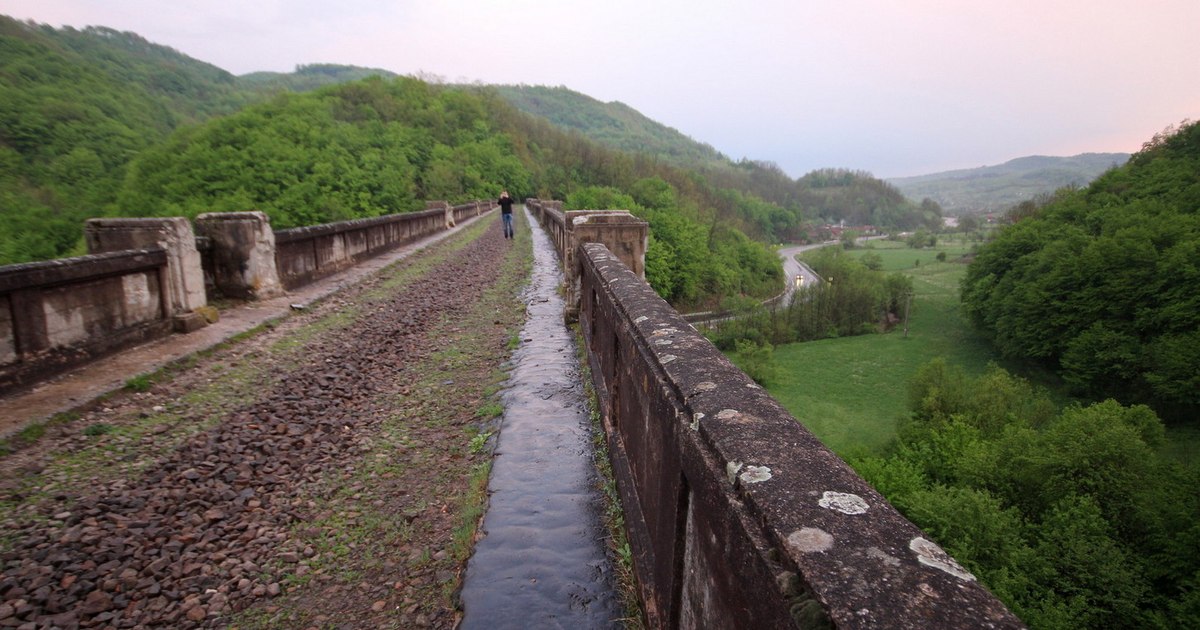
Numerous railways in Romania have remained abandoned for several years, without the authorities looking for solutions for their reactivation. In Europe, thousands of kilometers of disused railways have become green corridors for hikers and cyclists.
Almost 1,000 kilometers of standard and narrow gauge railways (forestry, mining or industrial railways) were decommissioned after 1990, but after the closure of the railways, many of their routes were bypassed by conversions.
Some of the former closed railway routes cross areas with tourism potential. They were built since the 19th century or in the first part of the 20th century, in picturesque mountain regions, to facilitate communication and transport, but also in support of the mining industry developed in these areas or for forest exploitation.
Over time, the old railways diminished their economic importance, in areas affected by industrial decline, while road transport became more accessible to the locals. The closure of many railway segments was often followed by the removal of rolling stock, installations and metal structures, the dismantling of bridges and viaducts and the abandonment of former stops.
Their embankment, sometimes covered with sleepers, could not be removed, but the plans for the conversion of the former railway routes encountered numerous obstacles.
The Metaliferi railway, spectacular but abandoned
In 1997, a landslide caused by torrential rains led to the closure of traffic on the Deva – Brad railway, which crosses the Metaliferi Mountains (Apuseni), connecting the Crișului and Mureșului valleys, on a route of about 40 kilometers.
The line, which crosses 11 large viaducts, over 30 bridges and footbridges and four tunnels, was decommissioned in later years along most of its route, but its embankment was still used by local people, in some parts as a footpath, in others as a dirt road. The rest of the route was covered by wild vegetation.
In 2021, the authorities of Brad and the communes crossed by the former railway requested the Government to take over the administration of the route in order to be transformed into a bicycle path that would attract tourists to the area. The bill responding to their request was, however, declared unconstitutional a year later.
“According to the specifications in the document sent by the Ministry of Transport and Infrastructure, the transfer of the lands related to the railway line Păuliș Lunca – Brad (disused) from the public domain of the state to the public domain of the localities of Brad, Luncoiu de Jos, Șoimuş, Băița and Vălișoara will be able to be carried out after the preparation of documentation by the authorities of the five localities that intend to introduce the disused railway into the tourist circuit”, then inform the Hunedoara County Prefecture.
Without being landscaped, a 4-5 kilometer segment of the former railway arouses the interest of hiking enthusiasts. It connects the railway station in Brad, a period building from the end of the 19th century, to the stone Luncoiu viaduct, built in the 1940s, 25 meters above the picturesque valley on the edge of the municipality.
The railway from the Crișului Negru valley, proposed as a bicycle route
The Oradea Est – Vascău railway, 105 kilometers long, was built on the Crișului Negru valley at the end of the 19th century, being used for the transport of wood, marble, stone and ore from the area of Beiuș and the Bihor Mountains to Oradea. At the same time, there was a commuter train that connected the villages of Crișana to the city in northwestern Romania, on a winding but spectacular route.
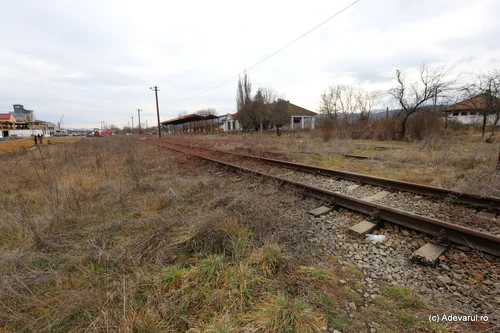
Until 2020, the railway that passed through Oradea, Băile Felix, Beiuș, Ștei and Vașcau was closed, but in 2025 the Bihor authorities proposed taking over a 40-kilometer section, in order to develop it as a bicycle path. The project aimed at the Cordău – Holod route, decommissioned since 1999, sparked heated debates in the Bihor community. Some locals encouraged its conversion, but others opposed it, demanding the reactivation of the railway route and, possibly, the construction of a bicycle path parallel to it.
The forgotten stations of the former rack railway. What was chosen for the line that connected the historical regions of Transylvania and Banat
The former railway from the Iron Gates of Transylvania, on Via Transilvanica
In Hunedoara, the most spectacular section of the former railway Hațeg (Subcetate) – Caransebeș, inaugurated in 1908, was set up as a hiking trail, part of Via Transilvanica. The former railway section between Sarmizegetusa and Bouțari, 12 kilometers long, was decommissioned in 1978.
It was famous because, due to the high slope of the route in the area of the “Iron Gates of Transylvania” crossing, the railway was equipped with a rack, a complex installation that helped the locomotives, also equipped with a set of special wheels, to go up and down the slopes.
Foresters’ railway, difficult hiking route
In Hunedoara, the route of the former mining railway, which connected the city to the mines of Ghelari and the villages of the foresters, remained undeveloped two decades after the decommissioning of the approximately 16-kilometer line. The former railway was inaugurated in 1900 and represents one of the most spectacular mountain railway routes.
Although it has no longer preserved its lines and some of its period bridges, the route is sought after by hiking enthusiasts, its attraction being a tunnel of almost 800 meters, which connects the picturesque valley of Zlaști with the valley of Govâjdia, where trains ran above the gorge, under steep cliffs.
The foresters’ railway has also remained a special place for many residents of Hunedoara, who participate in hiking along its route. In some areas, however, the route is difficult to follow, due to the vegetation covering the embankment and the removal of the metal bridges of the past.
The railway station of the city of Lugoj, rebuilt from the ground up, after 150 years since the inauguration of the “Banat highway”
20,000 kilometers of railways became cycle paths
The European Greenways Association, an organization that promotes and supports greenways, estimates that there are around 30,000 kilometers of greenways in Europe, of which around 20,000 kilometers are laid out on former railway lines, representing only about 20 percent of all disused railways.
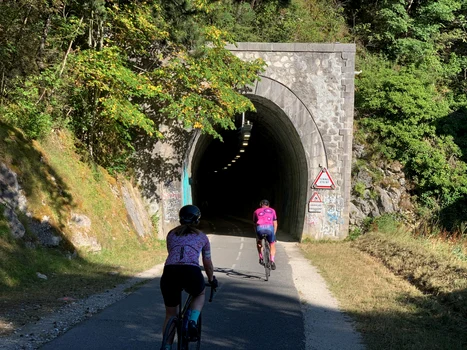
“This highlights significant potential for future developments,” notes the organization founded in 1998, which gathered members from 17 European countries.
According to the European Greenways Association, in Spain, 3,500 kilometers of former railway lines have been converted into green routes, out of a total of 7,600 kilometers. In Wallonia, Belgium, the RAVeL network comprises more than 1,515 kilometers of routes reserved for pedestrians, cyclists, horse riders and people with reduced mobility, of which around 700 kilometers are laid out on former railway lines. In Portugal, more than 500 kilometers of green routes, known as Ecopistas, are currently in use, out of a total of 1,000 kilometers of abandoned railways. “The Portuguese program, coordinated by IP Património, emphasizes the preservation of railway heritage, including historic stations decorated with the famous Portuguese azulejos,” the organization reports.
Many Romanians who are passionate about cycling also showed their enthusiasm for the former railway routes in Europe designed for cyclists, publishing on social media pages, such as Reddit, images of the spectacular places returned to the tourist circuit.
