
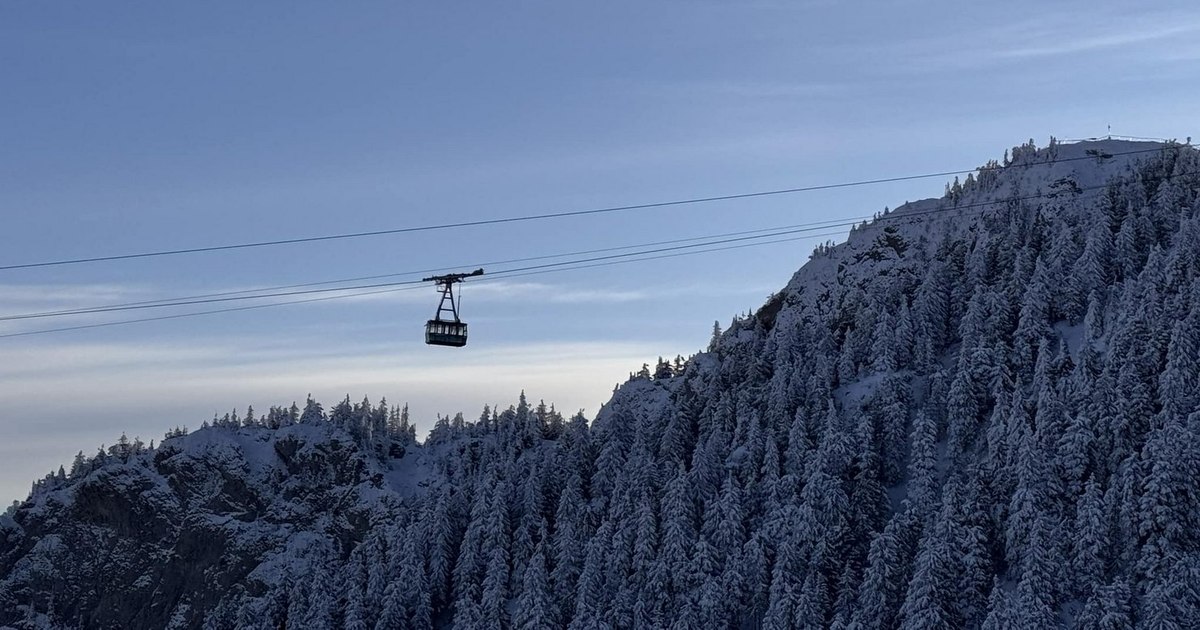
Five and a half decades after the inauguration of the first cable cars in Romania, only a few mountain resorts and cities benefit from such facilities, in a country where the number of localities declared resorts exceeds 200.
Romania has over 200 localities declared resorts of national or local interest, but only a few benefit from a modern tourist infrastructure. The construction of cable cars was a priority investment in the resorts in the 70s, and since then date the oldest, but still used, transport facilities for groups in Romania.
Cable cars with equipment from Italy
The story of the first cable cars for tourists built in Romania began in 1970, and over time the transportation facilities built in several mountain resorts and cities in Romania played an important role in transforming these places into major tourist attractions.
The oldest cable car in Romania was built in Brașov, in 14 months, and was inaugurated in the summer of 1970. The cable car, modern for that time, had a transport capacity of 20 people and connected Brașov to the summit of Tâmpa, through a cable of almost 700 meters, which connected the starting and finishing stations, located at a difference in level of 320 meters, without intermediate pillars.
“We arrived at Tâmpa on a new aerial tourist road, made in Brașov, towards the ridge guarding the old citadel. The time we covered this distance: 2 minutes and 15 seconds. The machines and aggregates of the cable car were delivered by an Italian company. The only one of its kind in our country, the cable car on Tâmpa opens a new aerial tourist route, which will serve tourists, as well as visitors to the tourist complex that will raised to this level. Many young people from the country, located in the rest camps of Brașov county, also contributed to its achievement. informed the newspaper Scânteia Tineretului, in August 1970.
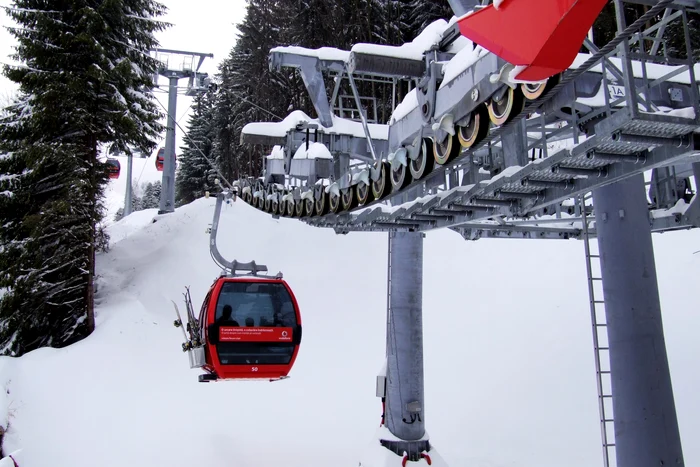
In February 1971, the first section of the cable car in Sinaia was inaugurated, between the resort on Valea Prahovai and its recreation area at Cota 1400. The second segment of the installation, between Cota 1400 and Vârful cu Dor, located at over 2,000 meters, was put into use in May 1971. The cable car in Sinaia had a maximum transport capacity of 40 people on the first section and 30 people on the alpine section, the total duration of the climb being approximately 12 minutes.
“The execution of the cable cars in Sinaia lasted 26 months. Here, five metal pylons were mounted, with heights between 28 and 58 meters, the maximum opening of the cable between two pylons being 1,470 meters. For all these works, for which the technical and assembly project, the machinery and technological equipment, as well as the cables were provided by the Italian company Ceretti e Tanfani, the execution projects of the structure of resistance were developed in the country”informs, in January 1971, the engineer Dan Nicolescu, technical director of the Bucharest Mining Construction and Installation Trust, which built the cable cars in Brașov and Sinaia.
According to the specialist, the two cable cars in Sinaia and Brașov were built on the “go-te-vino” principle, with two independent carrying cables, anchored at the top and stretched at the bottom by concrete counterweights. “This system, which eliminates any mechanical operation of coupling and uncoupling the cable-carrying devices, is very safe to operate and the most widely used in the world,” add this one.
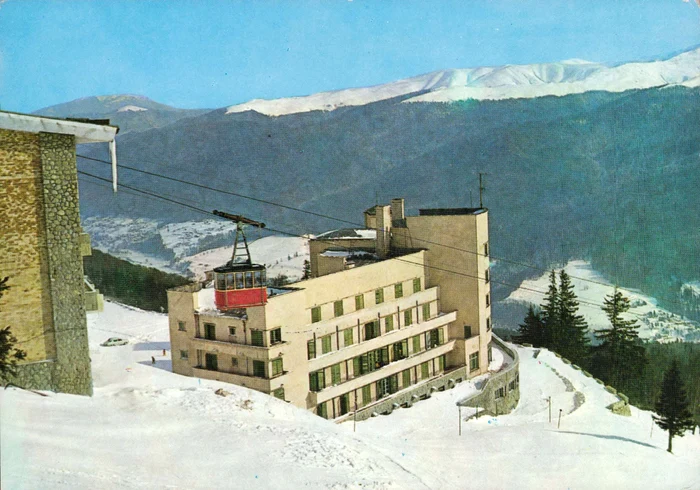
Also in February 1971, the cable car in Poiana Brașov was inaugurated, built by Trust 5 and Enterprise 10 Instalății Brașov, in cooperation with an Italian company.
“The new cable car, equipped with two cabins, with a capacity of 31 people each, moves from the “Teleferic” hotel to the Cristian peak, over a distance of 2,449 meters, with a speed of 7.5 meters per second. The difference in level between the two stations is 693 meters, the gauge is 7.5 meters, and the cabins and the cable run along three pillars of support”, informed the local newspaper Drum Nou, in February 1971.
The most spectacular cable cars, in Făgăraș and Bucegi
Meanwhile, two other cable cars for tourists entered the construction site, in the Bușteni resort and in the Făgăraș Mountains.
The mountain road that crosses the Carpathians through the Bâlea caldera in the Făgăraș Mountains, climbing up to 2,042 meters, near Lake Bâlea, was inaugurated in September 1974, the works in the alpine area, its most difficult, being spread over four years. From the beginning, the authorities have planned the transformation of the alpine area of Făgăraș into a tourist area, accessible in winter with the help of a cable car. It was inaugurated in the fall of 1976.
“The new cable car is equipped with two cabins and connects Lake Bâlea with the waterfall of the same name, being the largest in our country, with a length of 3,610 meters. The road it crosses, in about 7 minutes, offers a beautiful view of the Bâlea waterfall and Transfăgărășan”informed Romania Liberă, in October 1976.
In 1978, a new cable car was inaugurated with a spectacular route, the third in Bucegi, connecting the Bușteni resort with the Babele cabin, located at an altitude of 2,187 meters.
“The Bușteni-Babele cable car represents a highly technical work, being the longest route completed up to that time in the country: 4,350 meters, with a difference in level of 1,237 meters. The work was carried out by the skilled builders of the Brașov construction site group, within the Bucharest Mining Construction and Installation Company. The cable car covers the distance to Babele in only 11 minutes. The cable car has a capacity of 35 seats and operates in full security conditions”, informed Ion Furtună, the director of the Brașov Cable Transport Company.
Another cable installation then in the construction site was to continue the route from the Bucegi plateau, between Babele and Peștera. Investments in mountain tourism declined in the 1980s, and the construction of gondolas, planned in several mountain resorts, stagnated. In recent years, several other resorts and cities have benefited from such investments, among them Mamaia, Piatra Neamț, Azuga, Pasul Vâlcan, Deva and Straja.
