
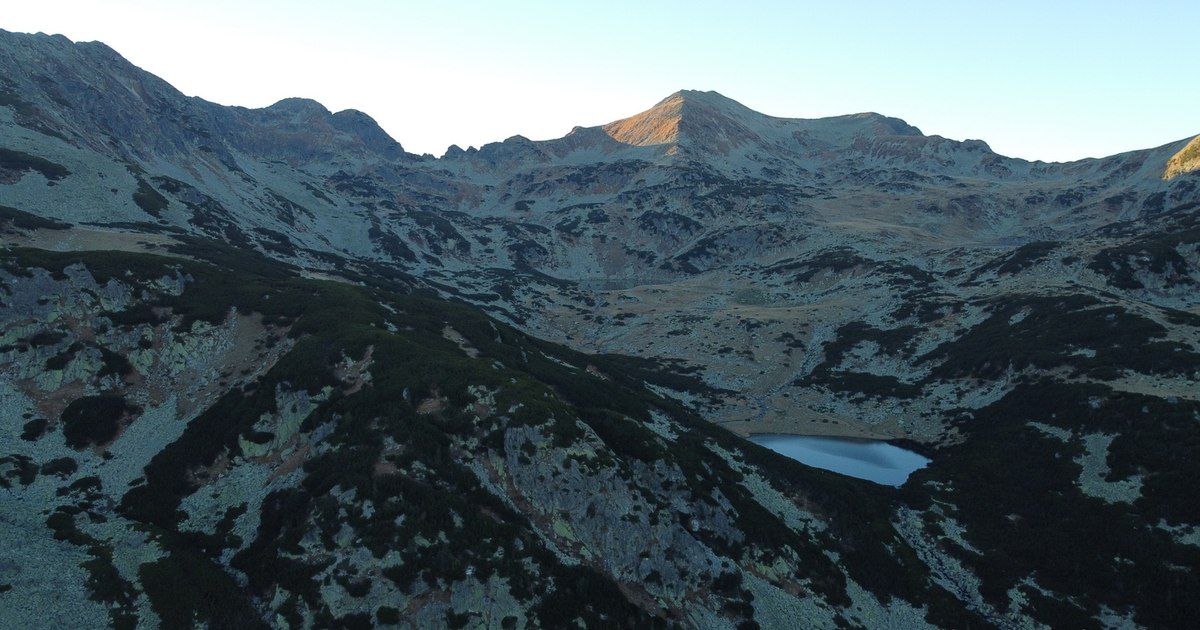
Retezatul, the first national park established in Romania, has celebrated 90 years of existence. Old hunting field of noble families, the land of secular forests and glacial lakes has become one of the most precious reserves of nature in Romania.
The ridges of the Retezat Mountains. Photo: Daniel Guță. TRUTH
The scientist Alexandru Borza (1887-1971) recognized as a pioneer of nature protection in Romania, had among the greatest merits in the establishment of the Retezat National Park, on March 22, 1935, by a decision of the Council of Ministers of Romania.
Alexandru Borza, the scientist who fought for Retezat
His efforts were long. After in 1920, he founded the Botanical Garden in Cluj-Napoca, Professor Alexandru Borza, supported by other scientists such as Andrei Popovici Bâznoşanu and Emil Racoviţă, but also by the Romanian naturalists society focused in the next years on the establishment of national parks, where the Romanian state will legislate.
“People everywhere and all the ages have been eagly to the aesthetic and scientific treasures of nature, thinking only of the exploitation of the goods offered by nature. (deforestation of forests, grazing, mowing, irrigation), so you can hardly find a corner of nature with the unaltered vegetation, where you can further discern the natural laws of the coexistence and the mysteries of their distribution.wrote Professor Alexandru Borza, in his call “We need a law for the protection of nature”, published in 1927, in the magazine “Natura”.
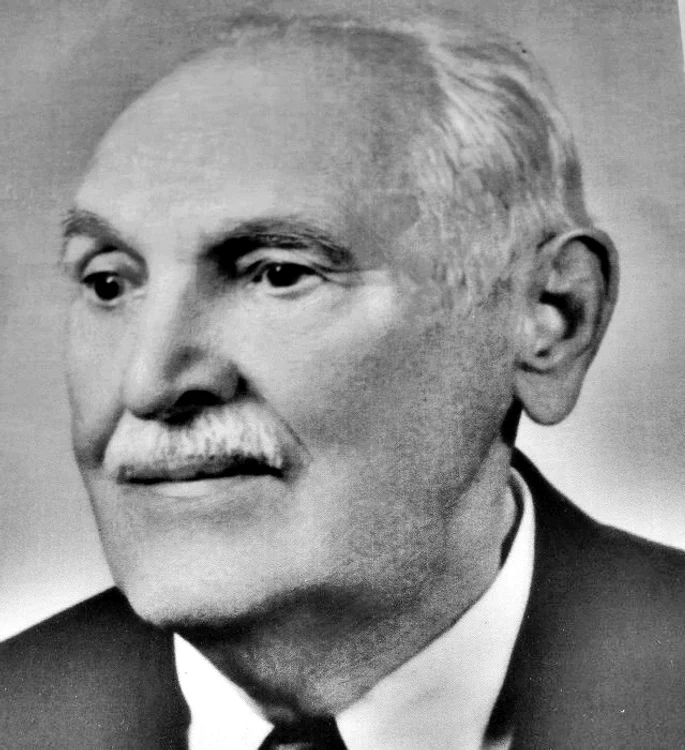
Alexandru Borza. Wikipedia
It advertised the disastrous consequences caused by forest cuts, too intensive grazing, hunting or unsuspecting fishing, accentuated after the war years.
“Our scientists, recognizing the danger that runs the natural monuments, more in Romania, started a living campaign to protect nature, after the parable of more enlightened nations. It is unexpectedly important. added the scientist.
Retezat tip, the heights of the park
In 1935, almost 15 years after the first steps taken for the establishment of Retezat National Park, which at the beginning of the 20th century was included in the area of the Noble Family Kendeffy, the efforts of Professor Alexandru Borza and other scholars, such as Emil Racoviță (1868-1947), were successfully crowned.
“The retez up! Few mountain names evoke deeper impressions of tourist, naturalistic and hunting privileges. Rarely a mountainous massif that will enchant you more with the landscapes, of the most authentic savagery, to fascinate you more secretly through its rare flowers, through the wonderful geese, the extraordinary and especially through the phenomenon, In this gigantic sanctuary of nature with a stretch of at least 100 square kilometers, they will admire and study the miracles of concentrated creation here as if from deep, the current and future generations, tourists from the country and abroad, attracted by the fame of the Retezat “, informed Alexandru Borza, in the description “Retezatul”.
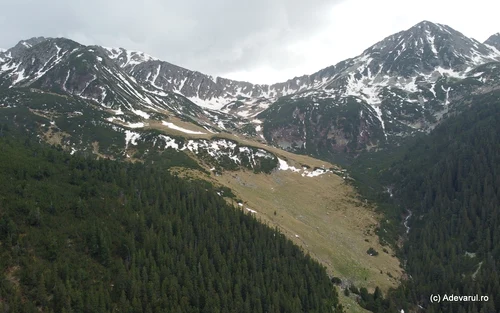
Image 1/22:
The Men’s River Valley, the Retezat Mountains Photo Daniel Guță Adevărul (47) JPG
At the establishment, Retezat National Park had an area of 13,000 hectares (about 130 square kilometers), which, over time, was extended, reaching over 38,000 hectares.
Most of the park is located in Hunedoara county (87 percent), the rest stretching on the territories of Caraș-Severin (11 percent) and Gorj (2 percent) counties, informs the Administration of the Retezat National Park.
“In the Retezat National Park there are 50 peaks that exceed the altitude of 2,000 meters, the highest being the Peleaga peak, with 2,509 meters, followed closely by the Păpușa peak, the second as a height in the massif, with 2,508 meters. The Retezat peak is the best known due massively, with 2,482 meters ”the PNR administration shows.
The “emerald tears” of Retezat
The Retezat National Park is nicknamed the “land with blue eyes”, due to the multitude of glacial lakes that are in the massif and represents about 38 percent of the total glacial lakes in Romania.
“The more than 80 lakes in Retezat, of which only 54 are permanent, are fueled by the melted snow from the ridges. The most spectacular of the lake higher altitude ”the representatives of the protected area show.
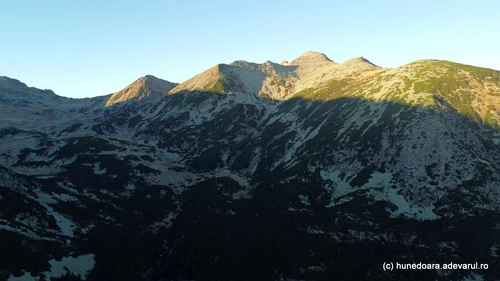
Image 1/18:
Poiana Pelegii Retezat Aerial Pictures Photo Daniel Guță Adevărul (13) JPG
The glacial lakes were formed in the boilers, by accumulating the water from rain and snow and through the springs. The lakes together with the glacial circles (rocky basins with steep slopes, formed by the melting of glaciers) make the cutter one of the massifs in Europe that retain the most widespread traces of the glacial era.
“The central cutting was the place of a great glaciation. All forms of glacial circles are represented here and their development is so large that as traces of the old reliefs have remained only sharp, sometimes made up of piled blocks, which are still constantly collapsing,” wrote the French scholar Emmanuel de Martonne, in 1907.
Twins, the place forbidden to Retezat tourists
Another special land of the Retezat is the twin scientific reserve. It occupies almost 2,000 hectares and retains one of the latest primary, unaffected, existing forests and the only mixed ancient forest area.
Here, according to the representatives of the Retezat National Park, many of the nearly 2,000 species of upper plants in Retezat live, allowed to evolve freely in their natural habitat. On its territory, tourism is forbidden, as well as camping, fire, waste abandonment, plants, trees damage, opening paths and tourist routes.
On the territory of the scientific reserve the twins are allowed only scientific research, the practice of biologists, geologists, geographers, forestry, official visits of Romanian and foreign specialists.
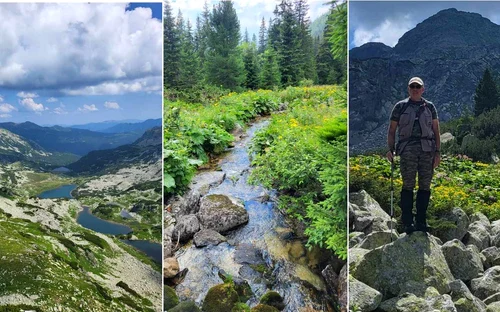
Image 1/27:
Reserve Gemenele from Retezat Photo Ottmar Trașcă JPG
From the ’50s, the wild land entered the administration of the Romanian Academy, based on an agreement concluded with the Ministry of Agriculture. Currently it is compared to the Retezat National Park, administered by Romsilva through its unit with legal personality the Administration of the Retezat National Park.
At the center of the reservation, at 1,770 meters altitude, the Romanian Academy built a research station in the 1950s.
