
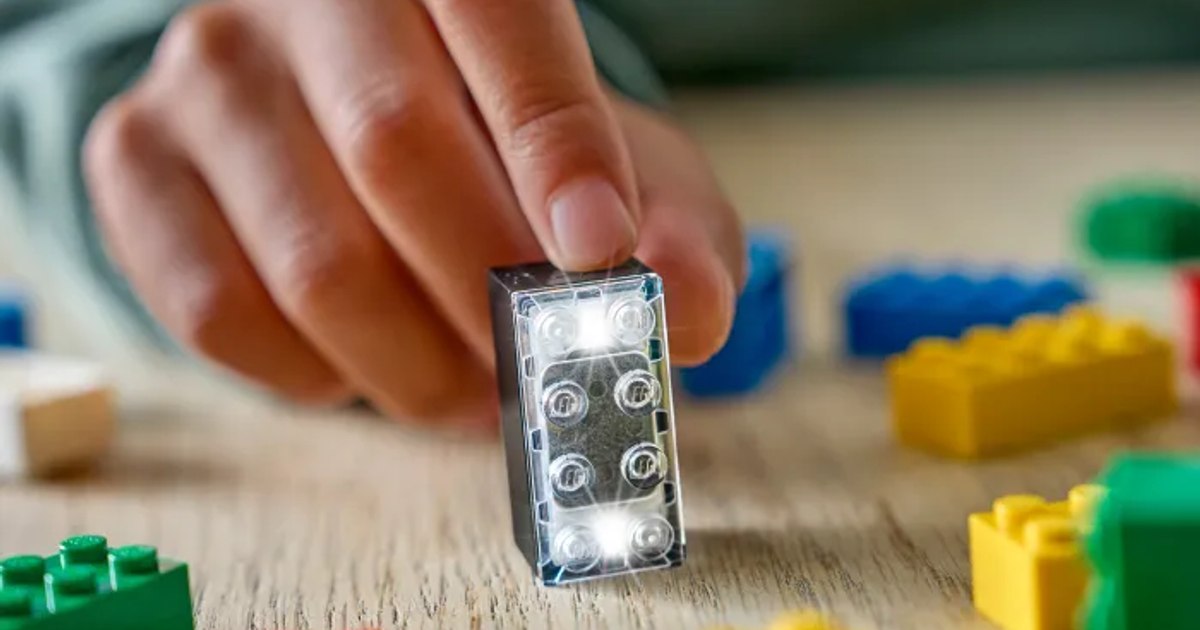
The Lego Group has announced the release of the most advanced piece in the company’s history: a fully functional computer built into a classic 2×4 Lego piece, capable of bringing sets to life through sound, light and intelligent motion reactions. The announcement was made at the Consumer Electronics Show 2026 — the largest and most influential international technology trade show dedicated to electronics and technological innovation.
The new piece, named “Smart Brick”detects nearby NFC tags embedded in special parts and minifigures, as well as other Smart Bricks. According to the company, this technology will allow Lego sets to react dynamically during play — from lightsabers that vibrate and motors that “start”to sound effects and music specific to the Lego Star Wars universe.
Unlike previously released Lego Mario toys, which required AAA batteries and operated based on color or barcode recognition, the new Smart Bricks are charged wirelessly through a platform that can simultaneously power multiple bricks. The battery is designed to work even after years of inactivity.
Smart bricks include light sensors, sensors that detect movement, tilt and gestures, as well as sound and light effects. In addition, they create a Bluetooth network of sorts “mesh“, which allows them to be aware of the position and orientation of other nearby pieces. Thus, Lego Star Wars ships and characters can “interact” between them, and famous music “The Imperial March” can automatically turn on when Emperor Palpatine is seated on the throne.
In car sets, Smart Bricks can detect which vehicle crosses the finish line first, or change engine sounds to impact effects if the car is overturned. The computer inside is a custom ASIC smaller than a single Lego button, and the firmware can be updated via a smartphone app.
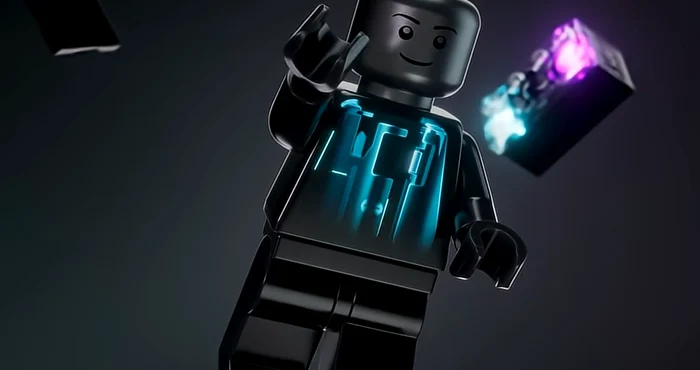
The pieces also include a microphone, but Lego representatives point out that it doesn’t record sound, but is used as a sensor — for example, kids can blow into the piece to trigger certain effects. Also, the product does not contain artificial intelligence and does not have a video camera.
The first sets to hit the market starting March 1 are exclusively from the Lego Star Wars range and include Darth Vader’s TIE Fighter ($70), Luke Skywalker’s “Red Five” X-Wing ($100) and Vader’s Throne Room and A-Wing Complex ($160). The dimensions are smaller than those of the classic Star Wars sets, the costs being influenced by the integrated technology.
Lego believes the new smart tags will encourage creative play and unusual combinations between sets. The company describes the Smart Brick as “the most significant evolution of the Lego system since the introduction of the minifigure in 1978″, and unconfirmed rumors point to the technology extending to future Lego Pokémon sets as well.
Skeptical reactions to the LEGO announcement
However, the release also sparked controversy. Some play and education experts have expressed concern that digitizing a traditionally analog toy could “undermine what was once special about Lego”, namely stimulating children’s imaginations during play.
“As anyone who has ever watched a child play with classic Legos knows, children’s creations are already moving and making sounds through the power of their imagination“, an expert told the BBC.
Lego quickly reacted to the criticism, stressing that Smart Bricks do not replace the classic experience, but complement it, encouraging “play physical, open, without screens”.
“It is an important part of the future“, said Federico Begher, LEGO executive. “But it is very important to be clear that this does not mean that we abandon the essence of who we are, which has generated some questions and fears, such as: «Are you giving up what will bring you success, in favor of this direction?“”
Despite the skepticism, the announcement is considered by some experts to be one of the most exciting innovations presented at CES 2026, marking a new chapter in the evolution of one of the world’s most iconic toys.
