
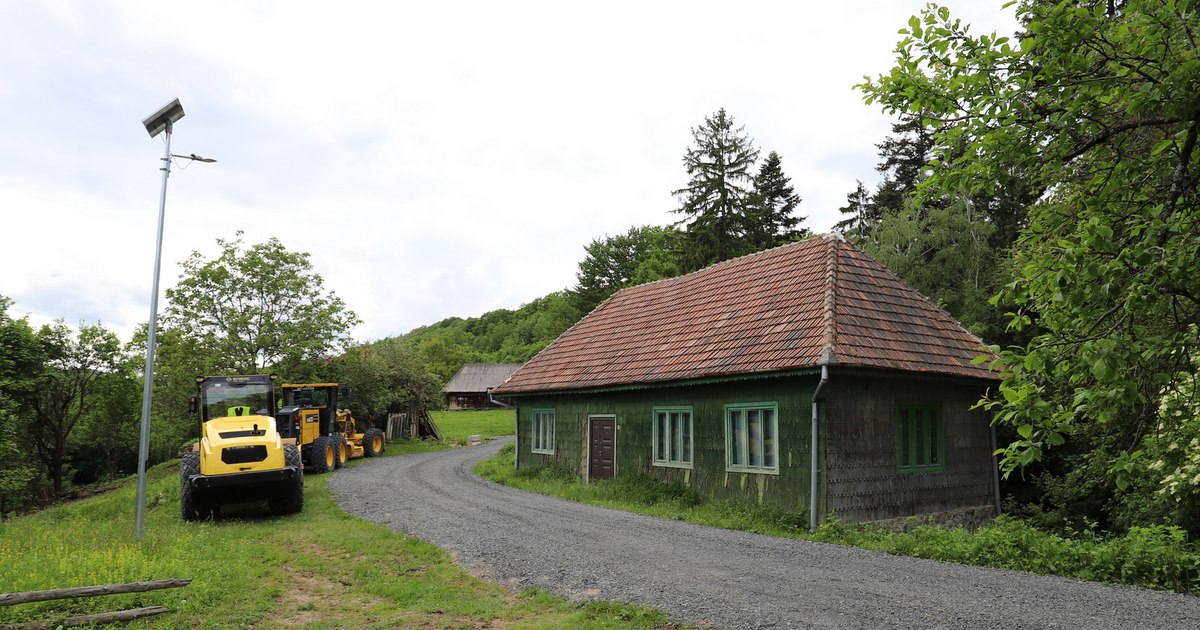
Most of the schools established in the past in the Forest Land of Hunedoara have become history. Their picturesque buildings, some abandoned for years, remind of the times when the quiet villages of the Poiana Ruscă Mountains were animated by children.
The former school in Red Face. Photo: Daniel Guță. THE TRUTH.
Less than 5,000 people live in the Foresters’ Land of the Poiana Ruscă Mountains, Hunedoara, where in the middle of the last century, the 40 villages and hamlets together numbered almost 25,000 people.
The picturesque mountain region of Hunedoara depopulated over time, and the schools closed one by one, most of them in the 90s.
The school in Bătrâna commune, transformed into the town hall
In the Batrâna commune from Hunedoara (video), one of the most isolated settlements in the Poiana Ruscă Mountains, the last school was closed in 2002. Radu Herciu, the former teacher of the school in Bătrâna village, became mayor in 2004, a position he has maintained until now, when he chose to withdraws from the activity. The building of the former school in Batrâna has meanwhile become the seat of the town hall of the commune, which currently has about 80 inhabitants.
The valley of the Batrâna stream separates the hill on which the village of Batrâna was founded from the hills on which its hamlets Piatra, Răchițaua and Fața Roșie are located, currently inhabited by about 20 people.
A school also functioned in Fața Roșie, and in the past children from the surrounding settlements gathered here to learn books.
The old wooden house, covered with green painted shingles, stands out in a cluster of equally picturesque houses, surrounded by the fir forest. There are only a few children left in the commune, who study at Dobra, the commune on the Mureș valley, about 25 – 30 kilometers from the villages of Batrâna.
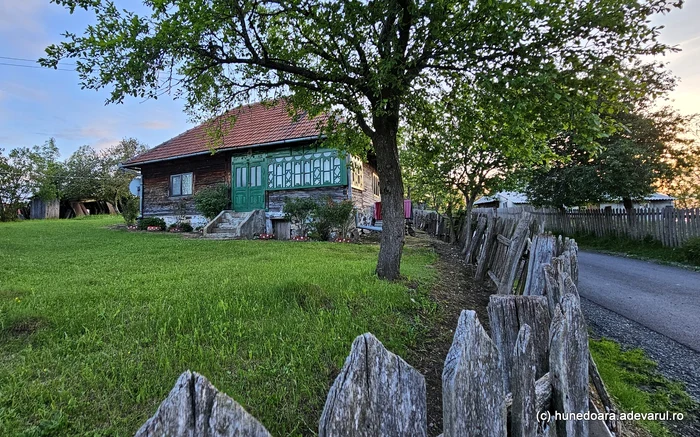
Batrâna village from Hunedoara. Photo: Daniel Guță
“Our child goes to school in Dobra, being accommodated there, from Monday to Friday at the boarding school. In the entire Fața Roșie village, about six families remained, several of them elderly, because there were no conditions here. There is no electricity, only solar panels. We have such a panel, but it is not enough for our needs. There is no water network either, some have drilled and found, but at great cost. We collect the rainwater in a basin for the animals, and the potato and vegetable crops are watered by the rain. If God gives and it rains, the vegetables are made”, recounted Alina, a local from the village of Fața Roșie in Hunedoara.
The school in Ghelari was a high school
Schools in the communes of Cerbăl and Bunila in Hunedoara, located in the Poiana Ruscă Mountains, were also closed.
The villages of the commune Bunila, Alun, Cernișoara Florese, Vadu Dobrii, Bunila and Poienita Voinii together have less than 300 inhabitants, and the few children in the commune study at the school in Ghelari or in Hunedoara.
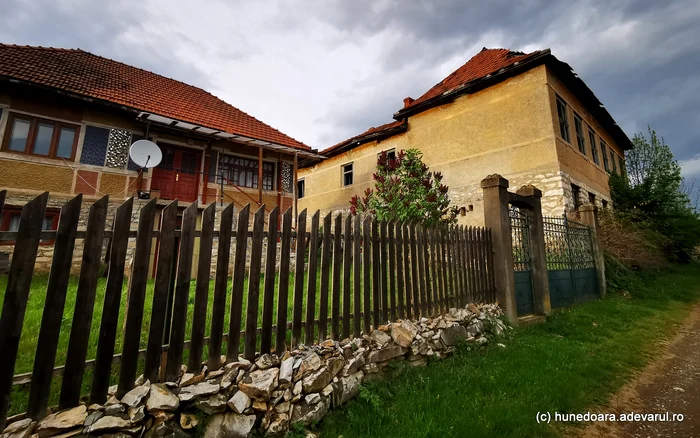
The boarding school building (right) in Alun. Photo: Daniel Guță. TRUTH
In the village of Alun of the commune of Bunila (video) also operated a boarding school in the past. The building where many schoolchildren from the mountain villages were accommodated remained ruined, and the village almost deserted.
Ghelari commune from Hunedoara (video) is in a slightly better situation than the neighboring settlements, in terms of education. In the past, the iron mines of Ghelari attracted thousands of people to the Land of the Forests, and the commune had a high school and a boarding school.
“About 90 – 100 students are now at the school in Ghelari, some from the locality, others from neighboring villages. Also, the groups from the kindergarten were moved to its rooms, until the kindergarten building will be rehabilitated”says mayor Iancu Emerson Toma from Ghelari.
Commuter teacher from Lelese
In the past, the school population was also quite large in Lelese commune (video), and its four villages, Runcu Mare, Lelese, Sohodol and Cerișor, each had a school.
“Our best years, in terms of schooling, were the 60s-70s, when there was a school in each village, and each of them had 30-40 children”recounted Ciprian Achim, the mayor of Lelese commune, where the only remaining school, with about seven students, operates in the town hall building.
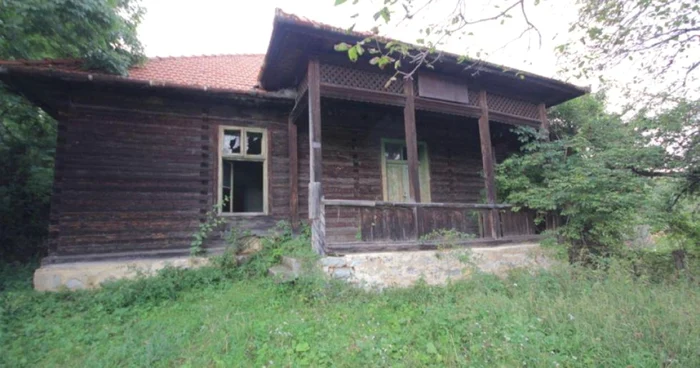
Former school in Sohodol. Photo: Daniel Guță
Since 2010, in order to provide education to the students of the school in Lelese, the teacher Dorina Onesc makes a round trip of almost 100 kilometers every day. She lives in the Chitid village of the Boşorod commune, located at the foot of the Șureanu Mountains, in the Streiului valley.
The village schools in Lelese commune were established over a century ago. The first teachers came to the mountain villages shortly after the end of the First World War. They were ex-soldiers who learned to write during the years spent at the front and wanted to teach their children to read and write.
At first, some villagers did not want to send their children to school, because they needed them in the household. People were generally engaged in animal husbandry, forestry and field work, and children were taken to help when they were young.
More and more deserted villages in the Forest Land
The Land of the Forests got its name because of the vast expanses of forest that have covered, since ancient times, the region of the Poiana Ruscă Mountains.
In the Middle Ages, forest dwellers established their refuge settlements in hard-to-reach places, after clearing some dense forests populated by wild animals.
The villages remained surrounded by forest cordons that sometimes stretch for tens of kilometers. In some places, people have never interfered with nature.
In this way, the secular Codris of the valley of Dobrişoara and Prisloape have been preserved, a reservation located on the administrative territory of Bătrâna, Bunila and Cerbăl communes, which occupies almost 140 hectares.
In the middle of the 20th century, almost every one of the 40 villages in the Forest Land had a school where the children of the locals studied. The children of the foresters studied books in the picturesque, wooden houses, equipped with one room each – two in the centers of the villages.
Some schools, where students from grades IV to VIII studied, also had boarding schools, which hosted children from neighboring villages, separated from each other by several kilometers of forest or deep and precipitous valleys, during the week.
The villages lined up on the peaks of the Poiana Ruscă Mountains, crossed by dirt roads that went up to over 1,300 meters above sea level, or hidden in the narrow and shady valleys of the mountain rivers, began to depopulate after the Second World War.
In the following decades, many young families migrated to Hunedoara, where the steel plant attracted most of the labor force from the surrounding settlements, and the first blocks of flats offered greater comfort to the new tenants.
In the working-class city, the schools built since the 50s looked more welcoming, and children could continue their studies at the high schools and the institute of sub-engineers in Hunedoara.
Other families gradually gave up the patriarchal lifestyle for the services offered in Deva, Călan or Hațeg, cities located a few tens of kilometers from the mountain villages.
Since the 1960s, the phenomenon of the migration of Romanians from the forest villages, increasingly depleted of labor force, to the industrial cities has decreased, and the small industry developed here through the few iron and talc mines and stone and marble quarries has stabilized the population of the area . After 1990, the mines were closed and the mountain settlements continued to depopulate, some to the point of extinction.
The Land of the Forests has been rediscovered as a tourist destination, after the difficult roads that cross the mountains have been modernized in recent years.
