
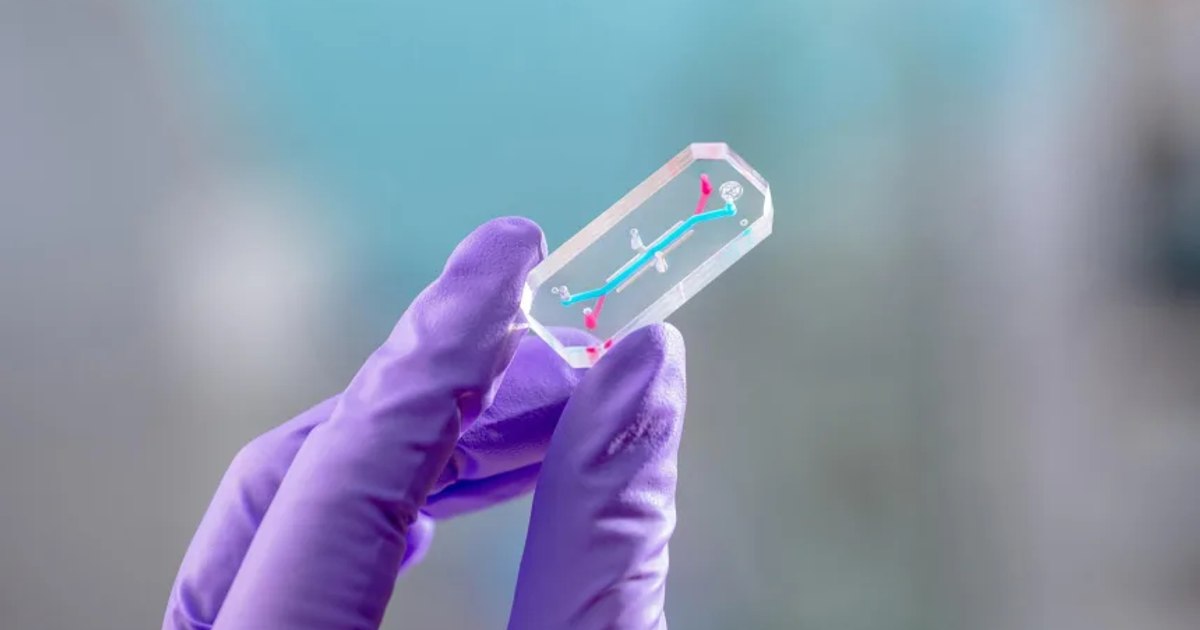
Before the launch of the Artemis II mission to the moon, an unusual cargo was placed aboard the Orion capsule: four biological “avatars” the size of a USB stick, created from human tissue, which will symbolically accompany the crew and provide data about how outer space affects the body.
It is about an experiment called AVATAR (A Virtual Astronaut Tissue Analog Response), through which NASA researchers simulate the reactions of the human body in deep space conditions, using structures of the “organ on chip” made from stem cells from the four astronauts of the mission, according to CNN.
Bone marrow, the key to radiation study
Avatars contain bone marrow tissue, an essential element for the immune system. The goal is to observe how cells react to cosmic radiation and the specific stress of flights beyond Earth orbit.
According to NASA researchers, this type of analysis could in the future allow personalizing medical treatments for astronauts, depending on each one’s vulnerabilities.
“Each astronaut may react differently to the deep space environment. Some may be more resistant to radiation, others more sensitive. This data can help us tailor treatments before and during missions,” explained specialists involved in the project.
Data on the human body in space, collected for the first time
The Artemis II mission is not limited to testing the Orion spacecraft, but also includes a wide range of medical experiments. Astronauts are constantly monitored by radiation sensors, smartwatch wristbands and periodic biological tests.
According to the cited publication, saliva, blood and urine samples are collected before, during and after the flight to study the effects of microgravity on the immune system, sleep, cognitive functions and the microbiome.
Researchers are also looking for the possible reactivation of latent viruses, such as those that cause chickenpox or shingles, a phenomenon already observed in missions on the International Space Station.
NASA summarizes the dangers of spaceflight under the acronym RIDGE: radiation, isolation, distance from Earth, reduced gravity, and the hostile environment inside and outside the spacecraft.
Even on a relatively short mission like Artemis II, researchers are looking at how these conditions influence crew behavior, sleep and collaboration in the confined space of the Orion capsule.
After returning from the mission, the astronauts will go through a set of physical exercises designed to test the readjustment to Earth’s gravity. These include climbing stairs and lifting weights, difficult activities immediately after returning from space.
Experts say these tests are also essential for future lunar missions, where astronauts will need to function efficiently immediately after landing.
NASA officials say the data collected on Artemis II will help prepare for future missions to the Moon and possibly Mars, where the flight duration and radiation exposure will be significantly greater than in past missions.
