
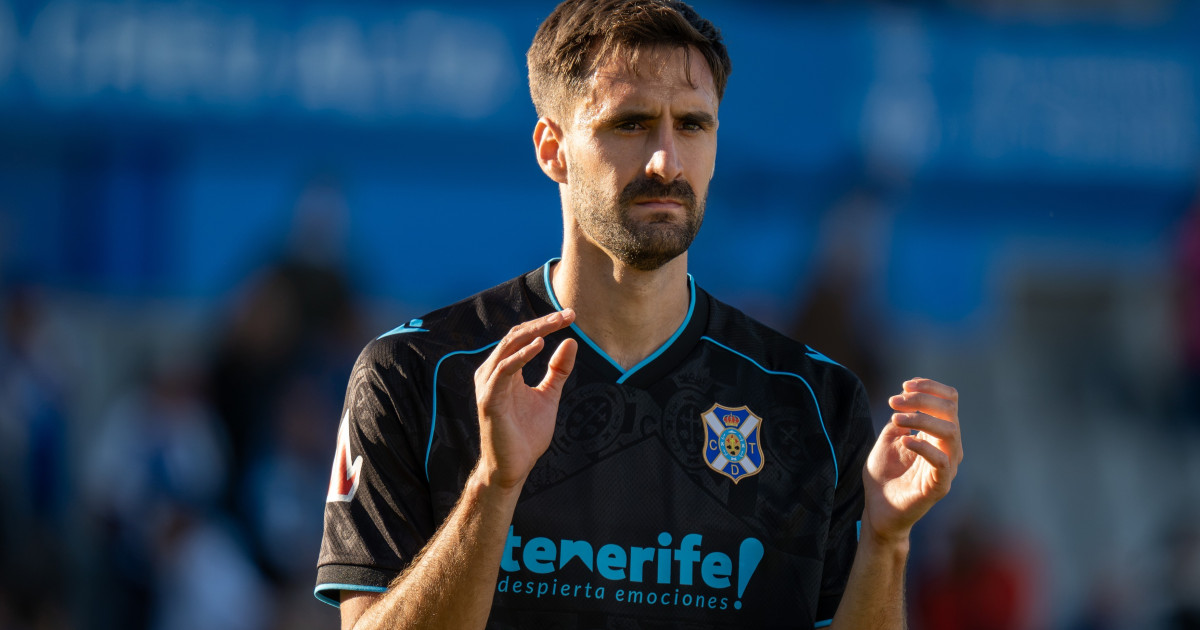
The death of Jesus de Miguel, the 30-year-old former striker of Spanish second division soccer team Tenerife, is believed to have been caused by commotio cordis, a rare phenomenon in which a strong impact to the chest triggers a cardiac arrhythmia.
The Spaniard Jesus de Miguel suffered a cardiac arrest on the field, after a violent collision with the goalkeeper Jesus Owono, in the match with FC Andorra, and a renowned doctor from Spain explained the mechanism that caused the tragedy.
According to Digi Sport, Jesus Almendra, head of the Cardiac Arrhythmias Unit of HM Monteprincipe Hospital, spoke to the Spanish press about commotio cordis, a rare phenomenon in which a strong impact on the chest triggers a cardiac arrhythmia. The specialist also explained how important quick intervention is in the event of a cardiac arrest.
“The truth is that the boy was terribly unlucky. Jesus suffered a very rare phenomenon known for years as commotio cordis.
This occurs when the impact is so strong that it goes straight to the heart and causes a cardiac arrhythmia. The blow must have been extremely powerful and caused a brutal energy that went straight to the heart.
But for this to occur, the impact must occur at a certain point in the cardiac cycle, i.e. between two heartbeats, and for this reason it caused cardiac arrest through an arrhythmia caused by ventricular fibrillation. It’s extremely rare and down to terrible bad luck.
In the images it can be seen that the player remains completely unconscious on the field. The brain is no longer supplied with blood and begins to suffer after 3, 4 or 5 minutes. If this period is exceeded, the patient dies.
It is the critical phase in which the patient must be tried to get out of cardiac arrest in those minutes, by manual resuscitation or with the help of a defibrillator. If it doesn’t succeed, there is no chance of survival,” explained Jesus Almendra, in the Iberian press.