
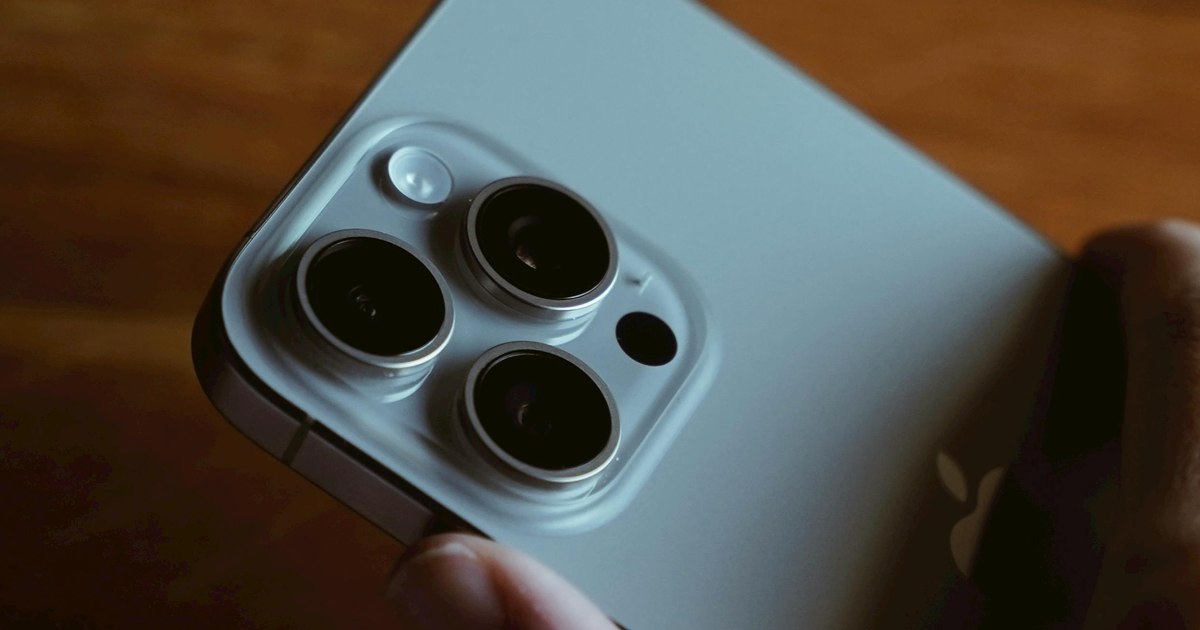
From spacecraft to prosthetics, titanium has been at the forefront of materials science for the past two decades. You can find it mentioned everywhere: in science fiction books, in Marvel comics and movies, in high-performance cars, in the aerospace industry, and so on. In most people's minds, titanium is associated with high-tech and expensive gadgets and carries a futuristic air.
So when Apple decided to use titanium with the new iPhone 15 Pro Max models, many people produced the “wow” reaction that the company was anticipating.
But what is titanium? Is it much better than aluminum or stainless steel? What are its applications and what are the pros and cons when this cool sounding material is used to make a smartphone? Today you will find out the answer to all these questions!
What is titanium?
Your chemistry teacher would probably say something like this: “Titanium is a chemical element in the periodic table with number 22. It is a metal that belongs to group IV.” But that's pretty boring, right? Here is another way to define this material.
Titanium is a super cool silver-gray metal that is light but also strong. It can resist corrosion and also doesn't care much about magnets. Below you will also discover the properties of this metal in a second. What's really interesting, and something you probably don't suspect, is that titanium is the fifth most abundant element in the Earth's crust. That's right, titanium is everywhere – in rocks, clay, soil or sand.
Then why is it so expensive? Well, it's very reactive, and its extraction can be difficult, requiring multiple steps and high temperatures. Titanium is also difficult to work with due to its high hardness. That's why it's used on smartphones like the iPhone 15 Pro Max.
Different grades of titanium
Another important point is that titanium, in its purest form, is as hard as ordinary low-grade steel alloys. It is less dense, so lighter, but the point is that it is not automatically superior to other common and less expensive metals. There are 38 grades of titanium, depending on the different elements present in the alloy. Grades 1 through 4 are considered pure titanium. The only variable is the oxygen present. Grade 5 is the most commonly used and widespread titanium alloy and contains 6% aluminium, 4% vanadium, 0.25% iron and 0.2% oxygen.
This alloy is the most favorable for most applications. It has an excellent combination of strength, corrosion resistance, weldability and manufacturability. The frame of the new iPhone 15 Pro Max is made of grade 5 titanium, according to Apple. Grades 6 through 38 all have different chemical elements in them, giving them specific properties and making them suitable for specific applications. Grade 23 (6% aluminium, 4% vanadium and 0.13% oxygen), for example, is the most commonly used titanium for medical implants due to its excellent biocompatibility.
Advantages and disadvantages of titanium as a smartphone construction material
Simply put, titanium is a great build material for smartphones, but not for the reasons you might think. First, you can get the same strength with stainless steel or aluminum for less money.
What makes titanium great is its density, corrosion resistance, low heat and electrical conductivity. You can combine all of this with titanium's weak interaction with magnetic fields to get the full picture. This means that a phone made of titanium will be lighter, stronger, heat up less and won't need another layer to protect it from corrosion. Looking at the low magnetic interaction of titanium, there is another possible benefit of making a phone back out of that material. Wireless charging, as is also possible with the iPhone 12 Pro Max or iPhone 14 Plus models.
The biggest downside to making the inner and outer bezels and back of a smartphone out of titanium is the cost. Just a small frame of 1 mm thickness around the iPhone 15 Pro Max leads to an increase of almost 500 lei on the retail price. So you can imagine how expensive a titanium phone would be.
Do you need titanium phones?
The answer to that question is that, like many other things in life, it depends. Titanium is widely used in smaller electronics such as smartphones, smart rings or jewelry. There are a lot of benefits to titanium, the biggest issue being the cost. If people are willing to pay extra for a titanium phone, then there will be one.
Do you miss phones with metal backs? Well, titanium might be the answer to your wish.
