
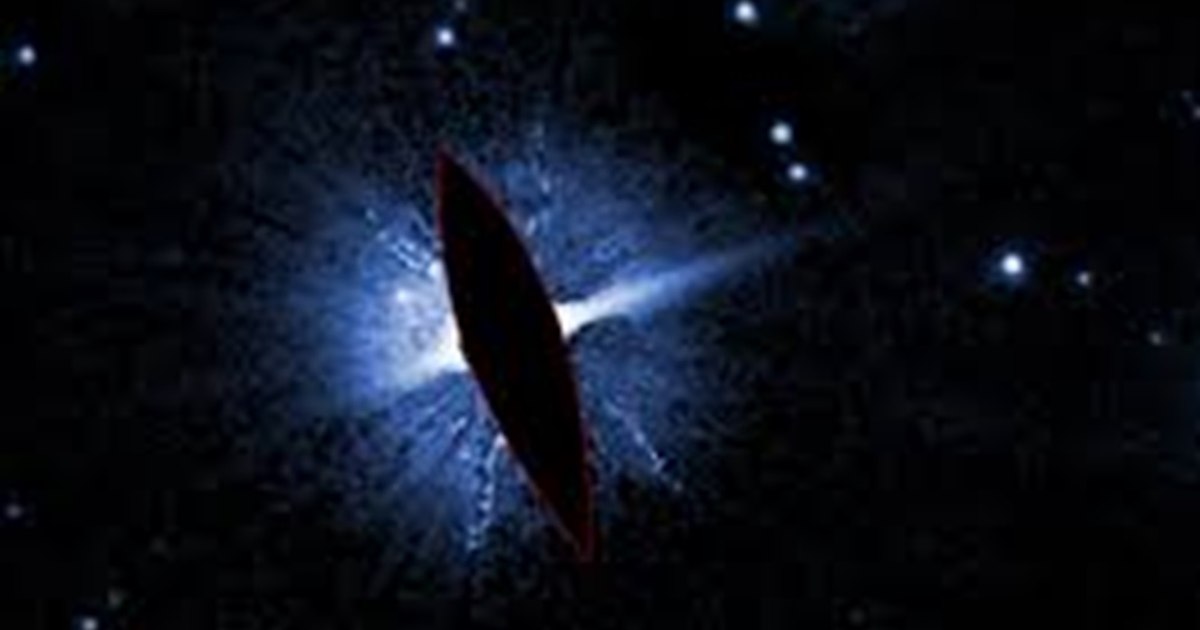
Scientists have used satellites from NASA and the European Space Agency to learn more about this planet.
A new planet PHOTO: NASA
Scientists using data from NASA satellites have discovered a new planet that could host humans – as long as we are able to get there, writes unilad.com.
The discovery of the planet, which was described as “cit is the closest known planet to Earth in size and temperature”was made by scientists from the University of Warwick, UK, together with researchers from NASA and the European Space Agency (ESA).
Called “Gliese 12 b,” the planet orbits its own version of the Sun, a cool red dwarf called Gliese 12, every 12.8 days, which is pretty short years.
But while the would-be inhabitants may have to cool down a bit over the New Year holidays, scientists have noted that the planet is similar in size to Earth and is “one of the few known rocky planets on which humans could theoretically survive.”
Dr. Thomas Wilson, an astrophysicist at Warwick who was involved in this discovery, expressed the significance of the discovery in a press release.
He commented: “This is a really exciting discovery and will help us in our research on Earth-like planets in our galaxy.
Excitingly, this planet is the closest planet to Earth in size and temperature that we know of. The light we see now dates back to 1984 (40 years ago) – that's how long it took to reach us here on Earth.”
Wilson continued: “Planets like Gliese 12 b are very few and far between, so it's very rare to be able to examine one so closely and learn about its atmosphere and temperature.”
The planet has an estimated surface temperature of around 42 degrees Celsius, so it might not be the best place for those people who prefer the cold.
But if we had to leave Earth behind to move to a new planet, I suspect the state of our planet wouldn't be too pleasant either.
The only problem is that Gliese 12 b is in the constellation Pisces, some 40 light-years away—a journey that would require a little more than a few snacks and a good playlist.
Scientists have not yet been able to determine what Gliese 12 b's atmosphere looks like; an important factor in maintaining an atmosphere is the stormy nature of its star.
Red dwarfs tend to be magnetically active, leading to frequent and powerful X-ray bursts, but scientists' analyzes have so far indicated that Gliese 12 shows no signs of extreme behavior.
Larissa Palethorpe, co-leader of the study and PhD student at the University of Edinburgh and University College London, said the discovery marked a “unique candidate for a more in-depth atmospheric study that could help unlock aspects of the evolution of our own solar system.”
She added: “Earth remains habitable, but not Venus due to complete loss of water. Gliese's atmosphere 12 b could teach us much about the ways of habitability that the planets go through as they develop”.
