
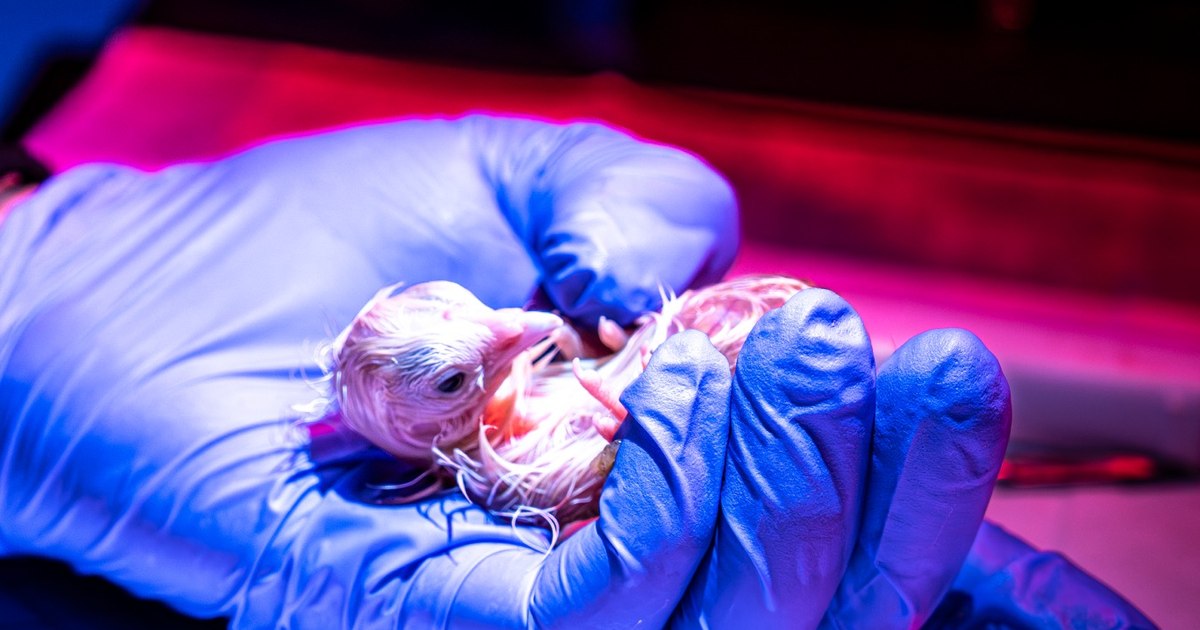
A US “de-extinction” company has announced that more than 20 healthy chicks have hatched from an “artificial” egg platform, technology developed to bring extinct species back to life, including New Zealand’s giant moa bird.
Colossal Biosciences considers this result a key moment in its efforts to recreate species lost centuries ago, according to Reuters.
“Using our system, we have hatched 26 chicks and are now actively monitoring these birds as they grow,” the company’s CEO and co-founder Ben Lamm told the source. The chicks have hatched at the headquarters in Dallas, where the new technology is being tested.
Colossal, which has six restoration projects in its portfolio, including the dodo and the moa, also previously announced the acquisition of genetically modified cubs of the ancient wolf (dire wolf), a species that disappeared after the last ice age.
How the “artificial” egg works
The incubation platform developed by Colossal uses a bioengineered silicone-based membrane inserted into a rigid structure designed to replicate the functions of a natural shell. The membrane allows gas exchange and humidity regulation so that the embryo develops under conditions similar to those in a real egg.
“The technology is designed to reproduce as faithfully as possible the conditions of a natural egg, in order to produce healthy animals with normal development, fertility and longevity”, explained Ben Lamm.
The company’s co-founder points out that this approach is essential for species like the moa, whose eggs were much larger than any bird in existence today, making it impossible to use a surrogate species.
In the case of the ancient wolves, Colossal resorted to cloning and implanting the embryos into canine surrogate mothers.
For the moa, however, there is no current bird large enough to lay an egg the size of a football.
“In order to hatch a South Island giant moa chick, Colossal needed a way to ensure the embryo’s gestation. There is no living surrogate species large enough to lay a South Island giant moa egg, as their eggs were about eight times the size of emu eggsLamm specified.
They want to make a Romanian Christmas! How a New Zealander and a Tongan spend their holidays
The development process
Colossal’s CEO also explained how the system works:
“The process begins with a fertilized avian embryo, similar to the earliest stages of development inside a natural egg. The embryo and yolk are then transferred to Colossal’s proprietary artificial egg platform, which is designed to replicate the key functions of a natural eggshell and incubation environment, including gas exchange, humidity regulation, temperature stability and developmental support“, detailed Lamm.
As the embryo develops, the system adjusts the necessary parameters, including calcium supplementation for skeletal formation.
“Because the embryo develops visibly above the yolk, researchers can monitor development in real time throughout embryogenesis”he added.
For the 26 chicks, the development period was about 21 days, similar to that of natural avian species.
A step towards bringing the moa back to life
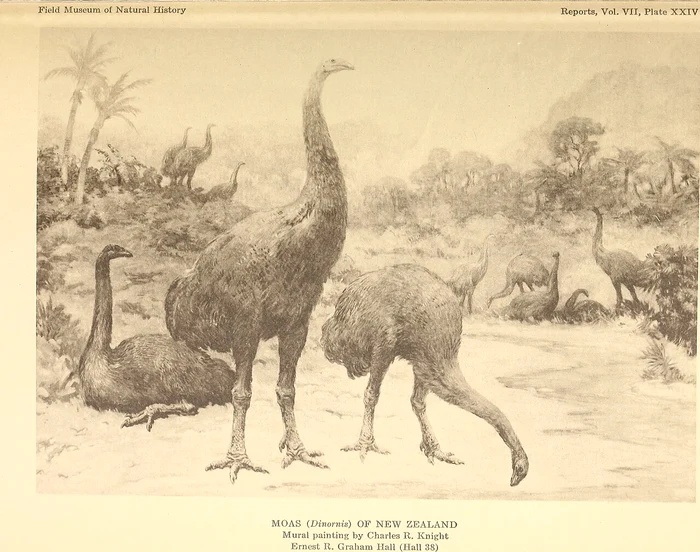
Colossal believes the technology could also be used to conserve critically endangered bird species. However, bringing the moa back to life involves other complex steps.
“Other obstacles include the need to reconstruct an accurate moa genome from ancient DNA, identify the genetic basis of key moa traits, and introduce these traits into a living and closely related species such as the emuLamm specified.
The American company is currently in the phase of sequencing the moa genome.
“To date, our team has identified several solid sources of ancient DNA, including samples from giant moa in the South Island,” explained the co-founder of the company.
