
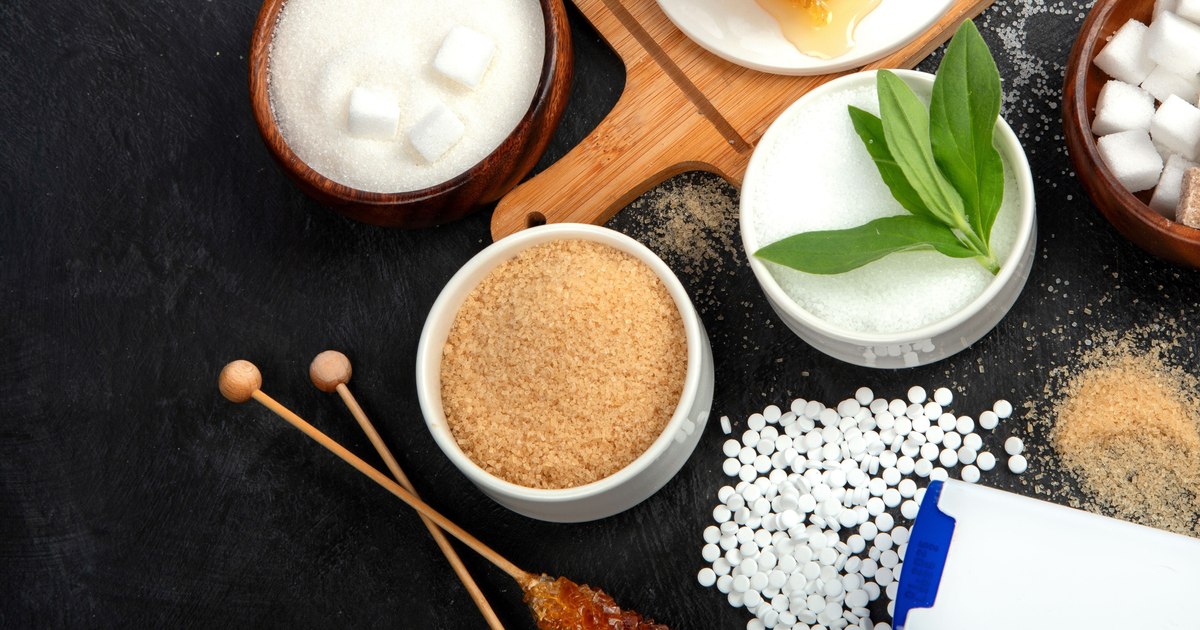
A recent study linked xylitol, a low-calorie sweetener used in various foods and consumer products, to a nearly double risk of heart attack, stroke and death in people who consume the highest levels of the sweetener.
Xylitol: Nearly Doubles Risk of Heart Attack, Stroke, and Death -Photo Shutterstock
Used in many sugar-free foods, but also in products such as chewing gum and toothpaste, xylitol is associated with an increased risk of heart attack, stroke and death in people who consume it regularly, according to a study recently.
Dr. Stanley Hazen, director of the Center for Cardiovascular Diagnosis and Prevention at the Cleveland Clinic's Lerner Research Institute, found that xylitol levels can increase significantly after consuming a typical beverage with this sweetener.
“We gave healthy volunteers a typical xylitol drink to see how high the levels would be, and they rose 1,000-fold. When you eat sugar, your glucose level may increase by 10% or 20%, but not 1,000 times,” said Hazen, who also directs the Cleveland Clinic's Center for Microbiome and Human Health, according to CNN.
The author of the study warns that at no time have people consumed more xylitol than in the last two decades, since “we started ingesting completely artificial processed foods and sugar substitutes“.
Blood clots
In pursuit of a healthier lifestyle, many of us are replacing the products we use regularly with sugar-free ones, but this can put our lives at risk.
Last year, researchers found that xylitol and erythritol, another low-calorie sweetener, can contribute to blood clots, increasing the risk of heart attack and stroke.
Specifically, erythritol and xylitol can cause blood platelets to clot more easily. Clots can break off and travel to the heart, triggering a heart attack, or to the brain, triggering a stroke.
Dr. Matthew Tomey of Mount Sinai Foster Heart Hospital in New York, who was not involved in the study, noted that differences in platelet behavior were seen even after consuming a modest amount of xylitol. However, he emphasized that these experiments do not directly demonstrate a link between xylitol and clinical events.
“Differences in platelet behavior were seen even after a person consumed a modest amount of xylitol in a drink typical of a real-life serving“, remarked Dr. Matthew Tomey, according to the quoted source.
About 61% of American adults are likely to suffer from cardiovascular disease by 2050, so reducing clotting activity is a key treatment used by cardiologists. Any extra platelet clotting is a bad sign, said Dr. Andrew Freeman, director of cardiovascular prevention and wellness at National Jewish Health in Denver.
“This is another warning that we should switch to water, second only to unsweetened tea or coffee.”the doctor added.
On the other hand, Carla Saunders, president of the Calorie Control Council, dismissed the study's findings, saying they contradict decades of evidence supporting the safety of low-calorie sweeteners. She believed that these findings put those who use alternative sweeteners in an attempt to improve their health at a disadvantage.
What is xylitol?
Xylitol, a lower-calorie sweetener, is used in a variety of products such as chewing gum, toothpaste, and syrups. Although it is found naturally in some foods, such as fruits and vegetables, the amounts are small.
“If you actually do the math, it literally takes a ton of fruit to be equivalent to a diabetic cookie that can have about nine grams of xylitol, which is a typical amount on the label. It would be like eating salt at the level of a teaspoon of salt“, stated Dr. Stanley Hazen.
In commercial use, it is obtained from various sources, including corncobs and birch.
“It is sold as a so-called natural sweetener.”Hazen also said.
Xylitol is advertised as friendly to diabetic patients and suitable for low-carb diets.
“However, people at risk of diabetes are among the most vulnerable to clotting events. We're reaching out to the wrong people“, adds the author of the study.
Cheaper than sugar
Exposure to xylitol has increased over the past two decades as it has been recognized as safe by the FDA, and is increasingly being used in foods and beverages as a sugar substitute.
“Xylitol is cheaper to manufacture than cane sugar and is therefore increasingly incorporated as a sugar substitute in foods. Some 12-ounce drinks that use xylitol as the main artificial sweetener can contain 30 grams or more. You can even buy it in bulk at the grocery store where they tell you to use it as a one-to-one sugar substitute in your home kitchen.,” adds Dr. Hazen.
Research has shown that some artificial sweeteners can negatively affect metabolism, making it harder to lose weight.
The recent study published in the European Heart Journal analyzed blood samples from more than 3,200 people to find chemicals that predict the risk of heart attack, stroke or death. Researchers have found that sugar alcohols, including xylitol and erythritol, can increase this risk. People with high levels of xylitol had almost twice the risk of serious cardiovascular events. These sweeteners appear to activate platelet receptors, promoting clotting.
The WHO warned in 2023 against the use of artificial sweeteners for weight loss and called for more research into their long-term toxicity.
“Through their work, the researchers shed light on the safety of sugar substitutes. There is still much to learn. In the meantime, it's worth remembering that sugar substitutes are no substitute for a sincere commitment to several elements of a healthy diet and lifestyle..” concludes Mount Sinai's Dr. Tomey.
