
We want a school like the outside, we dream of a high-performing education system that produces values on the conveyor belt, we want a program that keeps pace with the present and students prepared for life, for the future. What do we have in return? A shaky, outdated education system, “stuck in communist paradigms”, as education expert Marian Staș said. And the students feel more and more strongly this gap between what they want from school, between what they really need and what they actually receive: forms without substance.
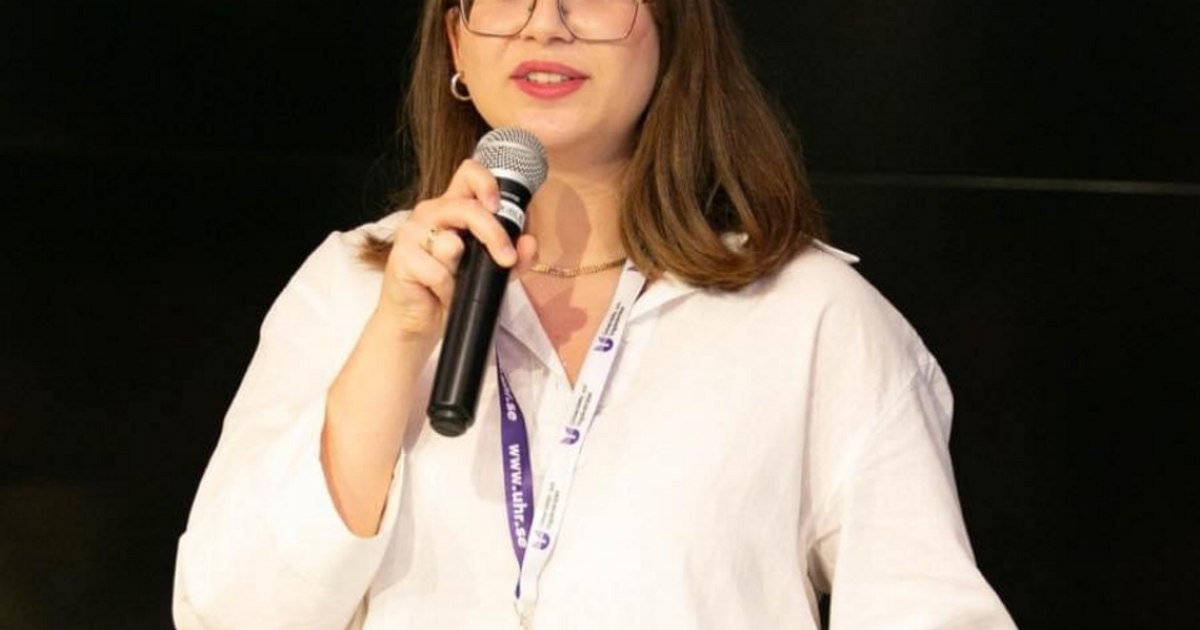
Bianca Ivan, president of the National Council of Students Photo source: consiliulelevilor.ro
Bianca Ivan, president of the Student Council, explained to “Adevărul” why the Romanian education system is limping. Because, she said, generations change, so do the needs of children, but the educational offer stagnates. “I recently participated in an Erasmus project, and one of those present at the meetings that took place said, perhaps, the truest thing about our education system. Generations change every five years. We, the students, have other concerns, other perspectives, other visions, we look at the future with different eyes. The school, however, remains the same”.
“The school must adapt to our needs, not the other way around”
In 90% of the time spent at school, students learn the established, classical subjects. But, they want to know more than what they get from the teachers, beyond dry information, historical data they have to remember, beyond numbers or comments they have to digest. The students, says Bianca, need to be taught how to manage in life and they ask the teachers to overcome their condition, get down from the chair in their midst, get involved, get to know them, really come to meet their needs their current In other words to teach them values. “This is very important. Namely, that the Romanian school, in addition to this set of skills that it already offers us, also draws us certain values, which will then be reference points in our lives, to guide us in our career, but also in society”.
The student believes that this would be possible if optional subjects were introduced among the classical subjects. Social, legal, financial education, health education are just some of the subjects that would open new horizons for children. “It is not the students who have to adapt to the school, but the school who has to adapt to the students and their current needs”.
“We want teachers to teach us values too”
Coming to class, teaching the lesson, and then leaving is simple. Even teachers, many of them, admit it. Getting involved in the development and education of children, beyond the more or less dry information you deliver, is very difficult. But not impossible. “We had the Representative Student Gala, which reached its seventh edition this year. We offered a series of awards, and among them was one dedicated to teachers involved in the teaching profession. What was the nomination criteria? All these teachers have a common denominator: they use non-formal learning methods, they adapt to the needs of the students, they really understand the students. In addition to the subject they teach you, they also teach the children various values“. And these values, says Bianca, are taught during the lessons. “No extra time is needed to talk about the world we live in, how we understand it and how we make it understand us“. So, if you want, you can. “And the teachers, in order to meet us, must adapt their teaching methods”. But it is very difficult for many of them to come out of their shell, to “forget” the teaching methods used for perhaps decades and to modernize overnight.
“Lack of trust in us, the biggest cross we carry”
What do today's students need? “We need to learn certain skills, to understand what leadership means, time management, to have notions of public speaking and to be taught to use them. Many students have not yet mastered these skills of really saying what they want, what they think, of calling things by their names. I was one of those students myself until I also did extracurricular things. School should give us more confidence and help us gain more confidence in ourselves.”
The student believes that the young people's lack of confidence in themselves is one of the obstacles that will not allow them to develop, to overcome themselves. And the school should help them in this regard. To teach them to think freely, critically, without any constraint, to teach them to judge with their own powers. “We should trust that we, if we want to, can really change something. And we would like to stop being told that we are just simple children who cannot change anything, who have nothing to say, who are not taken into account. I think it's the biggest cross we carry.”
The president of the Student Council believes that today's young people should perhaps be a little more vocal, but in a way that doesn't offend anyone, doesn't hurt those around them. “Ssay what they think in the most objective and professional way possible”. In other words, to show maturity. Although, let's not forget, we are only talking about some children.
Bianca confessed to us that she learned on her own what the school did not offer her. “I meditate, I also prepare in parallel with school to go to University, I am self-taught, I also do volunteer work”. Students must try to overcome the educational barriers they face in traditional school and have extra concerns, oriented towards personal development, Bianca also believes. “I learned many things on my own. I, for one, am a big campaigner for social education. To know what it means to be good citizens, to know our rights, to learn how to become better, how to excel in certain fields, how to be more responsible, how to adapt to the times in which we live. And where can we get these little bits of teachings? Fixed from the dedicated teachers, who offer us much more than strictly the subject they teach. I pass the job description, as they say”.
Bianca Ivan, Erasmus ambassador, is a student in the 11th grade at the “Alexandru Ioan Cuza” National College in Alexandria, Teleorman county. Since January this year, she is the president of the National Council of Students.
