
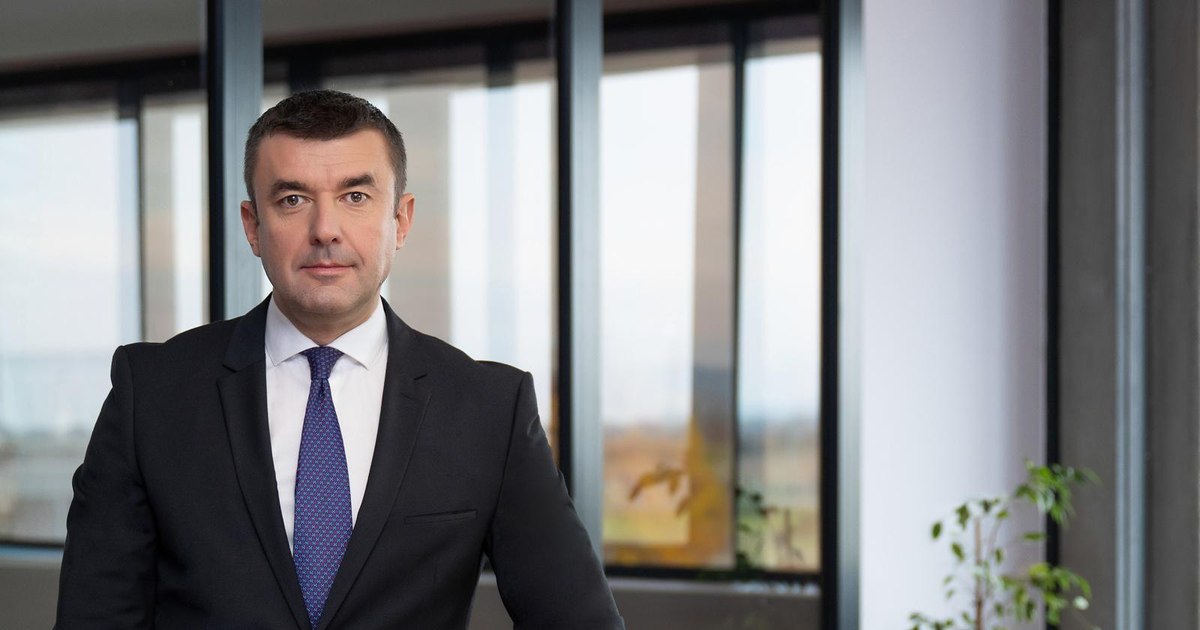
Respondent: Marius Mihăilescu, CEO Beko Romania, Moldova, Greece, Malta and Cyprus
In a context where consumers are becoming more attentive to efficiency, sustainability and the real impact of products on everyday life, technology evolves along with people’s needs, and relevance becomes the result of the ability to understand these changes and respond with adapted, accessible and responsibly built solutions.
For Beko Romania, this direction is reflected in a business model that integrates advanced production, technology, sustainability and care for the consumer in an approach built around the idea of applied progress and long-term relevance. We inspire sustainable lives in every home, and this direction is reflected in the products and technologies we develop and in the way the company coordinates its operations, organizational culture and relationship built over time with people and communities.
Under the coordination of Marius Mihăilescu, CEO of Beko Romania, Moldova, Greece, Malta and Cyprus, the company continues to strengthen Romania’s position as one of the most important strategic hubs of the Beko group in Europe, both through the industrial infrastructure developed locally and through the operational capacity built around production, logistics and the relationship with consumers.
At this stage, his leadership perspective is related to the strengthening of lasting relationships, built on trust, transparency and common goals. For Marius Mihăilescu, partnerships represent an essential component of long-term development, because a sustainable result is built through shared value, continuity and shared responsibility. In his view, success is measured by trust built over time, value created and long-term impact on people, communities and partners.
How is the consumer relationship with technology changing today, and what does relevance mean in an ever-evolving industry?
Beko Romania operates two of the largest home appliance factories in continental Europe: the refrigerator factory in Găesti and the washing machine factory in Ulmi, where products are developed that reach over 80 countries and contribute to the consolidation of the “Made in Romania” quality standard on international markets.
To this industrial ecosystem is added the regional logistics center in Căteasca and the national customer service network, which ensures proximity, continuity and quick response capacity in the relationship with consumers. Together, they define an integrated infrastructure through which the company supports an operational model permanently connected to market dynamics and the real needs of people.
At the same time, the development of products and technologies is supported by an extensive research and development infrastructure, built around global R&D and design centers, which constantly contribute to the integration of new technologies, energy efficiency and solutions oriented towards real consumer experiences. This ability to innovate allows the company to respond quickly to changes in the market and maintain a portfolio adapted to the contemporary lifestyle.
This direction was also illustrated at the EuroCucina 2026 fair in Milan, where the Beko group presented a vision developed around technologies naturally integrated into everyday life, design oriented towards real consumer experiences and concretely applied sustainability. The presented concept focused on solutions developed to simplify the interaction with the domestic space, through products that combine efficiency, connectivity and functionality in an intuitive and discreet approach.
The Arctic brand remains one of the most relevant expressions of the evolution of the local appliance market. Present in the homes of Romanians for over five decades, Arctic has constantly evolved along with the needs and preferences of consumers, democratizing access to technology through efficient, sustainable solutions adapted to the contemporary lifestyle, while maintaining accessibility and the relationship of trust built over time with the local market.
We see a clear evolution in the way consumers construct their choices. There is a growing focus on energy efficiency, sustainable products, intuitive technologies and solutions that simplify everyday experiences. That is precisely why technologies such as The 6th Sensewhich automatically adjusts the operation of the machine, for example by automatically detecting the amount and type of load and suitable washing parameters, EnergySpinwhich supports energy efficiency in washing programs, ExtraSteamwhich brings more care for clothes by using steam, or HomeWhizwhich allows the connected control of household appliances, are relevant through the concrete benefits they bring to the daily routine: comfort, efficiency, saving resources and a simpler experience for the consumer.
How does the philosophy of “Inspiring sustainable lives in every home” translate into the company’s strategy and operations?
The factory in Ulmi, the first Industry 4.0 unit in Romania and one of the most advanced production facilities in the region, reflects the company’s direction to integrate automation, digitalization and operational efficiency in an industrial model oriented towards performance and sustainability. The Sustainability Lighthouse recognition granted by the World Economic Forum confirms this direction and places Romania on the map of relevant European centers for sustainable industrial transformation.
The evolution of consumption behavior shows a growing attention to energy efficiency, sustainable products, technologies that simplify everyday experiences and brands that manage to stay connected to people’s reality. In this context, the company develops its strategy starting from the idea of practical relevance and long-term responsibility.
This philosophy is found both in the development of the company’s products and technologies, as well as in its industrial processes and sustainability initiatives. From solutions to reduce energy and water consumption, to the integration of recycled materials, increasing the durability of products and optimizing production processes, the company aims to develop technologies that are relevant to the consumer and responsible for the resources of the future.
The same logic of continuity can be found in the way Marius Mihăilescu looks at the development of the teams. In his view, the performance of an organization depends on the ability to create a framework in which people can evolve, contribute and feel part of a common project.
What is the role of well-being and organizational culture in an industrial company in a permanent process of transformation and development?
The company continues to develop an organizational culture where wellbeing, professional development and a sense of belonging are seen as essential elements for sustainable performance. In an industrial and technological environment in constant transformation, Beko Romania constantly invests in the development of people, in programs dedicated to well-being and in learning & development initiatives.
This approach connects all dimensions of the company, from technology and production to the relationship with employees, consumers and local communities. From this perspective, progress makes sense when it is supported by people, strong partnerships, and the organization’s ability to create long-term value for those it works with and those it addresses.
Through the continuous development of technologies, the consolidation of local production and the integration of sustainability in all its operational components, Beko Romania continues to contribute to the consolidation of a European model of competitive industry, responsible and connected to the real transformations of society.
