
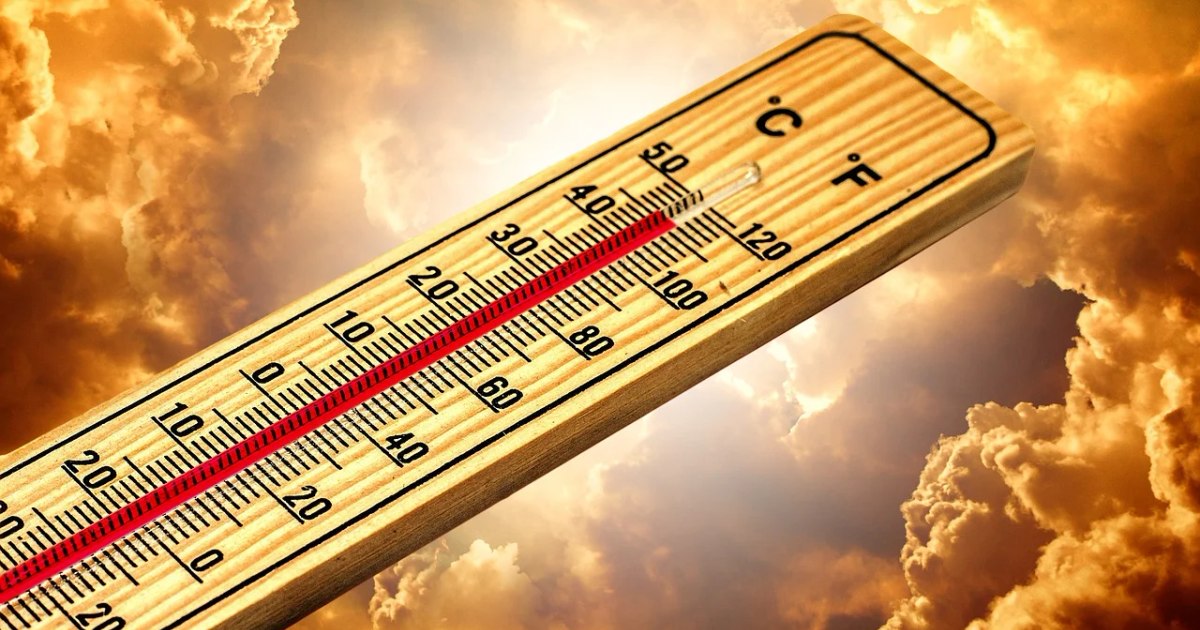
After a week of Code Red, ambulance services are almost at a standstill. Of these, hyperthermia caused by heatwaves are major emergencies, overheating of the body putting patients’ lives at risk.
Hot temperatures have also turned homes into ovens PHOTO: Pixabay
Temperatures have started to drop in the northern half of the country, but the south is still under a Code Orange heat wave, marking the second week of almost unbreathable air. The nights are also tropical, so that the homes, where there are no air conditioning systems, have turned into ovens, an aspect that the medical staff called for help by 112 notices when people feel sick at home.
The doctors are requested to the maximum, the patients feel the thermal discomfort as they say, never happened to them. Many patients are transported to the hospital, others are given first aid at home and refuse transport, reveal the doctors on the ambulances.
Sun exposure, risk of death
In the last hot days there were hundreds of calls across the country for patients with hyperthermia. Direct exposure to the sun and even prolonged periods spent in overheated rooms put people at risk of death. Hyperthermia, which means an abnormal and dangerous increase in body temperature, can be reached, in temperature conditions such as we have had these days, where they have also reached and exceeded 42 degrees Celsius in the shade, and in just a few dozens of minutes, says doctor Dragoș Toader, from the Olt County Ambulance Service.
“You overheat with hyperthermia. Even if you enter the cool room, you feel like you’re on fire, that the heat is coming out of you. That’s hyperthermia, as opposed to fever. There is a medical difference between hyperthermia and fever, although it is still measured in degrees Celsius”, says the doctor. While fever is the body’s response to fight infections, hyperthermia is overheating caused by external factors, the body failing to release the heat it produces or absorbs.
Hyperthermia, the doctor explains, has three degrees, the worst form being thermal shock, when the body temperature exceeds 40 degrees Celsius and thermoregulation begins to be impossible.
On Code Red days, in Olt, for example, several patients were taken with a body temperature of 42 degrees Celsius, the cases being particularly serious, admitted to Intensive Care. There was also a case of a deceased patient, the medical team called to help having nothing to do for a 74-year-old man, found by the neighbors fallen in the yard.
How to act when you feel that you have overheated
“The first thing that helps in hyperthermia is to get into a cool place. In 15-20 minutes you can free yourself. If you still feel sick and still feel like you have a very high temperature, it is usually hyperthermic shock which means temperature above 40-42 degrees Celsius. At 42 degrees, the center of thermoregulation, the hypothalamus, stops working, and you can die.” adds the doctor. Hyperthermia is a medical emergency, so it is best to call for professional help.
When we have to expose ourselves to the sun during the hour when the rays are particularly strong, we should pay special attention to the head area, advises doctor Dragoș Toader. Let’s wear caps, hats, etc., because overheating can quickly lead to cerebral edema.
“Hyperthermia sets in very quickly, in half an hour (ed. – of direct exposure) you can jump from 38 degrees Celsius to 42 degrees Celsius. The first thing that heats up is the skull, because the protection at the level of the cranial cavity is very small”, says doctor Dragoș Toader. When the thermoregulatory center goes awry, an avalanche of symptoms is produced that give the syndrome of multiple system and organ failure. “You become unconscious, you go into a traffic jam and so on”the doctor explains.
Although the heat becomes extremely difficult to bear even in overheated rooms, respiratory dysfunctions frequently occur in these cases. “You feel it’s hard to breathe, because being overheated, the amount of oxygen is very low. You feel dizzy, you feel like vomiting, your eyes hurt and sting, you have other symptoms. In an overheated room you don’t go into hyperthermic shock quickly. They usually die from respiratory failure, you run out of oxygen”says the doctor.
Considering that during these hot days the air temperature rises a lot from the early hours of the morning, the recommendation to take refuge in the parks is no longer valid either, because the shade is no longer enough. The cooling systems to use at home can also help us, and if they are missing, let’s try to spend a few hours a day in spaces such as hypermarkets, pharmacies or other places where such installations work which maintain a bearable temperature.
