
Articles and documents from the 1930s, in which the Romanian philosopher Mircea Eliade declared his sympathy for the Iron Guard, came into the possession of his disciple, Bruce Lincoln, today an emeritus American professor.
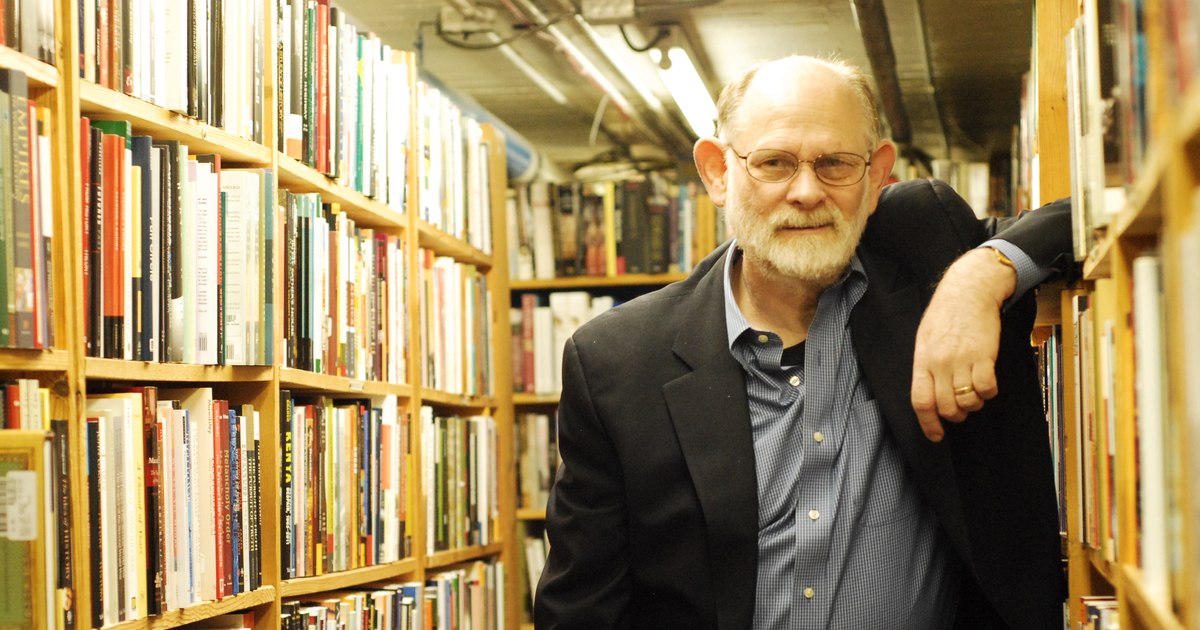
Bruce Lincoln teaches at the University of Chicago PHOTO Jasmine Kwong
This year, Professor Bruce Lincoln published, at Oxford University Press, the book “Secrets, Lies, and Consequences. A Great Scholar’s Hidden Past and his Protégé’s Unsolved Murder”, in which he analyzes the connection between the assassination of the Romanian historian Ioan Petru Culianu – right on the premises of the University of Chicago – and certain documents and articles from Mircea Eliade’s youth, through which he supported the fascist organization Iron Guard . The American professor reveals that Petru Culianu wanted to publish these materials, but met resistance from Mircea Eliade’s widow. Now, several years into their possession, Lincoln has decided it’s time to make them public in a thorough review.
In an exclusive interview for “Weekend Adevărul”, Bruce Lincoln, a former disciple of Eliade, talks about his relationship with the Romanian philosopher, but also with Ioan Petru Culianu, another scholar who was formed with the help of Eliade. The American professor says of Eliade that he had “a brilliant mind” but that his sympathy with the Legionary movement left him “with an ambivalent feeling about his teacher and friend”.
Both Bruce Lincoln and Ioan Petru Culianu were students of Mircea Eliade at the University of Chicago. And Mircea Eliade was the coordinator of Bruce Lincoln’s doctoral thesis. Ioan Petru Culianu was killed in May 1991 right in a University of Chicago building, the perpetrator not being caught until now.
Bruce Lincoln has been professor emeritus of the history of religions at the University of Chicago since 1994. He previously taught for eight years at the University of Minnesota. He received his BA from Haverford College in 1970 and his PhD from the University of Chicago in 1976 with distinction.
“Weekend Truth“: You got your doctorate at the University of Chicago, where you had Mircea Eliade as your coordinator. How was the first meeting with the Roma philosopheryear?
Bruce
Lincoln:
It was a meeting without anything unusual. And I’ll explain the context. In the fall of 1971, when I started my doctoral studies, Mircea Eliade was not teaching. I needed a special book for a paper I was writing for some courses I was taking with the renowned professor Jonathan Z. Smith (ed. – professor of History of Religions). Mr. Smith thought that Mircea Eliade might have a copy of the book and suggested I look for it. I met with him and he told me that he did not have that volume. Our meeting was short, but Mr. Eliade was very open, friendly and full of kindness.
What was your impression of Mircea Eliade before a–do you know him and how did your impression change after you met him?
I considered him to be the foremost intellectual working on the study of myth, and I went to Chicago to study with him. My collaboration with Mircea Eliade confirmed to me the brilliant mind he had. In reality, he was a kinder, more modest and more generous man than I could have ever imagined.
Supporting notes
How was the experience of being a student for you? or
at the doctorate?
I would say that it was something very close to an ideal experience in many ways, because Mircea Eliade was an exceptional man who supported me, encouraged me and inspired me to the highest degree. He wrote notes next to passages of my PhD that he appreciated, but never commented or identified issues that might have needed attention.
How much did Mircea Eliade influence your career?
That’s a question that others could probably answer better than I, because I have very little critical distance. Although I disagree with Mircea Eliade’s views in many ways, I continue to admire his work and remain grateful for the inspiration, guidance and support he gave me throughout my studies and at the beginning of my career.
What is the most special memory you have of he?
It is difficult for me to nominate a specific moment. But what I value most is the sense of excitement I felt after every discussion and meeting I had with him, because he managed to convey to me that the studies he had done and the ones I was following were very exciting, fascinating and extremely important.
Deadly documents
The book you published last year analyzes the events that led to the assassination of Ioan Petru Culianu and reveals that he tried to publish articles with a political tone written by Mircea Eliade in his youth, but met resistance and thought to protect them when his life was in danger. How did you obtain the documents of Ioan Petru Culianu?
A few days before he was assassinated, Culianu gave these documents to Mark Krupnick, the teacher whose office was next to his, and asked him to put them in a safe place. Mark did exactly that, although he did not understand what kind of documents they were and why they were important. Shortly before he died, Mark Krupnick gave me those documents and described how, in 1991, a very frightened Ioan Petru Culianu had given them to him.
Which
you think i am
the reasons behind the still unsolved assassination a the Romanian historian?
Much speculation can be made and many possibilities remain. Given Culianu’s concern about those documents, I am inclined to believe that he made a connection between them and the threats on his life, suggesting that the assassins may have tried to block his attempts to publish the documents he had given to Mark Krupnick, all documents being translations of articles by Mircea Eliade from the 1930s.
Do you think that the former Securitate in Romania could somehow have been involved in the assassination of Ioan Petru Culianu?
It is possible, but I do not believe in this option. To carry out such an assassination at a top American university would have risked dire consequences for a less stable and legitimate regime should something go wrong. Security – or its successors – would only take such a risk if it was something of exceptional importance and if the target was an extraordinary danger. Culianu was disturbing the regime in Romania, but he was not a threat of great magnitude. And with a few notable exceptions, Culianu overwhelmingly stopped writing political criticism in September 1990, half a year before he was assassinated.
Legionary sympathies, hidden but not forgotten
You did a lot of research for the book. During PROCESSwhat details regarding the life and work of Mircea Eliade intrigued you the most?
My work focused on the documents, and not on the totality of Mircea Eliade’s life and career, both of which have fascinating content. My concern was to find out what kind of articles they were, why he wrote them, why the articles caught Culianu’s attention, why he wanted to protect them so much, and what relevance the documents might have had in his assassination . Finding out about the Legionary movement, about Mircea Eliade’s support for it, about his continued admiration for Zelea Codreanu and about his sustained efforts to hide these commitments and sympathies was something that disturbed me a lot and left me with an ambivalent feeling about the professor and my friend Mircea Eliade.
Both you and Ioan Petru Culianu were Mircea Eliade’s disciples. When did you first meet him the Romanian historian and how would you describe it?
I met Culianu in the spring of 1975, when he came to Chicago to study with Mircea Eliade, at a time when I was working on my doctorate. I found Culianu very intelligent and motivated, but shy, somehow embarrassed and struggling with a culture and a language that were foreign to him.
Which
Do you think that is Mircea Eliade’s most important legacy?
Of all the books he wrote, my favorite is A Treatise on the History of Religions, where he identified repetitive ways in which, as he saw it, people of different ages and cultures recognized manifestations of the sacred in different phenomena materials (stones, water, sun, moon, seasons, etc.). And if Eliade considered these as instances where people recognized the eruption or revelation of the sacred, I see them as instances where people constructed an understanding of these phenomena as sacred, thus investing them with exceptional importance. It is a fundamental contradiction of great importance, but the material that Mircea Eliade assembled and the extreme sensitivity of the descriptions and analyzes that he provided remain extraordinarily insightful, inspiring and inspiring to many.
Resume
Professor Emeritus in the History of Religions
Name:
Bruce Lincoln
Date
birth:
1948
Studies and career:
In 1970 he graduated from Haverford College, majoring in Religion.
In 1976 he obtained his doctorate in History of Religions, with the work “Priests, Warriors, and Cattle: A Comparative Study of East-African and Indo-Iranian Religious Systems” East African and Indo-Iranian religious systems”), made under the guidance of Mircea Eliade.
From 1976-1994 he taught at the University of Minnesota, where he established the Program in Comparative Studies in Discourse and Society.
Since 1994 he has been teaching at the University of Chicago, where he holds positions in several departments: the Center for Middle Eastern Studies, the Commission on the Ancient Mediterranean World, the Commission on the History of Culture, the Department of Anthropology and the Department of Classicism.
Over time, he wrote several books about the religion of Indo-European cultures, volumes that were awarded internationally.
