
Millions of Americans go on beach vacations and seek sun, sand, and sea. But many do not realize how dangerous it can be to dig a trivial hole in the sand.
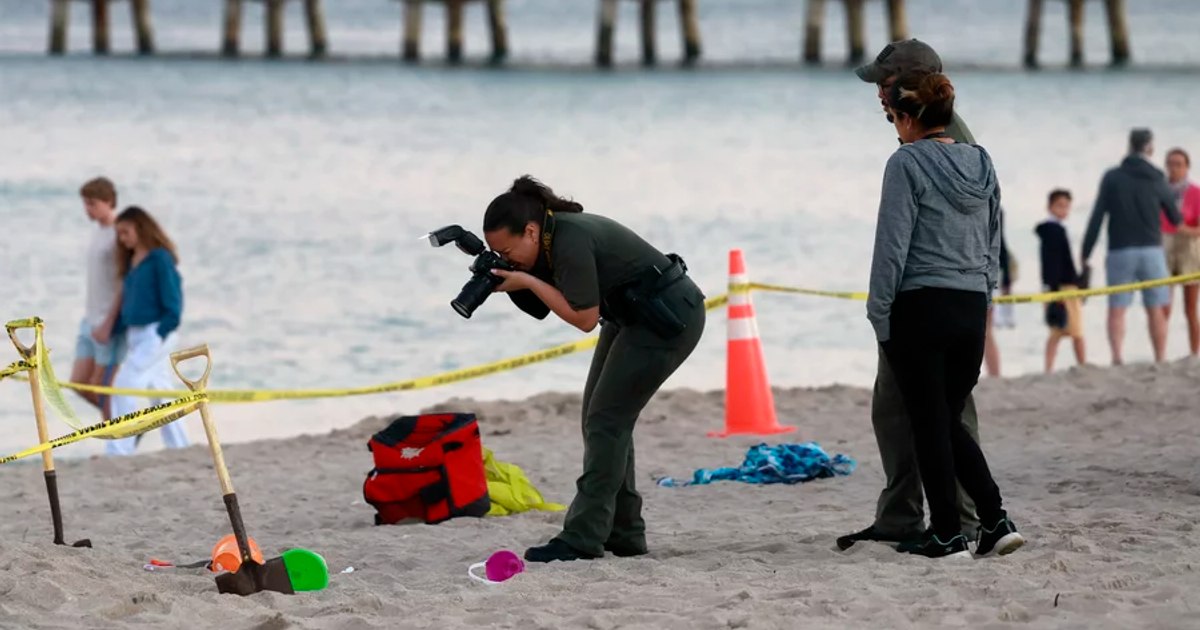
A 7-year-old girl died in a hole dug on the beach. PHOTO npr.org
In February 2024, a 7-year-old girl died after a roughly (1.5 meter) hole she and her brother dug in the sand collapsed on her, burying her alive, writes sciencealert.com
As a coastal science researcher, Stephen P. Leatherman, a professor of science at Florida International University who has studied beaches for many years, was called in to help investigate the girl’s death.
While many people nearby stepped in to try to free the girl after the sandpit collapsed, local firefighters could only arrive minutes after the incident – too late to resuscitate the victim.
Digging holes in the sand may seem innocent, but if the hole is deep enough and collapses on a person, it is extremely difficult to escape. In fact, research suggests that more people die from suffocation buried in sand than from shark attacks.
Quartz sand, made up of silicon dioxide, is the most common sand found on beaches, except on tropical coasts where coral sand beaches, made up of calcium carbonate, are found.
Sand is unstable
“Sand is more stable when wet because the surface tension between the water and the sand grains can keep the pile of sand upright. But once it dries, the pile will collapse because there is no more surface tension. So if you dig a hole in the beach, it will remain stable as long as the sand stays wet. Once it dries, the hole collapses“, says the researcher.
When either the sand forming the hole dries or someone stands near the edge of the hole, adding extra weight, the sand hole collapses and the heavy grains fill all the open spaces in the hole. This leaves no air available for a trapped person to breathe.
“While skiers caught in avalanches can trap their hands to form an air pocket because the snow is light, this is not the case when the sand is collapsing. Rescuing a person trapped in a sand pit can prove difficult because sand is both heavy and unstable. As the rescuers shovel sand to free the victim, the hole will continue to collapse under the weight of the rescuers and fill up again with sand. Rescuers only have about three to five minutes to save a person who is trapped in a sand hole before they suffocate”, says Leatherman.
Professionals such as firefighters must place boards over the hole when rescuing someone from a falling sand hole. That way they can reach down and use tools to remove the sand without putting any weight directly on the edge of the hole.
Experts recommend that you never dig a hole deeper than the knee height of the shortest person in your group (0.6 meters) being the maximum depth.
Collapsing sand holes resulted in 31 deaths, mostly children and 87% men, from 1997 to 2007 in the US.
