
In case you are stuck for reading ideas, The New York Times, with the help of well-known writers, literary critics, university professors and journalists, made a top of the 100 best books of the 21st century.
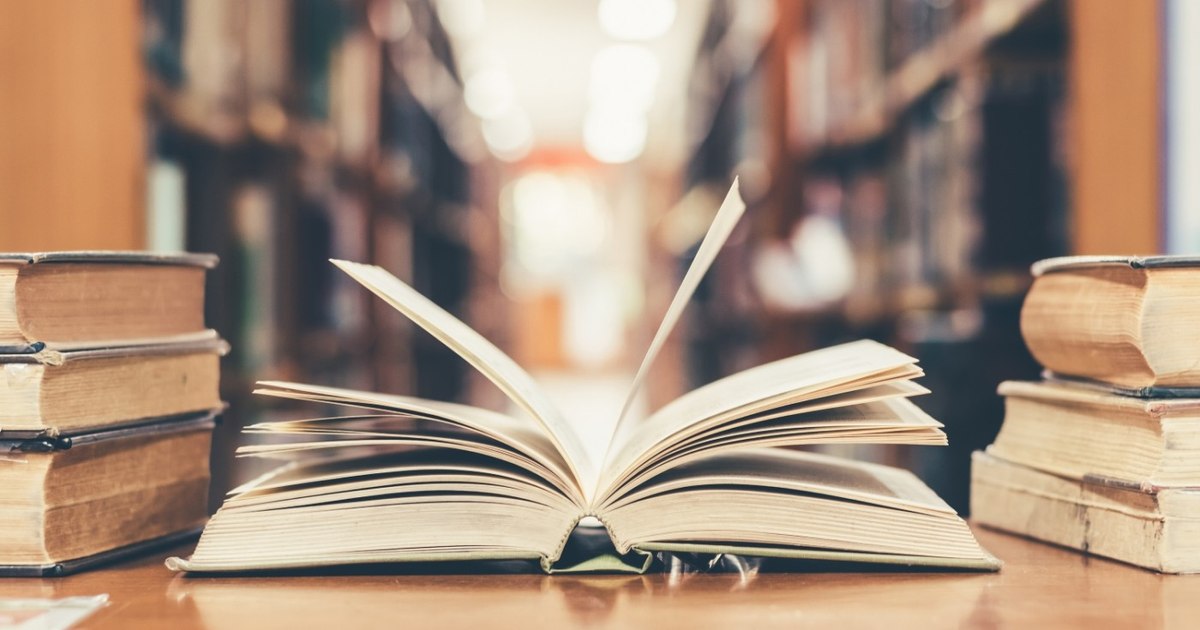
Nothing compares to the smell of a book. Top 20 books to read. PHOTO Shutterstock (Archive)
“My Brilliant Friend”
Topping the top 100 books list is “My Brilliant Friend” by Elena Ferrante, translated into English by Ann Goldstein and published by Europa Editions under the title “My Brilliant Friend” in 2012.
The first volume in what would become Ferrante’s stunning four-book series of novels, published in Italy by Edizioni E/O, the New York Times writes, “introduces readers to two girls growing up in a poor and violent neighborhood in Naples: the diligent and devoted Elena and her charismatic and swashbuckling friend Lila, who, despite her fierce intelligence, is seemingly limited by her family’s modest resources. From here, the book (like the series as a whole) expands as propulsively as the original universe, embracing ideas about art and politics, class and gender, philosophy and destiny, all centered on the conflicted and competitive friendship between Elena and Lila“. “My Brilliant Friend,” concludes The New York Times, is “one of the best examples of the so-called autofiction, a category that has dominated the literature of the 21st century”.
“The Warmth of Other Suns”
Written by American journalist Isabel Wilkerson and released in 2010, “The Warmth of Other Suns” is #2 on this list and details the Great Migration of black people from the South to the North and West from 1915 to 1970. According to the cited source, “is the most important and readable work of history in recent times.”
This migration, writes Wilkerson “it would become perhaps the most important undertold story of the 20th century“. Wilkerson’s book is moving, meticulously documented, and myth busting.
“Wolf Half”
This #3 book is written by Hilary Mantel and was released in 2009. In “Wolf Hall” she chose a historical character, Thomas Cromwell, and saw the living, implacable human being haunted by memories , full of life, which must have been later, presented “the era he lived in, the vast and complex web of power, money, love and need – until the spider caught him“, said Lev Grossman, author of the book “The Bright Sword”.
“The Known World”
Written by Edward P. Jones and released in 2003, “this novel, about a black farmer, shoemaker, and ex-slave named Henry Townsend, is a stunning achievement of the sly American story“says journalist Dwight Garner.
“The Corrections” (2001)
In “The Corrections,” Jonathan Franzen tells the story of a Midwestern matron, Enid Lambert, who is determined to bring her three grown children home for what could be their father’s last Christmas. The book also mentions the economy of Eastern Europe after the fall of communism.
“2666” (release year 2008; translated by Natasha Wimmer)
The novel written by Roberto Bolaño opens with an epigraph from Baudelaire – “An oasis of horror in a desert of boredom” – “and then proceeds, over the course of 900 pages, to create an entire world ruled in equal measure by boredom and the deepest horror. The book is divided into five loosely connected sections, following characters who are drawn for various reasons to the fictional Mexican town of Santa Teresa: a group of academics obsessed with an obscure novelist, an elderly philosophy professor, a lovelorn police officer, and an American reporter who investigates the serial killing of women“, notes the quoted source.
“The Underground Railroad” (2016)
“The Underground Railroad” by novelist Colson Whitehead “is a revelation of the complicated aspects of slavery and the nebulous forms of freedom, with an indomitable protagonist: Cora of Georgia. The novel seamlessly blends history, horror and fantasy” as it tells the “terror-laden story of a girl with a ferocious inner spark who follows the mysterious path of her mother, Mabel, the only person known to have escaped from the Randall plantations“, writes the NY Times.
The books that complete the list:
- “Austerlitz” – written by WG Sebald and translated by Anthea Bell (2001)
- “Never Let Me Go” – Kazuo Ishiguro (2005)
- “Gilead” – Marilynne Robinson (2004)
- “The Brief Wondrous Life of Oscar Wao” – Junot Diaz (2007)
- “The Year of Magical Thinking” – Joan Didion (2005)
- “The Road” – Cormac McCarthy (2006)
- “Outline” – Rachel Cusk (2015)
- “Pachinko” – Min Jin Lee (2017)
- “The Amazing Adventures of Kavalier & Clay” – Michael Chabon (2000)
- “The Sellout/Io against the United States of America” - Paul Beatty (2015)
- “Lincoln in the Bardo/Lincoln in the Bardo” – George Saunders (2017)
- Say Nothing – Patrick Radden Keefe (2019)
- “Erasure/Trees” – Percival Everett (2001)
