
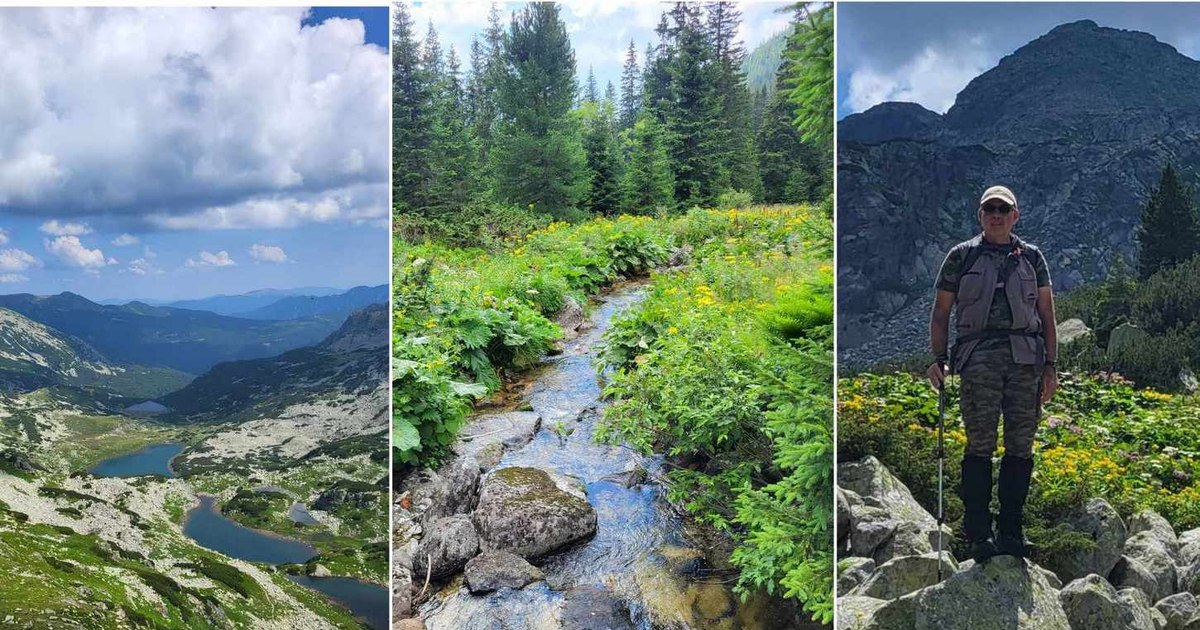
The Gemenele Reserve in Retezat has been inaccessible to tourists for seven decades. Here, nature is allowed to evolve without being affected by human intervention. Pictures taken by a scientist reveal what the wildest land of Retezat looks like.
Gemenele Reserve from Retezat. Photo: Ottmar Trașca
The Retezat National Park covers about 40,000 hectares in the Retezat Mountains and can be explored on several marked tourist routes, which can be covered on foot by hiking enthusiasts.
The tourist routes in Retezat lead to the most spectacular places in the mountains, the peaks that reach heights of over 2,500 meters above sea level, the slopes, the glacial caldera, the alpine meadows occupied by wild animals and the numerous glacial lakes.
Gemenele Reserve from Retezat (video Ottmar Trașca), a territory of almost 2,000 hectares in the Retezat National Park, remained off limits to tourists. From the 1950s, the wild land came under the administration of the Romanian Academy, based on an agreement concluded then with the Ministry of Agriculture. It is currently part of the Retezat National Park, administered by Romsilva through its unit with legal personality, the Administration of the Retezat National Park.
The measure was taken by the authorities to protect the wildest and least trodden place in the territory of the national park, an area where a lot of rare plant species grew and there were virgin forests.
In recent years, several dozen people have arrived in the Gemenele Scientific Reserve, but only after receiving permission from the Commission for the Protection of Natural Monuments within the Romanian Academy.
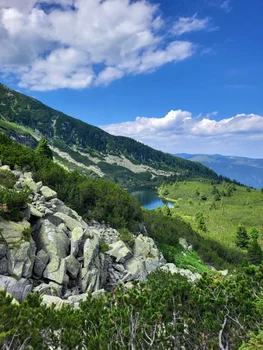
Image 1/15:
The Gemenele Scientific Reserve from Retezat Photo Ottmar Trască Facebook (55) jpg
Dr. Ottmar Trașca was among the few guests of the scientific reserve and published a series of photos of the places he explored.
“The Twin Reserve was created at the initiative of Alexandru Borza and Emil Racoviță during the interwar period. Indeed, to enter the reservation, you must have the written approval of the management of the Romanian Academy (the reservation is administered by the Romanian Academy). If you want to visit the reserve, which is beautiful but also wild, you must send a request to the Presidium of the Romanian Academy (the Commission for the Protection of Natural Monuments), in which you clearly indicate the scientific objectives you are pursuing and the period in which you wish to enter reserve. The Gemenele Reserve also has a cabin, called Casa Laborator (located at an altitude of about 1770 meters), which is in a rather advanced state of decay. The good news is that, following the evaluation reports that I drew up last summer together with academician Mr. Cătălin Tănase, the director of the Botanical Garden in Iaşi (an exceptional biologist and person to measure) and that I addressed directly to the Presidium Romanian Academy, things started to move in the right direction and this year funds were approved for the repair of the Laboratory House”transmitted the scientist Ottmar Trașca.
According to him, the routes in the reserve will be redone and marked, and the degraded footpaths and signs in the reserve will also be repaired.
There are still signs with the Academy of the Socialist Republic of Romania, 35 years after the revolution, including on the tourist routes that represent the limits of the reservation, for example on Șaua Bucura, he pointed out.
Reserve established in the 1950s
The Gemenele Reserve in Retezat covers almost 2,000 hectares in the central area of the massif and is surrounded by a “buffer” area of over 11,000 hectares of forests, also delimited in the 1950s.
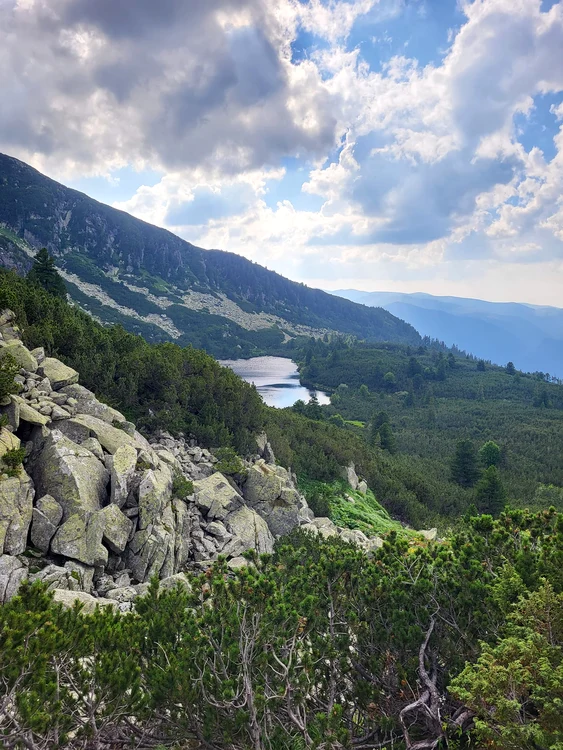
Gemini Reserve. Photo: Ottmar Trașca
“Comparing the buffer zone of the national park with that of the scientific reserve, we easily see a big difference between the two territories. It is primarily due to the protection action enjoyed by the scientific reserve, where the forest and mountain hollow vegetation has remained intact or nearly intact, while beyond, in the buffer zone, human intervention and tourism have caused some deterioration of the beauties of nature, animals and plants”informs the geographer Nae Popescu, in the “Monografia Retezatutu”.
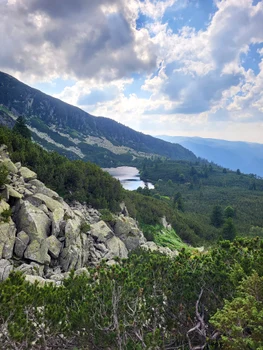
Image 1/15:
The Gemenele Scientific Reserve from Retezat Photo Ottmar Trască Facebook (42) jpg
Visitor access has been banned for the past seven decades, and grazing and logging have been stopped to ensure the protection of nature in the wildest part of the Retezat.
“In the reservation, a strict protection regime is ensured, whereby the habitats are preserved in their natural state, only scientific activities being allowed (other human activities being prohibited), with the consent of the Retezat National Park Administration. Here live many of the 1,190 species of higher plants in Retezat, left to develop freely in their natural habitat”inform the representatives of the Retezat National Park on the reservation page, retezat.ro.
The limits of the reservation under the Romanian Academy were established in 1955 and run along the following points: Gura Zlata – Valea Zlătuii – Scoaba Retezatut – Retezat peak – Saua Retezatut – Bucurea peak – Bucurei Gate – Judele peak – Bârlea peak – Şesele Mari – Şesele Mici peak – Zănoaga peak – Cioaca Radeşului, then going down the Turculu stream, a tributary of Zlătua, to Gura Zlata.
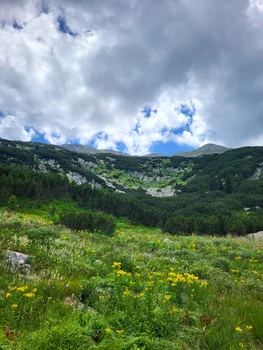
Image 1/25:
The Gemenele Scientific Reserve from Retezat Photo Ottmar Trască Facebook (21) jpg
In the center of the reserve, at 1,770 meters above sea level, the Romanian Academy built a research station in the 1950s.
“In the laboratory house, various scientific researches were carried out, carried out by the specialists who came to observe the habitats outside of any human impact. Observing the natural processes in a Scientific Reserve, where nature works freely, unhindered, specialists can make comparisons, thus noting the changes in the habitats in the areas of the protected areas where public access is allowed”informed the PNR administration.
On the territory of the Gemenele Scientific Reserve, only scientific research, the practice of biologists, geologists, geographers, foresters, official visits by Romanian and foreign specialists are allowed.
Tourism, camping, fire, abandoning waste, cutting or damaging trees, picking or collecting plants and animals, hunting and fishing, grazing, opening new paths or tourist routes, altering the landscape and the natural environment, by whatever means, were prohibited. . Those who enter the territory of the scientific reserve without permission risk drastic fines.
Over time, the reserve has been affected by human intervention. To prevent the spread of insect attacks, some forests on its territory have been cut down.
In the 1970s and 1980s, more than 30 kilometers of galleries were dug in Retezat, to divert the course of 12 streams towards the Gura Apelor reservoir, included in the Râul Mare – Retezat hydropower development.
A section of the Râusor – Gura Apelor adduction (video) has a length of 13,780 meters and was excavated under the Gemenele – Retezat Scientific Reserve.
After 1990, the supposed descendants of the noble Kendeffy family claimed forests located on the territory of the scientific reserve and received title deeds for them, which were later challenged in court.
Retezat National Park was the first nature reserve established in Romania. It occupies an area of almost 40,000 hectares, half of which is covered with forest.
The mountain range offers spectacular views from the height of the peaks of over 2,500 meters, covered with snow, and impresses with its multitude of glacial lakes. In its forests live large predators, such as the bear, lynx and wolf, but also numerous herbivorous animals and over 185 species of birds.
