
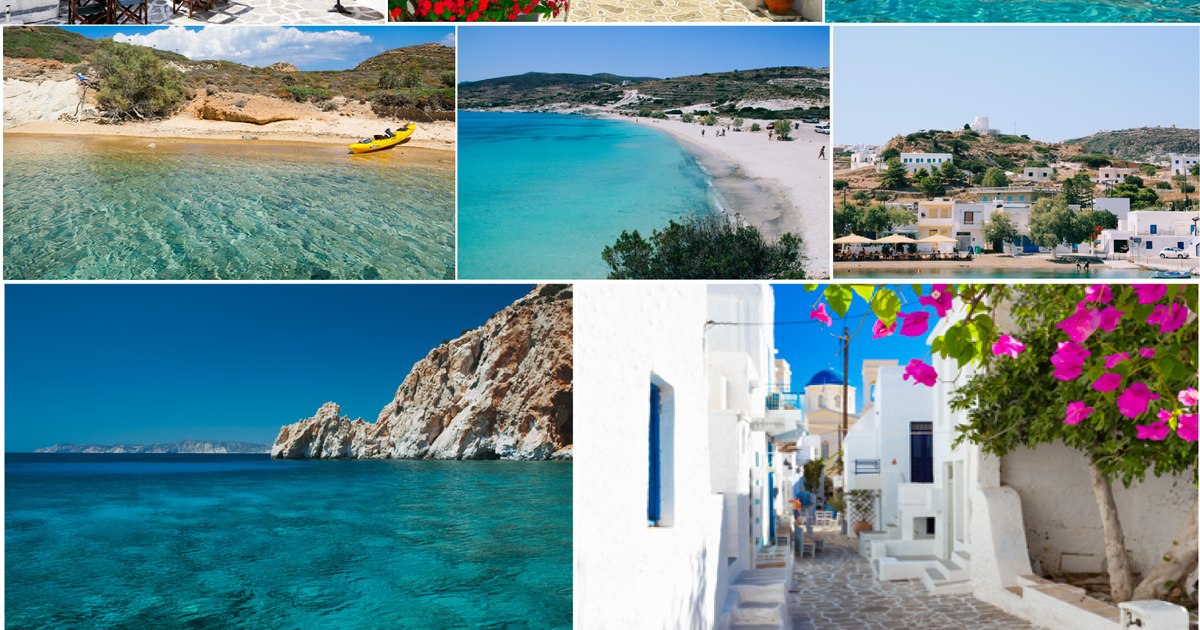
Little visited, Kimolos is like the Greece of old, where most of the 900 inhabitants still make a living from agriculture and fishing. It is one of the smallest islands in the Cyclades, still untouched by mass tourism.
Only one taxi and one gas station operate only in summer, when the first tourists arrive in the area. Until recently, only Greeks came here, but lately foreigners have also started to appear.
On the island (SEE VIDEO) there is only one port, and the area can be reached either by ferry from Piraeus – Athens (42 euros/person – six hours), or from Milos, also by ferry – locally called patoufla – slipper (1.50 euros/person) . Milos can also be reached by plane from Athens (from 60 euros/person). The island is located between the more famous islands of Sifnos and Milos (just 20 minutes away). It is only 22.5 square kilometers, but it has been exploited since Antiquity, even if it rarely appears on the radar of foreign tourists.
Kimolos Greece one of the Cyclades Islands Photo Collage Kimolos Island & Greeka com
Accommodation in Syrmata, near the sea. “A Slice of the Caribbean”
The main road passes idyllic beaches, which are almost deserted most of the time, with waters so clear you can see sea urchins. Most of the locals live in the main town of Chorio and live mainly from agriculture and fishing.
Tourists are accommodated in huts once used to store fishing boats in the winter, right on the beach and specially converted, called syrmata – after the metal cables with which, in the past, vessels were pulled from the water. Even these, once worthless, now cost 200,000 euros.
By renting a scooter from the locals, you can discover the other wonders of the island, such as Prassa, which looks “like a slice of the Caribbean” – the most popular beach of Kimolos, with turquoise waters and bordered by chalk-like rocks, from which the island Greek got its name.
Day trips to Polyaigos – the largest uninhabited island in the Aegean
In addition to olive groves, you can discover bays where the only sounds are the bells of goats, the buzzing of mosquitoes and the music of the waves.
Karas Beach is also dotted with blue-shuttered syrmata; Alyki, south of Chorio, is shaded by tamarisk trees; Agios Georgios is popular with nudists; and Agioklima is known for its thermal springs.
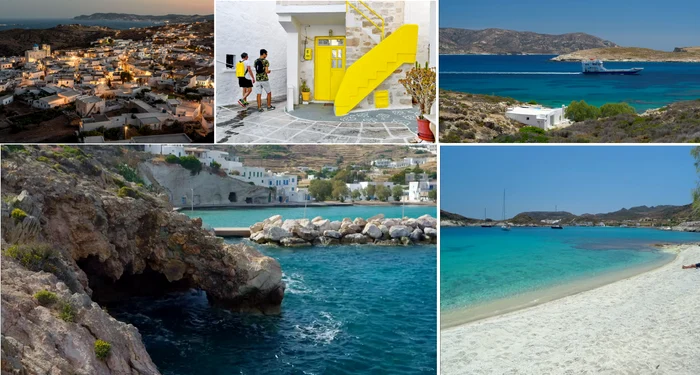
Kimolos Greece one of the Cyclades islands Photo Collage Greeka com & YouTube
With the local company Bay Cruises, you can take day trips around the area. Until 2003, this boat was used to carry essential supplies to the islanders; now, it is dedicated to tourists. The island has not changed in the last half century, experts say.
By boat, you can reach Polyaigos, the largest uninhabited island in the Aegean Sea, where the endangered monk seals come to breed in the sea caves.
“Kimolos is not the place for those looking for Mykonos luxury”
Chorio, the only significant settlement on Kimolos, was built in the Middle Ages to protect the islanders from pirates. From a castle from the 13th century, today we have reached a village where the arcades intertwine with the old alleys, which are constantly changing. The settlement also has an archaeological museum, where the finds from the ancient city and the necropolis of Ellinika, dating from the Mycenaean period, are exhibited, which is underwater, off the west coast of the island.
Nightlife is non-existent on the island, except for Agora, a cocktail bar located in the bougainvillea-shaded streets close to the castle.
A traditional bakery, suggestively named Paradosiakos, offers all kinds of goodies to those who want it – from slices of flat bread with irenia cheese, to elenia olive bread and kolokythenia pumpkin pie. Those who want to enjoy a local wine have to take the ferry to the Konstantakis Winery in Milos.
“Kimolos is not the place for those looking for Mykonos luxury, but if you want a simple life and lots of it beautiful beachesthis is the ideal place”the locals admit.
Accommodation on the island, right on the beach, can cost between 120 and 150 euros per night. A number of family-run tavernas offer spectacular views over the village of Chorio and adapted traditional dishes, including seafood, lobster pasta or the classic wild goat meat dish – katsoikoi tsigariasto.
