
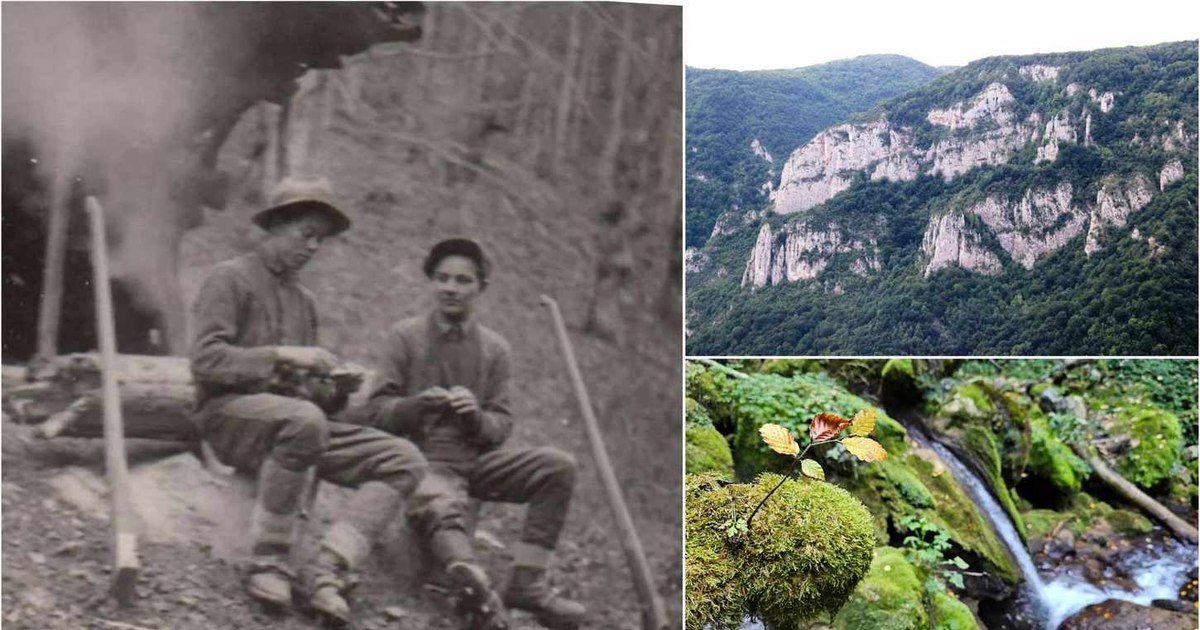
For several years, in one of the most isolated places in Romania, there was a village of forest workers who linked their existence to the centuries-old beech forests. The village of Tecuri disappeared, but an amazing cave remained near its hearth.
Forestry workers in the Șureanu Mountains, 1950s. Photo by Richard Marschalko. Streiului Valley. TRUTH
The Strei River originates in the Șureanu Mountains, near the famous Dacian fortresses, and before leaving the mountains in the country of Hategului, it bears the name Petroș.
Natural monuments from the springs of Streiului
On its upper course, of about 20 kilometers, travelers can see a lot of natural monuments, the appearance of which was favored by the karst relief.
Sipot Falls (video – The truth) are among the most spectacular places to visit in the Șureanu Mountains.
“The Şipot stream collects its waters from three resurgent karst springs. The fatigue of the climb along this stream is rewarded by the disturbing sight of some waterfalls and rapids with beautiful calcareous tuff concretions, as well as the three resurgences located at the base of a vertical wall over 150 meters high. Two of the springs emerge from grottoes, and one from a calcareous scree cone (which surely masks the entrance to a cave). “Also in the limestone wall of this area, several caves open up, whose admirable stalagmite formations could be preserved precisely because they are difficult to access”informs the geographer Nae Popescu.
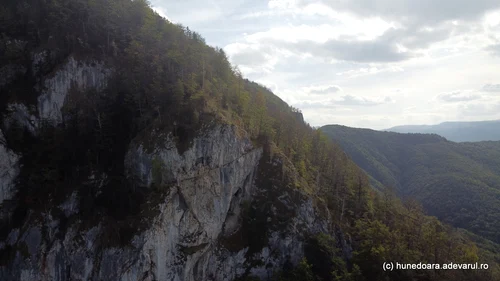
Image 1/15:
The Streiului Valley in the Șureanu Mountains and the Şipote Waterfall Photo Daniel Guță THE TRUTH (19) JPG
The waterfalls can be seen starting from a few minutes of climbing on foot, from the forest road that crosses the Streiului valley towards its springs. On the opposite slope, other mountain paths go up to Ticera Pinului.
“Here you can admire, on the right side of the valley, under the Ticera Pinului Peak (1,057 meters), the impressive limestone walls accompanied by chimneys, towers, overhangs or indented by suspended valleys that offer wonderful climbing routes with varying degrees of difficultye”, informs the geographer Nae Popescu, in the tourist guide of the Șureanu Mountains.
In the past, the area was more lively. A forest railway operated until the beginning of the 70s on the Streiului valley, starting from the village of Baru up the stream, over a distance of over 20 kilometers.
The railway was built around 1945, when one of the large forestry operations in the Șureanu Mountains was opened in the Streiului valley, close to its springs.
The village that did not appear on the maps
That’s when the village of Tecuri came into being, in one of the hard-to-reach clearings above the rocks and waterfalls of Sipot, where dozens of families of forest workers were to be moved.
The workers’ colony was not indicated on the maps of the time, and the road to it was extremely difficult. The place where the climb began was marked by the funicular installations that connected the mountain ridges to the valley where the forestry railway was located. (Photo: forest railways in the Șureanu Mountains, 1950s, Richard Marschalko)
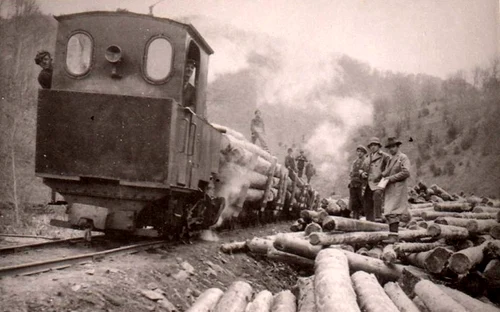
Image 1/12:
Forest railways in Jiului Valley Year 1956 Photo Richard Marschalko (7) 001 jpg
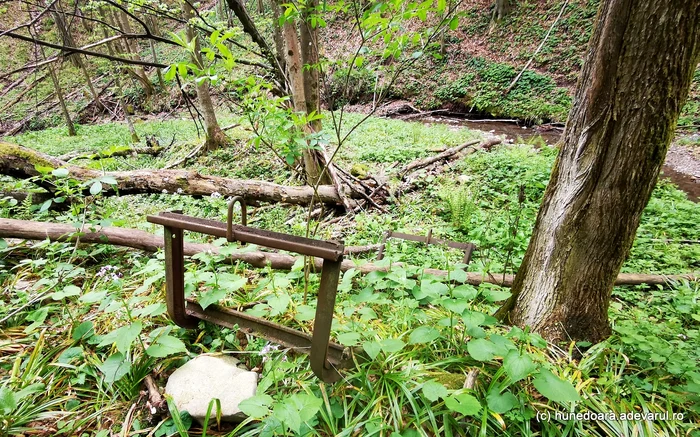
In the mid-1950s, several funiculars were installed at Tecuri, to speed up the transport of logs cut from large areas of forest.
“The first funicular, Wyssen, installed in 1954 in the Tecuri mine on the Streiului Valley, undergoes a whole series of route and length changes, which last almost the whole year and only after a year begins to be used, due to the fact that the Tecuri forest massif having a special configuration of the land, without any natural drainage, requires finding a means that lends itself to these conditions. The second funicular was also installed in Tecuri, being then transformed into a motorized funicular. The self-propelled funicular and the Wyssen are installed in parallel and both bring all kinds of wood from Tecuri to the CFF line on Valea Streiului. These two funiculars are the means by which all the products of the Tecuri exploitation are transported (in an annual volume of about 60,000 cubic meters of beech wood mass) and they also transport food, fodder and even water up the hill, which is lacking in Tecuri“, informed Revista Pădurilor, in 1959.
Remains of a funeral pyre. Photo: Daniel Guță. TRUTH
Two other funiculars of the Wyssen and Mâneciu type were installed to bring the wood brought from the hills closer to the forestry railway.
The cave that changed the fate of the settlement
The difficult-to-access village on the mountain ridges was initially faced with a lack of water, which was solved with the discovery of one of the most spectacular caves in Romania at Tecuri.
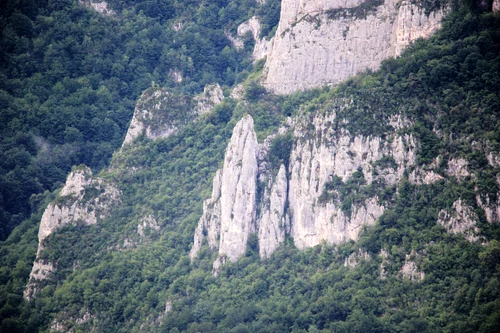
Image 1/8:
Tecuri Photo commune bar Facebook (4) jpg
“That region is poor in water. Rains are quickly absorbed by the porous soil. In search of sources of water for the animals, the shepherds in these parts advanced a few meters into an opening in the mountain that they thought was short. Great was their surprise when they found here the water they were looking for. Along with the underground lake, the entrance to the cave had also been discovered. The Tecuri cave has, according to the testimonies of those who have been there, an overwhelming importance. The stalagmites and stalactites are colored red, proof of the existence of iron oxide in the water, in large portions. The most important thing, however, is the fact that one half of the cave is still active, that is, drops of water continue to fall with clockwork regularity forming stalagmites and stalactites of particular beauty”informed publicist Ion Deleanu, in 1954.
Over time, the springs located about a kilometer from the colony could be captured, so the water in the cave was used less. Located at an altitude of about 900 meters, the Tecuri Cave is declared a nature reserve, being recognized for the corals, stalactites and microcrystals that adorn it, for its underground lake and for its great ornament, a white stalactite with pink reflections, high over seven meters.
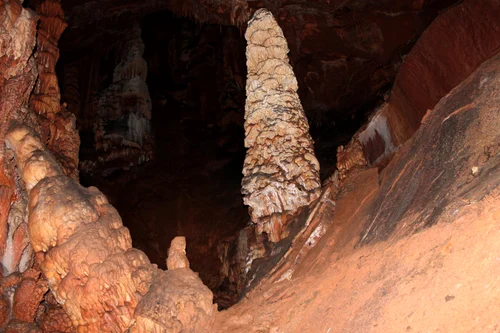
Image 1/7:
Tecuri Cave Foto Baru Hunedoara County jpg
The Tecuri cave is about 500 meters long, and the entrance to its interior is through a 12-meter avenue. It has attracted the attention of scientists, but has not been fully explored, being difficult to traverse, but its guests have often caused great destruction.
“The degradation starts right from the entrance, from the metal door: broken, cracked stalactites. Inside, the situation is even worse: broken formations, a column that initially had a height of three meters is knocked down and broken into pieces. However, the cave is still beautiful. If urgent protective measures are not taken, in a few years the destruction will take on proportions“, informed the newspapers of the time in 1973.
Nowadays, the Tecuri cave is less visited, the old colony around it having been abolished a long time ago.
The village of forest workers
In the 1950s, the village of Tecuri fascinated its few visitors, who dared to climb here, either starting from Baru Mare through the Streiului valley, or climbing over the hills, from the neighboring village of Crivadia – on the arduous paths of an 8-10 kilometer route (photo: forestry railways in the Șureanu Mountains, 1950s, Richard Marschalko).
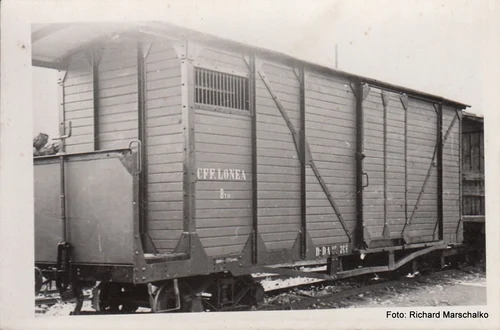
Image 1/11:
Forest railways in Jiului Valley Year 1956 Photo Richard Marschalko (5) jpg
“Up above, wonderful views open before your eyes; back Retezat with his snow-white cap, in front the forested ridges of the Sebeş mountains. From here to Tecuri is not even two kilometers. A path quickly crosses two mountain valleys, descending into a ravine. At the bottom of this gully, arranged in the shape of a circle, are the cabins of the colony of forestry workers from the Tecuri exploitation. At Tecuri, good living conditions were created for the workers. Seven new cabins were built where more than 100 seasonal workers can rest very well. Besides these, 12 rooms for family members were put into use. Last summer, the construction of two-apartment brick buildings began,” showed the newspaper România Liberă in 1957.
Other residential buildings were then under construction, and a four-grade school was to be established on the mountain. The canteen had 40 permanent subscribers, the newspaper reported during the communist years.
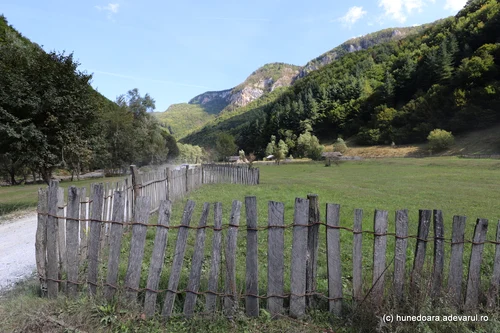
Image 1/6:
The Streiului Valley in the Șureanu Mountains and the Şipote Waterfall Photo Daniel Guță THE TRUTH (7) JPG
“When the evening shadow slowly descends over the forest, a lively animation begins in the Tecuri colony. People pass from one cabin to another, go to the canteen where a hot meal is served, go to the store to make purchases, come to the head of the exploitation, the main foreman Neagoe, to organize the various tasks for the next day. From a cottage, a doine of a whistle runs through the night”, inform Romania Free.
From Baru Mare, travelers traveled about nine kilometers to the foot of the limestone massif on which the Tecuri colony had been established. From here, they climbed steeply under the funicular installations
“Our road was not an ordinary mountain climb, with smoother sections, with detours. In front of us was a vertical wall of rock covered with oak trees, which we had to tackle, to metamorphose into performance climbers. Time flew by quickly, but we seemed to be standing still. The boots slid over the layers of leaves left over from last fall that slyly hide the opposing stone corners. And the hard work is just beginning – the guide announces encouragingly. A roar like before a great storm grows closer, closer, threatening. It’s a sign that we’ve reached the funicular line again, down which a huge load of logs is coming down. Only for a moment do we see its slippery slide over a precipitous ravine, where lie the rotting remains of the wood that years ago mercilessly fell from the top of the mountain.” informed Magazin magazine in 1960.
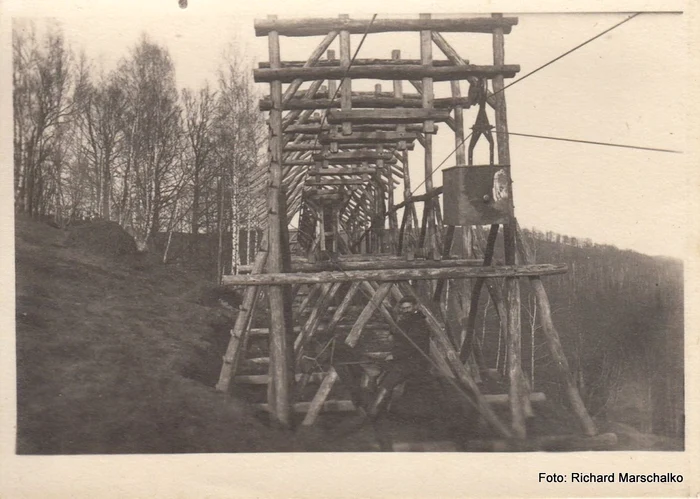
Funicular in the 1950s. Photo: Richard Marschalko
An iron cable stretched across the rocks was used by travelers as a safety point to keep them from tipping over the precipices along which they advanced.
Up high, however, people discovered the spectacular panorama of the country of Hațeg, surrounded by mountains, and enjoyed the hospitality of the isolated families in the mountain village. A school had been established in the 1950s for the children of Tecuri, and a teacher climbed the steep path every day to teach them books.
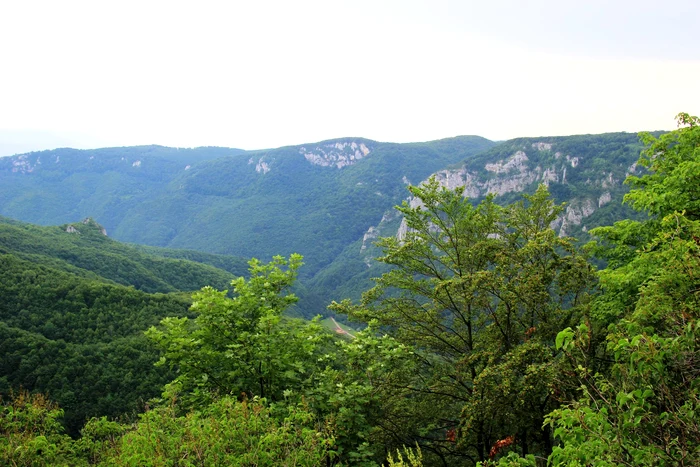
tecuri. Photo: Baru / Facebook
“Life goes on here as usual. The men go to work in the forest in the morning — and the work is easy because mechanization is a valuable aid. They give wood for industry, for furniture, for formwork. In the evening at the club they play chess, or people gather and sing together. It is worth going up to Tecuri with all the risks of the road, if only for the joy of the foresters to receive a guest”informs Magazin newspaper.
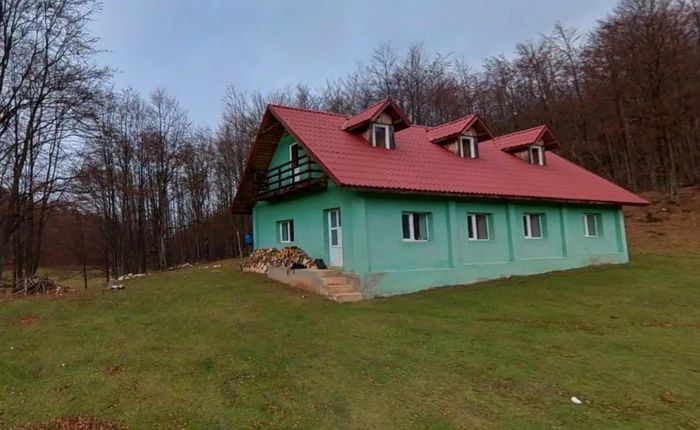
The cottage from tecuri. Source: IM Kovacs
In the early 1960s, once the forest thinned out, the colony also disappeared. A logging cabin now marks the site of the former logging workers’ village. Near it, the Tecuri cave has remained a picturesque place for mountain travel enthusiasts.
