
Founding director of the Anim’est Festival, Mihai Mitrică is one of the leading names in contemporary Romanian animation. Mihai curates animation film programs for various international festivals, promotes Romanian film at film markets such as Annecy or Clermont Ferrand, was invited as a member of the jury at dozens of festivals, but also works with some of the most popular animators and directors from Romania, as a producer, through the Safe Frame studio. In an exclusive interview for “Weekend Adevărul”, he talks about the challenges and satisfactions that the festival brought, but also about the situation of animation in Romania.
“Memoir of a Snail” opens Animest this year
“Weekend Adevărul”: We are fast approaching Anim’est 2024, the 19th edition. How did the idea of this festival come about?
That’s right, between October 4-13, the 19th edition of this year’s Anim’est will take place, which will take place in over seven locations in Bucharest, cinemas and alternative locations. The idea came about in 2005, when I had some friends who were doing animation and had nowhere to design them. Back then, there weren’t many film festivals either. It was TIFF in Cluj and DAKINO in Bucharest, that’s about it. Then I ended up in 2005 at an animation festival in the Czech Republic, which was somehow the trigger for Anim’est.
How would you describe the impact and importance of Anim’est in the Romanian and international cultural landscape?
For 19 years, Anim’est has remained a unique event both through its curated content and its proximity to the audience so loyal to the festival. The event has long surpassed the status of a film festival and has become an urban event of the city of Bucharest. Internationally, it has earned its reputation through the quality of the selection as well as through the technical quality of the projections. Year after year, the number of directors and producers who arrive in Bucharest has grown significantly, so last year we had a record number of foreign guests, over 150. Many of them say that they had the best screening of their films in Bucharest. In fact, Anim’est is the only festival in Romania that is on the list of the American Film Academy, which proposes the winner on the long list of the Oscar Awards for short animation.
Full hall, the goal of any festival
What have been the biggest challenges you have faced over time?
There were two big challenges. The first, of a financial nature and the second, of an artistic nature. All over the world there is a preconception that animated film is for children. We have managed, over the course of 19 years, to educate the public so that, at present, we no longer have this problem.
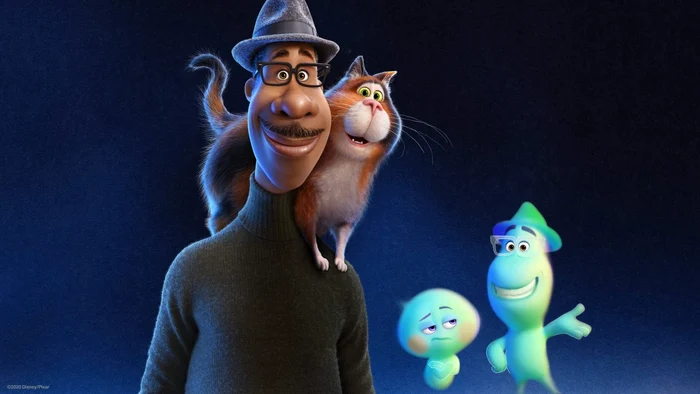
“Soul” (dir. Pete Docter, Kemp Powers)
What about the biggest satisfactions you’ve had?
Always when you see full halls during the festival you know you did the right thing and the audience rewards you. When Anim’est happened at the legendary cinema “Patria” and you saw more than 1,000 people in the hall for an independent animated film, it was an immense satisfaction.
From Geppetto’s world
This year’s edition puts the spotlight on Italian animation. What are the films not to be missed, from the perspective of the festival director?
It is a retrospective thought for a long time and now we managed to put it on its feet, with the support of the Italian Institute in Bucharest. Not to be missed is the film “Allegro Non Troppo” by the great Italian animation director Bruno Bozetto, but in addition to this, two programs of short films curated by Andrea Martignoni, a friend of the festival and one of the best sound designers in Europe .
What other surprises will there be in this year’s edition?
First of all, the films, all premiered in Romania, and secondly, guests from all over the world. From Japan, Argentina, Australia and the United States of America, special guests from the animation industry will come to Bucharest. One of them, a legend of Japanese animation, Koji Morimoto.
The two faces of Romanian animation
Anim’est has assumed an important role in supporting local animation since the beginning. How would you describe contemporary Romanian animation?
Since 2006, the quality and quantity of Romanian animated films have increased significantly. If at the second edition we had two or three Romanian films, today we receive around 30-40 for selection. Supporting domestic animation has been one of the main aims of the festival since the beginning.
This year marked the 60th anniversary of the establishment of the Animafilm Cinema Studio. Although it still exists, under the tutelage of the Ministry of Culture, it has practically been inactive for a very long time. Do you think there is still any chance of revitalizing this brand that is identified with the heyday of Romanian animation?
Much has been written about Animafilm. It was a legendary studio that laid the foundations of Romanian animation. It was practically the cradle of Romanian animation, where all those who made animated films in this country before 1989 grew up and learned. But I don’t think there is a chance of revitalizing Animafilm. If you want an analogy, it’s that of a damaged building that it’s better, safer and cheaper to tear down and build from scratch. I think it is the only solution to revive the Animafilm.
The animation, with the capital in Bucharest for a week
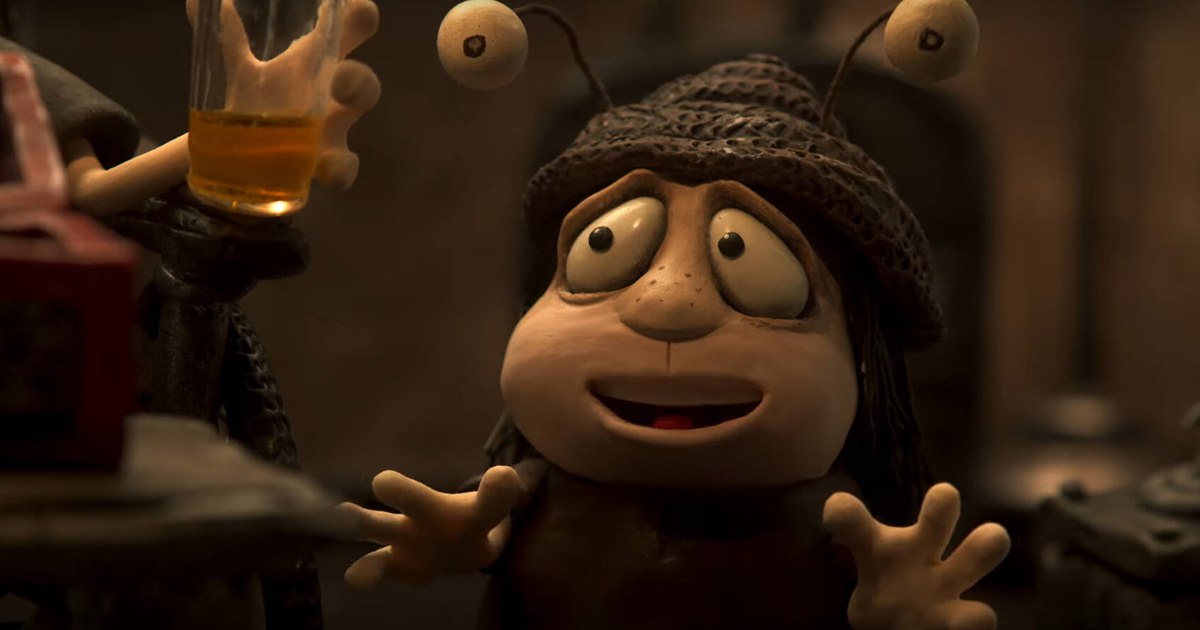
More than 350 short and feature films from around the world, grouped in 90 screenings, are included this year in the program of the Animest International Animation Festival (October 4-13). The urban adventure kicks off this year with Annecy Crystal winner Memoir of a Snail, a drama directed by Oscar-winner Adam Elliot – a story about trauma and how we deal with it, told with great humor and authenticity.

Fans of director Jonathan Hodgson, one of the biggest names in contemporary animation, should not miss the Retrospective dedicated to him: 12 of his short films, including “Dogs”, “Feeling My Way”, “The Man with Beautiful Eyes”, but and the moving “Save the Children – Mariupol: Margarita’s Story” (2023).
This year’s edition puts the spotlight on Italian animated film, thus continuing a long tradition of annual retrospectives dedicated to countries that have set important milestones in cinematography over time – both feature and short films. Six classic short films come from Italy, including “Dedalo/Labyrinth” (1976) and “Le città invisibili/Invisible Cities” (1998) by director Manfredo Manfredi, one of the representatives of the Golden Age of Italian animation, but also a selection of 10 titles representative of contemporary Italian animation, all released in the last three years.
