
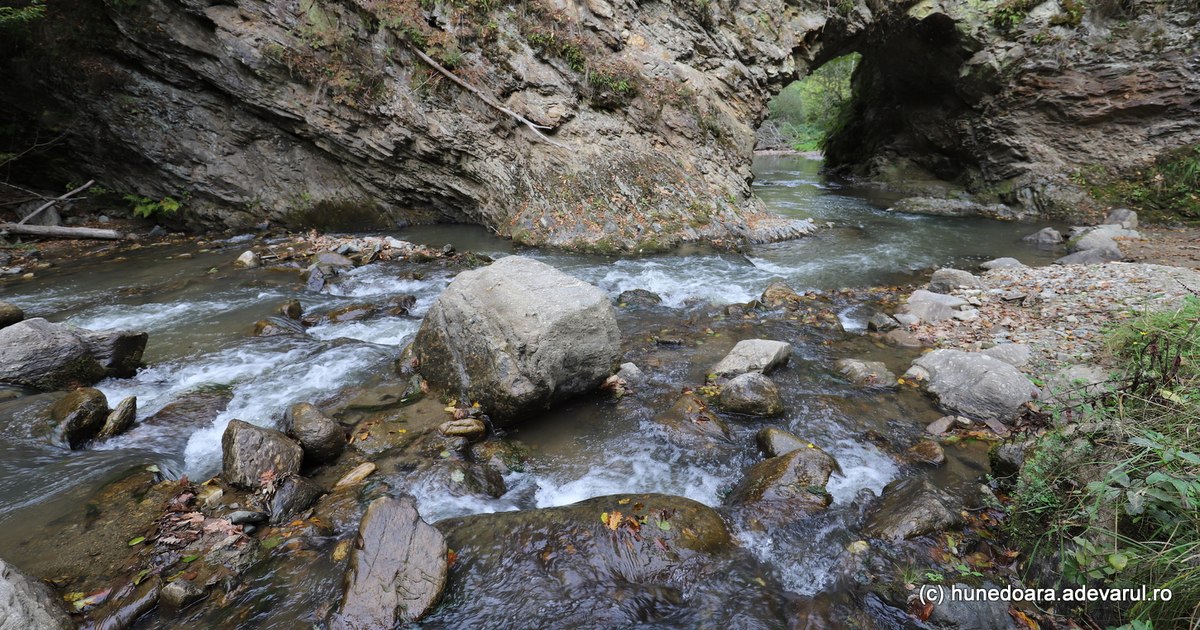
The Cerna River in Hunedoara forms the most spectacular gorges in the Poiana Ruscă Mountains, but people have contributed to the pollution of the reserve, with garbage, even in one of the most admired places crossed by the waters.
Bolta Apei, the entrance to Cheile Cernei. Photo: Daniel Guță. TRUTH
Until 11 years ago, when the road on the Cernei valley from Hunedoara was completed, the difficult roads to the villages of the Lunca Cernii de Jos commune were rarely traveled by tourists.
The locals at the foot of the Poiana Ruscă Mountains lived in greater isolation than the one offered today by the more than 50 kilometers of the distance from the nearest town, Hunedoara, which they traversed descending through the valley surrounded by mountains covered with forests.
Cheile Cernei, the little-known reserve in western Romania
The new 30-kilometer road from the Cerna valley gave travelers the opportunity to see some of the spectacular places in the Forest Land. One of these is Cheile Cernei, a nature reserve with an area of two hectares, difficult to access due to its relief.
The access to Cheile Cernei from Hunedoara is on a forest road from the edge of Hășdău village and is marked by the place called “Bolta Apei” (video – The truth), where the river made its way through a crack in the wall of a hill, creating a natural bridge that can be crossed on foot.
From the water vault, the path through Cheile Cernei continues for about 200 meters, then the travelers have to continue their way through the fast-flowing water, sneaking between the steep slopes, with heights of hundreds of meters.
The Cernei gorges are over six kilometers long, and above them, the Hunedoara – Toplița – Lunca Cernii de Jos road climbs, up to above the entrance to the waters in the gorge.
Here, the road passes through a tunnel built in the 60s and then descends into Lunca Cernii de Jos and the hamlets in the vicinity of the village. A small rest stop has been set up near the tunnel, and many tourists stop here to admire the view.
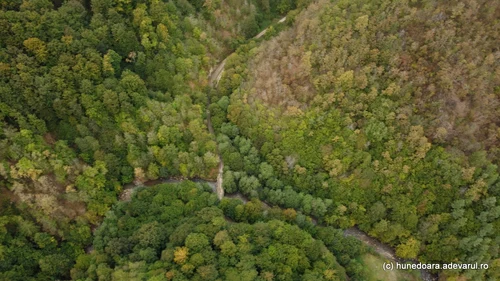
Image 1/19:
Cheile Cernei from Hunedoara Photo Daniel Guță (3) JPG
In recent years, however, the rest stop has become a source of misery.
“Many people come here to get rid of all kinds of rubbish, from used tires to furniture and appliances. He throws them from the side of the road, into the ravine that leads to Cheile Cernei. People do not take into account the beauty of the place or the fact that it is a nature reserve”, complains a local from the village of Negoiu, close to Cheilor Cernei.
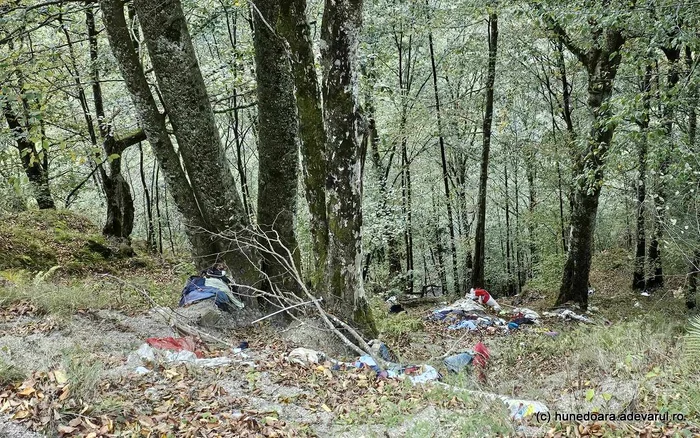
Garbage thrown into the ravine. Photo: Daniel Guță. TRUTH
Once dumped on the slope, garbage can be difficult to collect because the slope is steep. Some larger objects rolled dozens of meters down the valley, stopping at tree trunks. The difference in level between the road and the river is more than 200 meters.
The Cerna River in Hunedoara, the emblem of the Forest Land
The Cerna River in Hunedoara springs from the Poiana Ruscă Mountains, runs through several villages in the Pădurenilor Forest, feeds Cinciş Lake and crosses Hunedoara from one end to the other, and 15 kilometers from the municipality it flows into Mureş.
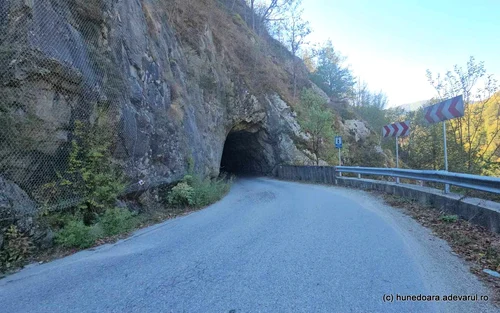
Image 1/16:
Cernei gorges from Hunedoara Photo Daniel Guță (34) jpg
The rapid waters of the Cerna bathe the lands of Hunedoara over a distance of over 70 kilometers, coming down from 1,200 meters above sea level, in the middle of the wilderness of the Poiana Ruscă Mountains, in the Mures meadow.
The most attractive part of the Cerna river route is located upstream from Lake Cinciş, where the river crosses several picturesque villages in the Pădureni Land: Lunca Cernii de Jos, Hășdău, Dăbâca and Toplița.
Between Toplița and Teliuc, the river and its tributaries formed Lake Cinciș (video), whose dam built at the beginning of the 60s is located about ten kilometers from the municipality of Hunedoara.
