
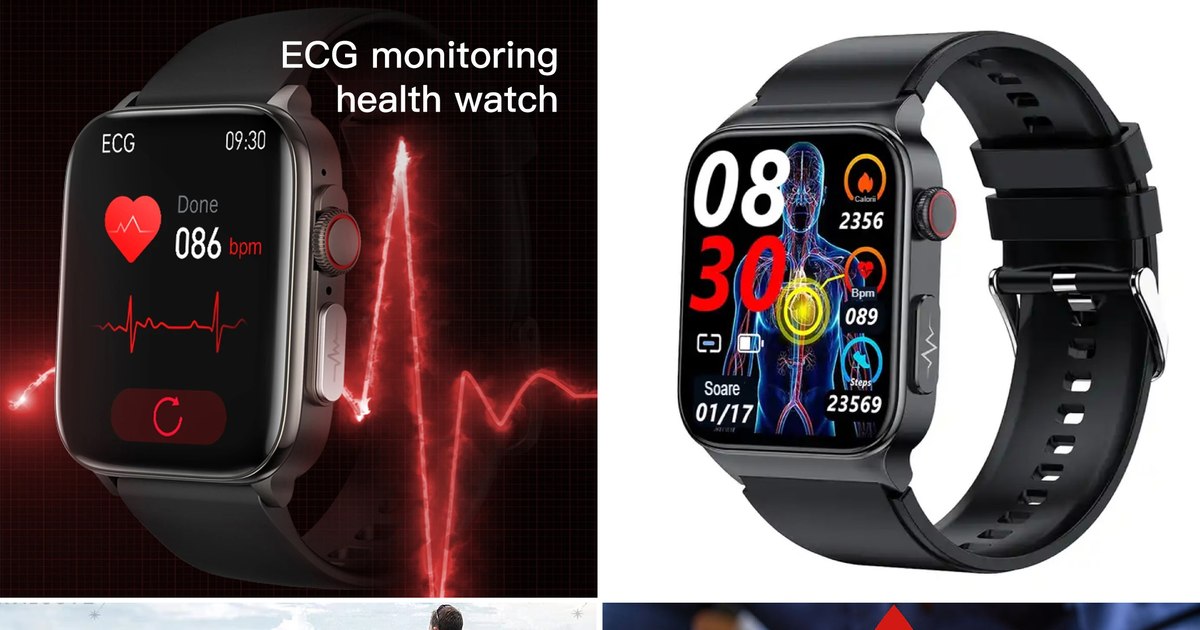
A recent study shows that wearable gadgets can detect early signs of COVID-19 and heart disease before symptoms appear. Researchers have found that the data collected by these smart devices could help identify subtle changes in the body.
Smart watches useful in detecting respiratory infections and even heart conditions
Research by the University of South Australia has highlighted how continuous health monitoring, via smartwatches and wristbands or other fitness trackers, allows early detection of conditions such as respiratory infections and arrhythmias.
Heart rate, sleep patterns, physical activity, and even blood oxygen levels can provide valuable information long before the first signs of a heart or respiratory condition become apparent.
Thus, these devices could function as an early warning system, helping users seek medical attention before the situation worsens. The study also highlights the potential of integrating wearable technology into public health strategies by providing real-time health data, supporting early diagnosis and prevention.
Key findings of the study on wearable technology in health monitoring
The Australian study reveals that wearable gadgets that monitor the physical activity of users show promise in detecting early signals of some diseases – especially atrial fibrillation – associated with stroke – and COVID-19. The researchers analyzed data from 28 studies involving more than 1.2 million participants to assess the accuracy of these devices in detecting disease.
It was thus discovered that the wearable technology could correctly identify: the status of COVID-19, positive or negative, in 88 out of 100 people, similar to rapid screening tests; atrial fibrillation in 87 out of 100 people, similar to tests performed by doctors.
Dr Ben Singh, lead researcher at the University of South Australia, said these devices could revolutionize the detection of medical conditions. He pointed out that amid rising medical costs, gadgets like the Fitbit and Apple Watch can help cut costs by monitoring health in real time and identifying conditions like COVID-19 or heart problems: “Wearables not only allow users to proactively manage their health, but also help them detect problems in real time so they can react quickly and hopefully avoid serious complications.”
Although these devices offer monitoring opportunities, Professor Carol Maher pointed out that there is still room for improvement: “These gadgets provide valuable data, but their applicability needs to be expanded to cover more conditions and demonstrate widespread effectiveness before they can be used clinically.”
Severe cases of COVID-19, diagnosed with the help of wearable devices
And a cardiologist at Pune’s Ruby Hall Clinic, Dr Anesh Jain, pointed out that the gadgets are only capable of measuring oxygen saturation levels and providing real-time ECG readings, but are limited to single-lead electrocardiograms. Basically, it is a simplified version of traditional 12-lead electrocardiograms, with less accuracy and precision, which can lead to omissions in diagnosis.
A single-lead EKG can diagnose rhythm abnormalities such as atrial fibrillation, but is less effective for comprehensive diagnosis of myocardial infarction (heart attack), for example.
Regarding COVID-19, the cardiologist added that wearable devices are instead more effective in severe cases, when oxygen levels drop significantly.
“The accuracy of these findings is debatable. Although wearable devices provide some information about the conditions of healththey are currently limited compared to conventional methods”the cardiologist also specified.
Efficiency and limitation. Gadgets, useful as an early warning system
So, although a single-lead ECG can identify certain rhythm abnormalities, an accurate diagnosis of myocardial infarction requires a 12-lead electrocardiogram.
Wearables, on the other hand, are capable of detecting severe forms of COVID-19. The cardiologist noticed that his patients often become aware of their symptoms before the technology picks them up.
Therefore, traditional diagnostic methods remain essential for serious heart conditions and early identification of COVID-19, but modern wearable technology can also significantly contribute to health monitoring by providing real-time data.
