
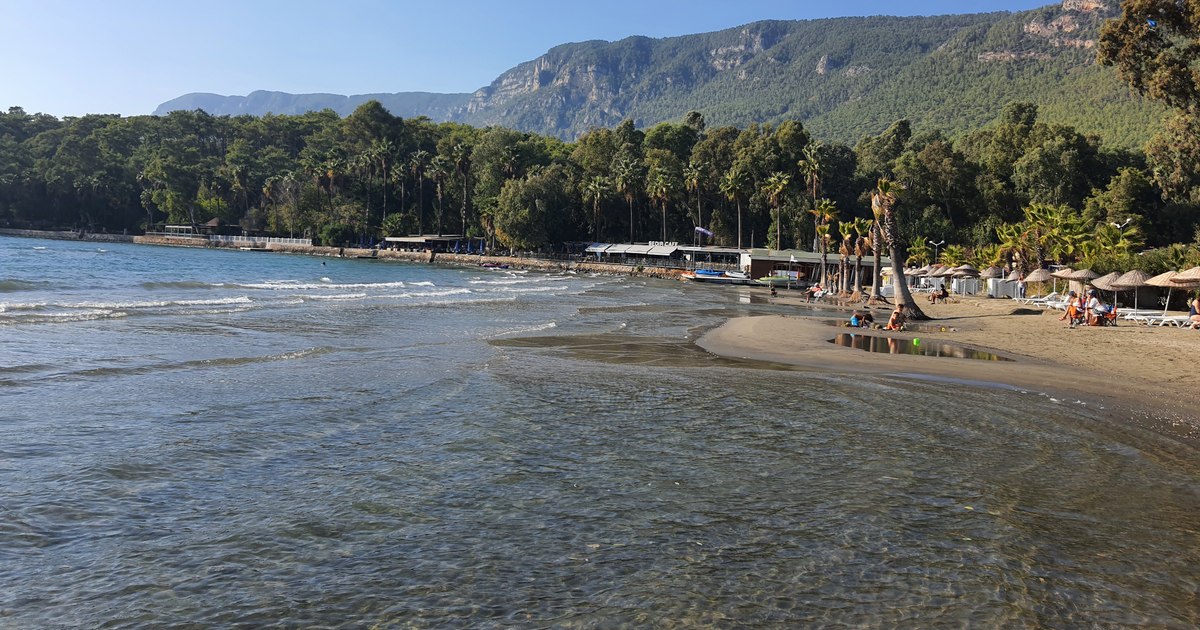
Despite the fact that Turkey has “flowed” 46 billion dollars from tourism this year, there are administrations like the one in Mugla that want to change the model of “wild tourism”, which destroys nature and makes locals revolt against tourists, as in Barcelona and Venice.
The beach in the Mugla metropolitan area. PHOTO: RF
Turkey broke all records in the first nine months of 2024. The country hosted an impressive total of 49.2 million visitors, generating more than $46 billion in tourism revenue.
At the end of the third quarter of 2024, Turkey had an impressive number of tourists, of which 975,582 were Romanian tourists, thus marking an increase of 16% compared to 2023 and 26% compared to 2022.
Istanbul and Antalya were the star destinations, with Istanbul receiving more than 14 million visitors, a 7% increase, while Antalya attracted 13.3 million tourists, continuing to be considered the “Tourism Capital of Turkey”.
A region in Turkey – Mugla – less known to Romanian tourists, being dominated by English tourists – intends to come up with a new approach to tourism, one that wants to get tourists out of all inclusive resorts where they get the cheapest supermarket food, and to urge them to discover authentic food of the locals, to show them the impressive historical vestiges of the country to make sustainable tourism, where nature and the locals are respected.
Mugla is Turkey’s third tourist paradise with 1,589 kilometers of coastline (123 blue flag beaches), a population of around 1 million people and a cultural heritage that makes the area look like a museum in the air free (with 126 archaeological sites with ruins).
The area is less known by Romanians who prefer Antalya. The most famous resorts are Bodrum, Marmaris and Fethye. In the Mugla metropolitan area there are 2,590 hotels, with an accommodation capacity of 216,200 beds, 18 Michelin restaurants, two objectives on the UNESCO list and two airports.
The number of tourists who arrived in Mugla between January and September 2024 was 3,239,853 people, 9% more compared to the same period last year.
The most numerous tourists came from England – 1.3 million people, followed by Russians (363,000), Poles (268,000), Germans (208,000) and Dutch. Romanians fall under the “and others” category.
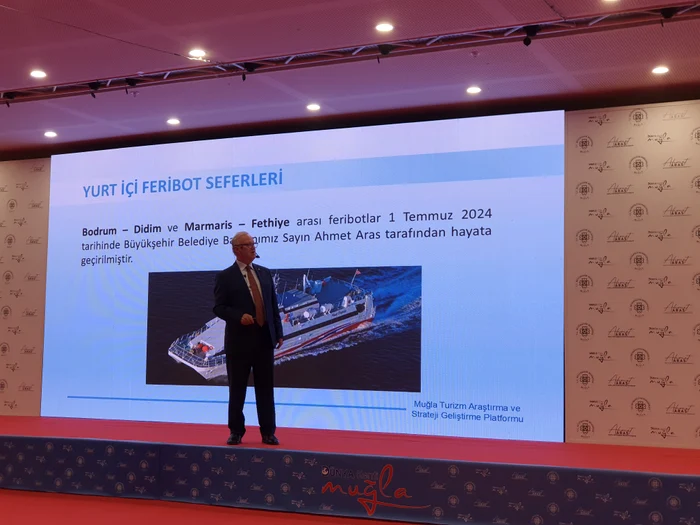
Cumhur Guven Tașbași, coordinator of the tourism platform. PHOTO: RF
They want sustainable tourism
The administration of the Mugla metropolitan area – led by the mayor Ahmet Aras, who is in opposition to Erdogan’s party – launched, the other day, in the administrative capital of the metropolitan area – a tourism research and strategy platform that aims to collaborate with all partners for a sustainable future of tourism.
The targeted partners are local and foreign visitors, public institutions, sector organizations, professional chambers, universities, experts, international organizations, the local community, foundations and associations active in the fields of culture, art and tourism.
Taking into account examples from tourist destinations such as Barcelona or Venice, where locals revolted against tourists, the Mugla administration intended to ensure a sustainable development of tourism, with the participation of locals, who would also benefit from tourism. Between 150,000 and 180,000 people work in the area’s tourism sector.
Thus, if areas like Antalya have a tourism offer centered on all inclusive, Mugla intends to develop a diversity of offers such as: religious tourism, health, cultural, gastronomic, sports, sea navigation tourism, education and shopping.
The most advanced consultancy and model – the Visit Berlin application – will be used for the tourism web platform.
The primary goals of the platform will be to develop tourism by increasing tourism revenues, ensuring that the population adequately benefits from tourism, increasing the number of local employees in tourism, creating and protecting cultural and natural resources necessary for quality tourism.
“We need more culture, art and sport”
Adevărul did an interview with Cumhur Guven Tașbaşi, the coordinator of the new tourism research platform in Mugla, about Turkish tourism outside the concept of all inclusive.
The truth: In tourism in Turkey, the model that seems to be the most profitable is the all-inclusive model, with which Antalya, nicknamed the capital of Turkish tourism, is successful. The tourism you pursue in Mugla involves investments in culture, in gastronomy, in natural heritage and it does not seem to be as profitable. Why did you choose this model?
Cumhur Guven Taşbasi: Money is not at the heart of our tourism concerns. Our goal is to develop sustainable tourism and to achieve this we must protect culture and nature. If we can’t do that, the money is worthless, that’s why we’re developing this platform. Because tourism is wild all over the world right now, and we’re against it. We must protect our nature and our cultural heritage against this type of tourism.
Also, the locals who live here must benefit from tourism. And we must avoid destroying their culture. That’s why it’s not about money for us.
I heard it mentioned many times, during the presentation of the platform, about the importance of local people, about the importance of collaboration with the local community. Why is there so much concern here for the locals?
Because we need a new concept for tourism, there is climate change all over the world, world tourism is developing, the population is aging now, artificial intelligence is being used more and more, so we need to do something new. Tourism must no longer be focused on beaches, sun and sea, we need more culture, art and sports in tourism. And we need to communicate better with the West, we need to turn our face to Europe, not to the Middle East, not to East Asia.
On the other hand, the top tourists visiting Mugla are the English. How did you manage to bring so many tourists from England to Mugla?
The English like to drink and have a good time and they want to do it with little money. They mostly visit Bodrum and Marmaris.
According to the statistics you presented, an average of $900 per person is spent on a stay in Turkey, while the world average, according to the World Tourism Organization, is $1,500. One of the aims of the platform is to increase revenue from tourism. How can this be done?
We don’t want more tourists, but richer tourists who spend more.
How do you plan to bring in more spending tourists?
Our destination is not all-inclusive like Antalya. Here we go on bed and breakfast (accommodation and breakfast), so tourists are encouraged to eat at the restaurant, we have many quality restaurants, both for those with money and for those who don’t want to spend so much.
Most Romanian tourists, it seems that the British ones are the same, want to eat, drink and spend time on the beach, as it happens at all inclusive. Do you think you can educate them to want more?
Tourists have these habits because cultural, artistic, gastronomic and historical tourism has not been promoted. They don’t want such offers because they don’t know they exist. Now we want to promote these types of tourism and we hope they will be interested. They also don’t know how to get to these cultural heritage areas.
