
In a political context marked by rapid developments and scenario changes, polls conducted since the beginning of the campaign for the 2024 presidential elections show a fairly clear competition, but also a great volatility in voting intentions.
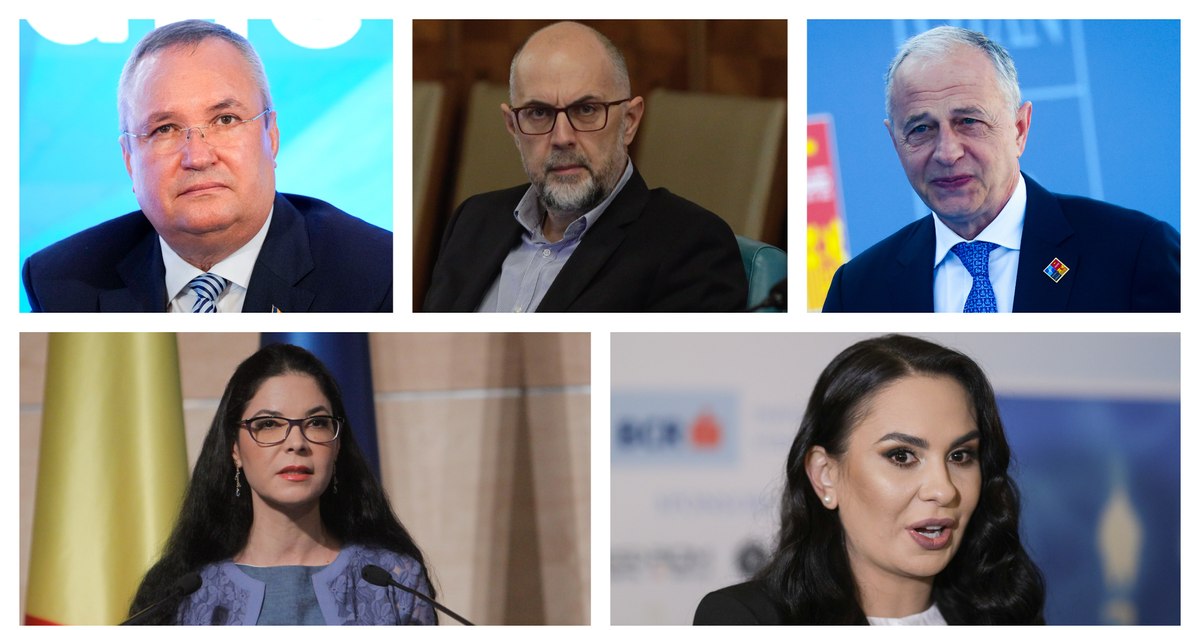
Lasconi, Simion, Ciolacu, Ciucă, Hunor, Geoana, Birchall, Păcuraru. Photo: Inquam, Profimedia
Sociologist Vladimir Ionaș and political analyst Cristian Pîrvulescu analyze for Adevărul the trends at this stage of the campaign, highlighting the candidates who gained ground, as well as those who lost to the other competitors.
Marcel Ciolacu – Favorite in the first position, no emotions for the second round
Marcel Ciolacu, head of PSD, remains the detached leader in the presidential race, with constant support from the electorate, says Ionaş. According to the sociologist,
“he is posted from the start in the first position, he is already qualified in the second round from the first position without any question, he has no problem.” This means that, regardless of the future developments of the campaign, Ciolacu already seems to be an almost certain candidate for the second round, with a sufficiently strong and well-established support, he appreciates.
According to Pîrvulescu’s analysis, Marcel Ciolacu managed to build a firm position at the top of the competition thanks to a rigorous strategic preparation. “The long pre-campaign and preparation that Marcel Ciolacu did mattered a lot, he had a team that worked very seriously in terms of analyzing different campaign scenarios.“Also, Pîrvulescu emphasizes that Ciolacu managed to turn disadvantages into advantages, so that “Marcel Ciolacu is the favorite, managing to make the most of his advantages and turn his disadvantages into collateral topics.” This ability to control the message and avoid the pitfalls of provocative speech strengthened his position: “He avoids as much as possible that statements can be used against him, he tries to be absolutely ambiguous, he tries to give answers that do not turn into attacks against him.”
Thus, Ciolacu presents himself as a calculated candidate, who benefits from constant support and who protects his public image through a subtle and adapted communication strategy. Pîrvulescu believes that this behavior makes Ciolacu the clear favorite of the competition, with very high chances of reaching the second round.
George Simion – Strong rise in recent months
One of the most surprising candidates is George Simion, the leader of AUR, who managed to attract a significant part of the Romanian electorate. Ionaș clearly emphasizes that Simion is the only one who registered a notable increase in voting intentions: “It seems that Mr. Simion is the one who managed to win the most electorate and he is about the only one who is on a visible upward trend, he has increased a lot in the voting options in the last 2 months, it is not strictly about the electoral campaign. “ This rapid rise suggests that Simion has captured the attention of a significant segment of the electorate, and his progress could continue as the campaign progresses, he said.
And Pîrvulescu observes the rise of Simion, which was also favored by the withdrawal of other candidates from the race: “Simion received a surplus of votes that placed him in second place.” Pîrvulescu also explains the reasons for this increase: “Simion arouses great sympathy among men, his electorate is predominantly male.” He adds that his more combative and direct style has attracted a large segment of the electorate, especially from small and medium-sized cities, which are less influenced by candidates from large urban areas.
Another important aspect that Pîrvulescu emphasizes is the fact that Simion took over part of the votes of his former colleague, Diana Șoșoacă, who had to leave the race. “Simion took less than half of Sosoaca’s votes, and the other half went to Georgescu.” Thus, even if Simion received part of her support, another candidate, Călin Georgescu, also benefited from Diana Sosoacǎ’s withdrawal.
Mircea Geoană – Precipitous drop in voting intentions
On the other hand, one of the big losers of this beginning of the campaign is Mircea Geoană. According to Vladimir Ionaș, “he lost the most, if 2 months ago he was one of the candidates who played a serious role for entering the second round, today he seems to be out of this race.”
The significant drop in voting intentions for Geoana suggests that he failed to maintain his electoral support, and his chances to reach the second round are now much lower, the sociologist claims.
Pîrvulescu notes the same thing in the case of Geoanǎ, but also regarding Nicolae Ciucǎ.
“Geoana went down a lot, lost 20 percent in half a year, which is huge“, states the analyst. Also, “Geoana and Ciucă lost, they went through difficult tests, negative campaigns that destabilized them.” In addition, both candidates lost votes due to the emergence of independent candidacies that divided their electorates. Thus, in Pîrvulescu’s opinion, Cristian Diaconescu, as well as Ana Birchall, managed to take over a part of the electorate of the two, which undermined their position.
The fight for second place – Simion, Ciucă and Lasconi in a close competition
With Ciolacu almost certainly in first place, the battle is now for second place. Ionaș explains: “The fight for second place is between Mr. Simion, Mr. Ciucă and Mrs. Lasconi, each of them having an important chance.”
These candidates are considered the biggest rivals for access to the second round, and at the moment, the differences between them are not significant. However, their success will largely depend on the ability to mobilize their own supporters, but also on how they will manage to convince their electorate that they have a real chance to face the PSD leader in the second round.
An essential aspect that Ionaș emphasizes at this stage of the campaign is the importance of mobilizing the electorate. According to the sociologist, “it will probably depend very much on the mobilization of the electorate on the day of the vote, on how each candidate will succeed in convincing his electorate that he has a significant chance and that this electorate needs to go to the polls.”
And Cristian Pîrvulescu points out that “the big question is who is in 2nd place”.
Elena Lasconi – An electoral surprise, but with limitations
Elena Lasconi was a surprise in this campaign, managing to attract important support from the urban population. Pîrvulescu notes this, but also emphasizes that Lasconi fails to convince the entire electorate: “Lasconi does not convince men, he has a predominantly female electorate.” The analyst also adds that “the problem is that the rural electorate, as diverse as it is, is generally a younger electorate.” This may be a challenge for Lasconi, as the rural electorate tends to have more influence in elections and is more difficult to convince with a message that resonates better with the urban.
At the same time, Lasconi managed to attract a segment of the electorate from the big cities, especially from Transylvania, but this is not enough to place it in second place. “Lasconi was a surprise in this campaign, it is very well supported by the urban electorate,” but he will have to overcome certain limitations of his supporter base, given the demographic and regional characteristics of the voters.
