
Turkey is a country that fascinates with its cultural, historical and natural diversity. Located at the crossroads of Europe and Asia, this nation offers a unique blend of historical influences and traditions, with a history spanning thousands of years. From ancient imperial cities to stunning natural landscapes, Turkey is a land of legend, where the past blends harmoniously with the present.
When we think of Turkey, famous destinations like Istanbul, Antalya or Cappadocia come to mind, which attract tourists from all over the world thanks to their picturesque landscapes and cultural richness. However, beyond the Aegean and Mediterranean coastlines, underground cities or strange cliffs, lies a lesser-known part of this fascinating country, full of unexplored mysteries.
Over the millennia, the territory of today’s Turkey, the bridge between East and West, has been the cradle of many great civilizations. The Persians, Macedonians, Sassanids, Romans, Greeks, Byzantines, Seljuks, Ottomans and others left behind a series of treasures whose mystery has not been fully unraveled even until now.
Image 1/24:
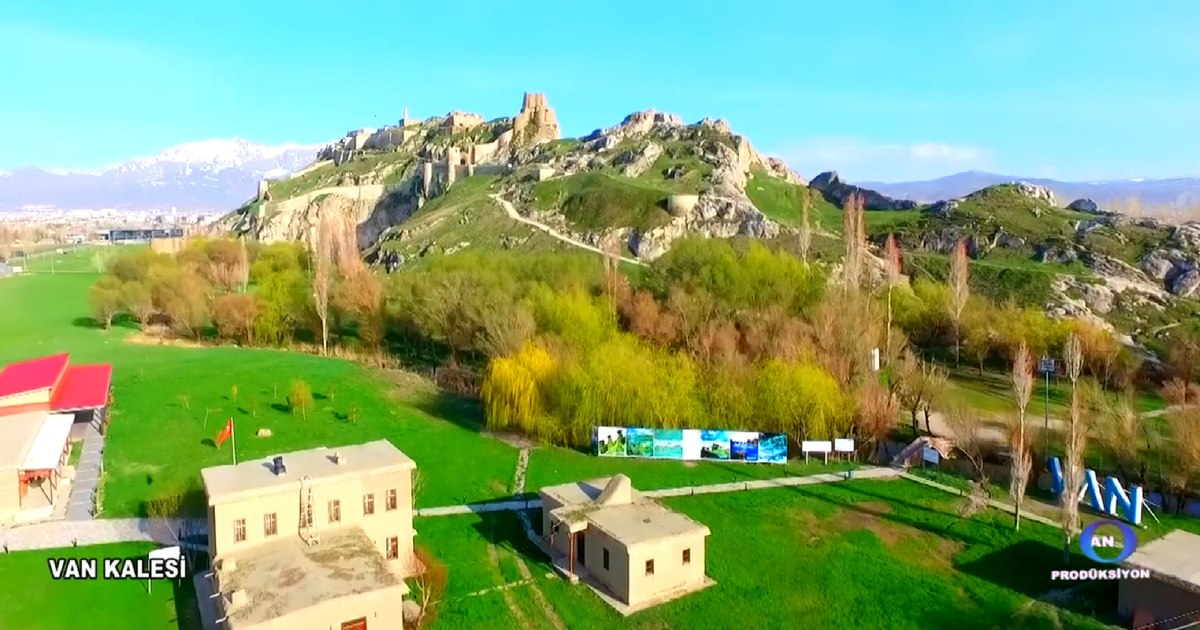
Van Castle in the capital of the Kingdom of Urartu in today’s Turkey Photo DMS
Land of legend – “Pearl of the East”
Van, for example, is an important city in the Eastern Anatolia region, known for its historical and natural wealth. Opening to the largest closed basin in Anatolia, Lake Van also known as “The Van Sea”the city enjoys a cultural heritage of nearly seven millennia.
Being the gateway to Anatolia, Van is located in a territory that bears the traces of many millennial civilizations. The city served as the capital of the Kingdom of Urartu, known as Tushpa, for centuries.
Located 1,640 meters above sea level, Van welcomes its visitors with a mysterious journey through turquoise waters, ancient temples and a glorious millennial past.
In the area of Lake Van, on the eastern shores of this stunning city, the story of Turkey comes to life in a unique way, bringing to light the legends and traditions that literally carved the history of this fascinating nation in stone.
Capital of the Urartian Kingdom in the 9th century BC, Van was often referred to “Pearl of the East” due to the beauty of the surrounding landscape. Today, it is a thriving city that is home to the impressive Van Citadel.
A trip to these lands gives you the chance to enjoy a deep cultural atmosphere, enjoy delicious dishes, especially the world-renowned breakfast, and discover a fascinating history.
Van Castle, the architectural gem of Antiquity
Van Castle (SEE PHOTO GALLERY)located in the province of the same name in far eastern Turkey, is a stunning fortress with a rich history dating back to the Kingdom of Urartu (approximately 9th-6th centuries BC).
The massive stone fortification impresses by its historical importance for ancient civilizations, but also by its architecture – being built on a massive rock – and by its dimensions (it covers an area of 46 hectares, having a length of 2 km and a height of about 100 meters).
The ancient inscriptions on its walls, which have hardly been deciphered, including one belonging to the Persian king Xerxes, bear witness to an extraordinary, still little-known history. In fact, parts of its walls have remained intact to this day, being the most imposing and difficult to conquer castle of its period.
The citadel is five kilometers from the city center and was built between 840 and 825 BC. at the order of King Sarduri I. It is also one of the most important archaeological sites of the Urartian culture, offering valuable insights into this mysterious ancient civilization. Conservation and restoration efforts are ongoing to protect and present this priceless heritage. That is why it was included in the tentative list of UNESCO World Heritage in 2016.
Fortress-city, Capital of the Kingdom of Urartu
Van Castle functioned as a fortress-city, with temples, palaces, tombs and storehouses (SEE ANIMATION VIDEO). The former capital of the Urartians thus includes the royal buildings of this civilization – among the ruins are walls and foundations, floors carved directly into the rock, burial chambers for kings, open-air sanctuaries, royal rock inscriptions and other historical artifacts. These remains preserve the impressive traces of the 250-year reign and reflect the complexity of the well-organized Urartian state.
The imposing walls of the fortress were mostly built on rock terraces, characteristic of Urartian architecture. The first construction of the fortress is the Sardur Tower (Sardurburç), located on the western edge. The inner fortress is composed of a palatial complex and a temple, known as the Old Palace. There are also eight rock-cut tombs on the southern facade of the building.
Van Castle therefore represents Anatolia’s most impressive Iron Age fortress. The revolutionary contributions of the Urartians in eastern Anatolia and the Caucasus are evident in various fields such as architecture, production methods and lifestyle, and the construction reflects the distinctive style of Urartian architecture, using large well-polished stone blocks.
The citadel located on a rocky promontory offers an impressive view of the city of Van, the lake and the surrounding volcanoes, indicating its strategic importance in different eras. The main gate and other entrances are examples of sophisticated military architecture from Antiquity.
It has been expanded and modified in different historical periods. “After the decline of the Kingdom of Urartu, the castle was used by various empires, including the Persians, who contributed to its development. During the Byzantine and Arab periods, the castle continued to be an important strategic point. During Ottoman rule it was used as a military garrison and was further fortified”tourist guide Adem Kocaman revealed to “Weekend Truth”during a trip organized by the Authority for the Promotion and Development of Tourism in Turkey.
Cuneiform history engraved in stone
Van was included in the kingdom established by King Tigranes I in the 1st century BC. The Romans and Sassanids of Persia fought for control of the city for a time, after which it became a tributary state to the Arabs in the 7th century and prospered under the Armenian Bagratid dynasty in the 8th century. The region fell under the rule of the Seljuk Turks after their victory over Byzantium (1071) and was later annexed by the Ottoman Empire in 1543. Russian forces then occupied the city between 1915 and 1917 during World War I.
Over the centuries, the various civilizations that occupied the region of Anatolia, where Van is located, left their mark on Van Citadel, contributing to its development and transformation. Each era has brought a new layer of history, culture and architecture, reflecting the diversity of the heritage of this iconic place.
From the rock-cut cuneiform inscriptions of the Persian king Xerxes to the Urartian and Ottoman fortifications, the castle offers a fascinating foray into the distant past and is an essential attraction for any visitor to Eastern Turkey.
The inscription left by King Xerxes I on the walls of the Van Fortress, for example, is a declaration of imperial power and legitimacy. The text is engraved in three languages – Old Persian, Elamite and Babylonian – and is part of the royal inscription tradition of the Achaemenid Empire. In rough translation it sounds like this: “A great god is Ahuramazda, the greatest of gods, who created this earth, who created this sky, who created man, who created happiness for man, who made Xerxes king, a king for all, a one ruler for all. I am Xerxes, the great king, the king of kings, the king of all kinds of people of all kinds of origins, the king of this great and wide land, the son of King Darius, the Achaemenid. King Xerxes says: King Darius, my father, by the grace of Ahuramazda built much that was good and ordered this niche to be dug, but because he did not make an inscription, I ordered that this inscription be made” .
“Imagine 3,000 years ago you were the royal family living here”
Van Castle is also a major attraction for tourists interested in the ancient history and spectacular landscapes of the region. “Imagine that 3,000 years ago you were the royal family living here. Of course, the king and queen, along with the rich people, lived in this imposing castle, and there were soldiers and locals around. All these vast lands that can be seen as far as the eye can see around were used for agriculture back then – people worked hard. There are many Urartian kingdoms, but if you want to remember a few names, let’s mention King Sarduri, King Argishti and King Menua. The entire period of more than two centuries was marked by several kings who ruled this area. From where we are now in the fortress, you can see the city in 360 degrees, the beautiful Lake Van and Mount Erek in the background“, the tourist guide also mentioned, referring to the fascinating view that the fortress offers.
Part of the fortress, located between the old city of Van and Lake Van, has been destroyed by earthquakes, wars, treasure hunters and neglect. However, a short distance away, right in the waters of Lake Van, another mysterious castle has been discovered, proof of the impressive treasures hidden in this still under-promoted area of Turkey. We’ll be back another time to tell about this and more.
