
Călin Georgescu has stated on numerous occasions how beneficial Romania’s isolation from the EU and NATO would be, including the country’s independence from imports and that Romania can produce what it needs on its own. INS data show that such a lockdown would leave nearly a third of employees without jobs.
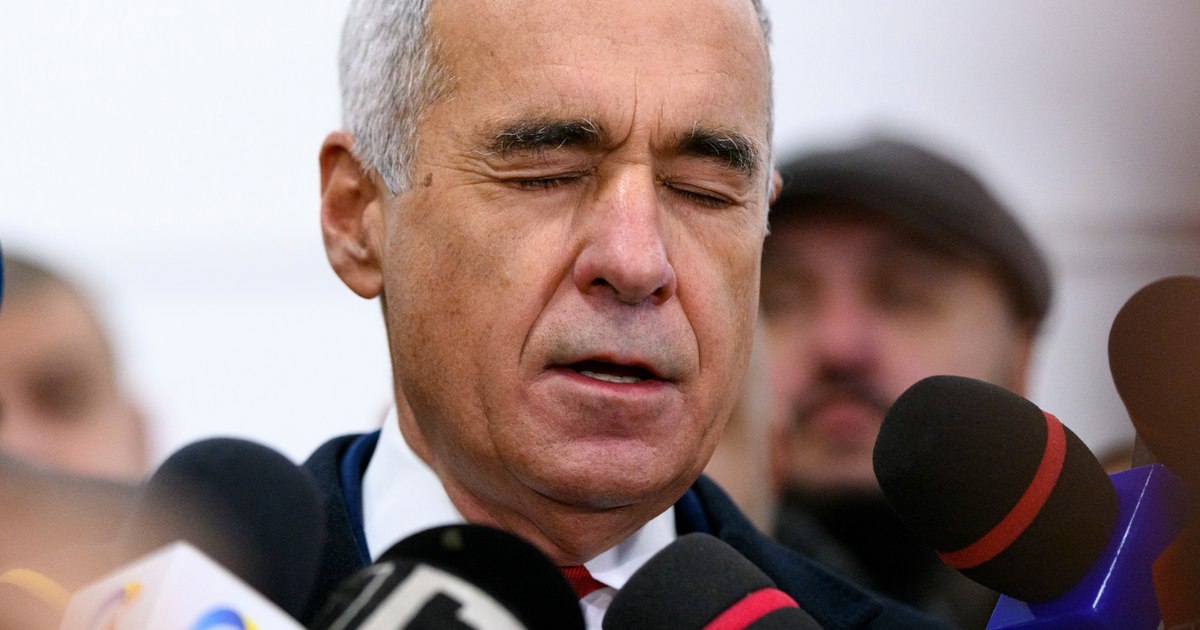
The expulsion of the multinationals would leave 1.7 million employees on the roads. Mediafax photo
The pro-Russian candidate also often spoke of nationalization, saying that the state should own at least 51% of foreign companies operating in Romania, without giving a single thought to the hundreds of thousands of Romanian employees who work in them.
The president’s program published by Călin Georgescu on his website stipulated, among other things, that the economic success of Romania will be based on the ownership by the Romanian state of 51% of foreign companies in Romania.
“The economic success of sovereignist-distributist Romania will primarily be based on: – the capitalization of the small producer – the support of local markets – the encouragement and defense of new forms of productive ownership (for example popular banks, cooperatives) – the improvement of the governance of enterprises, the management of micro- and macroeconomic – peasant agriculture, beekeeping, innovative sectors and green industries, as locomotives of sustainable development and health. – the participation of at least 51% by the state in everything that means the exploitation of natural resources on the territory of Romania“, notes Călin Georgescu in “President’s Program“.
The data consulted by “Adevărul” show that almost 1.7 million Romanian employees would remain on the roads, if the multinationals left Romania, driven not only by the state taking over the majority stake, but also by increasing the tax rate from 1% , at 2%.
“Taxation at 2% on more than €1 million turnover – to make taxation coherent and viable for collection”Georgescu recounted in his program as president.
The aberrant policies would affect around 1.7 million employees
The latest data published by the INS on companies with foreign capital in Romania in the spring of this year (April 29, 2024) show that, at the level of 2022, Germany, France and the United States of America occupied the first three places in the top countries that control subgroups of enterprises in Romania.
According to INS data, in 2022, 96,705 enterprise groups were identified in Romania, of which 6,036 resident enterprise groups and 90,669 multinational enterprise groups (606 controlled from within, respectively 90,063 controlled from abroad).
In the same year, from the total number of multinational enterprise groups controlled from abroad and identified in Romania, 14,553 are groups controlled by foreign legal entities, and 75,510 are groups controlled by foreign natural persons.
Most of the enterprise groups in Romania are active in the field of trade.
Regarding the distribution of Romanian enterprise groups by economic activity, 32% were from the field of wholesale and retail trade, the same percentage (32%) operating in the field of motor vehicle and motorcycle repairs.
In construction, 12% of all enterprise groups were active, in the manufacturing industry 10% and 8% in real estate.
“In Romania, in 2022, a percentage of 29.2% of the total number of employees in active enterprises carried out their activity in enterprises that are part of multinational groups controlled from abroad”, the INS data show.
According to “Adevărul” calculations, the percentage of 29.2 means about 1.7 million employees who work in companies with foreign capital, considering that, at the national level, the number of employees is about 5.75 million people.
The statistical data also show that 21.7% of the total number of employees were active in the groups of multinational enterprises controlled in the top 10 countries.
In first place in terms of the number of employees are the subgroups of enterprises controlled by legal entities or natural persons from Germany (18.1%), in second place are those controlled by France (11.2%), and in three are controlled from the United States of America (9.3%).
