
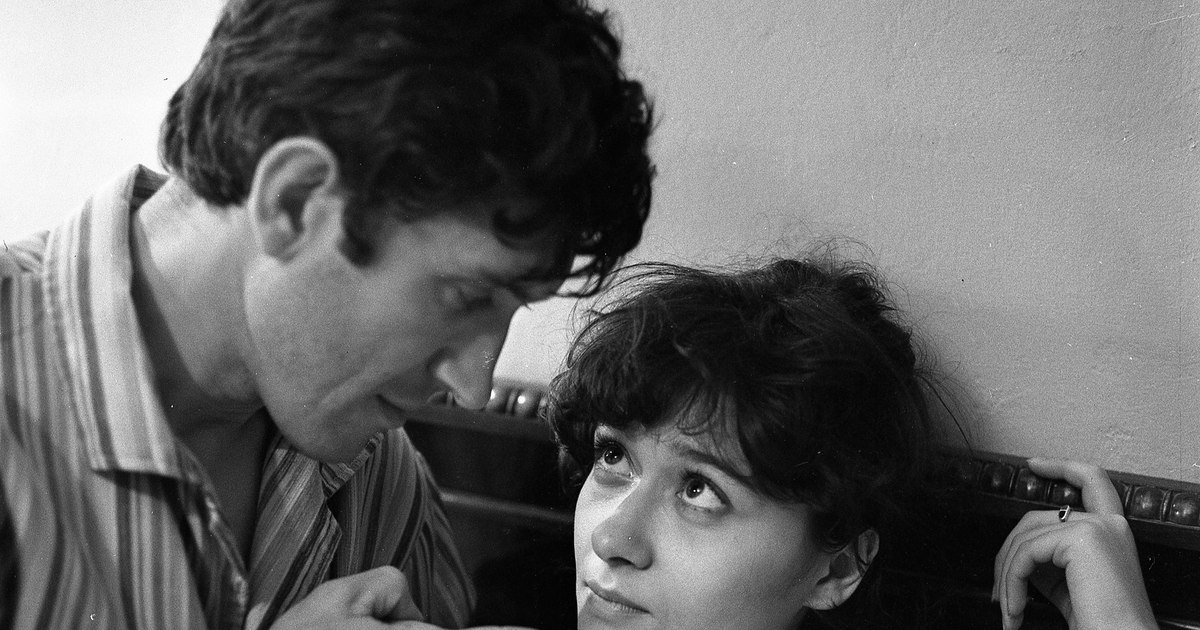
“God! I would go home quickly, so that it would happen to me there, not to be among strangers” – answered Mircea Diaconu when he was asked how he would live the last week of his life. The beloved actor also revealed the list of dreams that he did not fulfill.
Mircea Diaconu spoke about the myth of the poor and unhappy actor. PHOTO: Personal archive/FB
The beloved actor Mircea Diaconu died on Saturday, just a few days before his 75th birthday, on December 24. The artist died at the Fundeni Institute in Bucharest, where he was being treated for colon cancer. His lifeless body will be laid to rest on Monday, December 16, between 12:00 and 16:00, at the Nottara Theater in Bucharest. Friends, colleagues and admirers are expected to pay their last respects. The funeral will take place on Tuesday, at the cemetery in Săftica, in a small setting.
10 years ago, the great actor was asked: “If you had, say, not one day, but one week to live, how would you live it?”
“My God, tell a 60-and-a-half-year-old man that! (laughs) I would go home quickly, so that it happens to me there, not to be among strangers”the beloved actor answered for Tango magazine. He also confessed that he has a long list of dreams that he wishes for that will probably never come true.
Around the world, a boat, a horse
Asked what else he would like to do, Diaconu added:
“If you find out you only have a week left, I don’t think you think about anything. Of course I have a long list of things I want. Dreams… that I will probably never be able to put into practice, starting with the trip around the world that I wanted and can’t do. I try, in bits and pieces. Then I wanted to have a horse. And look, I don’t have it.”
The actor explained that it is not so simple to be a horse owner: “you also have to have a stable, and what to feed it, you can’t do it like that…”
Deaconu stated that he still fulfilled one of his dreams, that of having a boat: “I wanted to have a boat, it’s a great passion and I bought one, but it’s been sitting in the yard for half a year, I couldn’t take it to the water. I want to do this as soon as possible. I try to do them all…“
The myth of the poor and unhappy actor
The actor was also asked how he understands happiness. He recounted a story he heard from his mother:
“My mother, a special being, asked her mother one thing when she was little. She was the youngest of the children, sickly, a Prâslea of the family, with millions of misfortunes. She asked her mother: “Mom, what should I do to be happy?”.
The beloved actor’s grandmother’s response was: “Be pleasing to God.” This is how I translate happiness. Be pleasing to God. See the difference between pleasing God and fearing God. It is completely different. It is an undertaking to please God, it is your undertaking to live in a certain way, it is your performance, it is your offer to the One above. What does it mean to please God? Be like Jesus Christ, who taught us not to be greedy, not to be proud, but to be happy with what we have. If we are healthy, we should be thankful that we are healthy. If we ate, we must be happy that we ate today. And let’s not want what is not ours. That’s what it’s all about, that’s what happiness is.”
He mentioned that he was asked by a television moderator “Mr. Deacon, how do you manage, that the actors are poor and unhappy?”.
When he told him that it was not true, the journalist replied: “Yes, you have low wages, you are poor.”
“And I urged him to see what happiness means, in this case wealth. I told him “sir, the moment happiness is a number for you, you are a loser”. Happiness is not a number. I ask, the moment the lights come on, after a show, and I probably played well, and I see those people’s faces, how am I? Happy or unhappy? “Happy,” he says. Was there something in the bank, an amount? Not. It was a state. Happiness is a state, not a number.” explained the actor.
Deaconu said that happiness lies in simple things: “let’s just say my wine turned out well. But how happy I am that day! My wine turned out fine, didn’t it? Or I travel and I stop by car somewhere and I like it so much that I am happy in that moment. That’s all. Be happy that you are, that’s happiness. The moment you enter this path of money, you enter a war that you lose endlessly, because any number is less than the next and you can never be happy.“
“During Ceaușescu’s time, there were negotiations, the actors fought for money”
Asked how well he was valued from a financial point of view in his career, Mircea Diaconu said: “There were times when we signed film contracts and there were some of us who demanded the maximum, I’m talking about my youth. I never asked, even when I was taking all the prizes I could, for more than what was offered to me. What they could put there was their business, it was not my business. If I accepted to play in a movie, I didn’t accept because there was one or another amount in the contract”.
He claimed that during Ceaușescu’s time “we were negotiating, the actors were fighting for money, maybe even more than today”.
The deacon found that he was paid better than those who demanded and insisted and fought for the last penny. Why?
“Maybe this attitude also imposes. I believe in values like this. I am a theater director here, and slowly getting to know the people on stage or behind the scenes, I have promoted this kind of behavior and it is felt.”
The actor claimed that in the 10 years since he has been a theater director, people with ordinary jobs such as soufflés have ended up running entire theater departments. “They are as simple and honest and serious as I thought they were at first. They didn’t ask me to be something, to occupy a specific position. But my job was to see that they have a behavior you can count on and that they have honesty. Honesty is often seen as a weakness these days. I think it’s a quality.”
Iconic actor
Mircea Diaconu was an emblematic actor, both in the field of cinema and theater. He made his debut in 1970 at the Bulandra Theater and then in 1971 he played for the first time in a film, more precisely “Stone Wedding” directed by Dan Pița. From 1972, for 10 years he was employed at the Bulandra Theater and then at the Nottara Theater. Cinematography was what made Mircea Diaconu known in every corner of the country. He has acted in more than 65 films, with great actors and directors.
In his film career, Mircea Diaconu had to play many roles as a model communist, either young scholars who, instead of a job in the city, sacrificed themselves patriotically to go to the country and applied socialist philosophy, or even a basic man of Security in the fight against the “bandits” in the mountains, that is, the Romanian partisans who opposed communism. It seems that the communist party had an appetite to order his distribution in roles of “good, honest and hardworking boy”, as the writer and journalist Cristian Tudor Popescu said.
