
The Soviet Union would have tried to invade Romania in 1989. This is one of the theories stated during the years of the Revolution, but also later, based on intense Russian “tourism” in December 1989, but also on a series of statements by some Western officials.
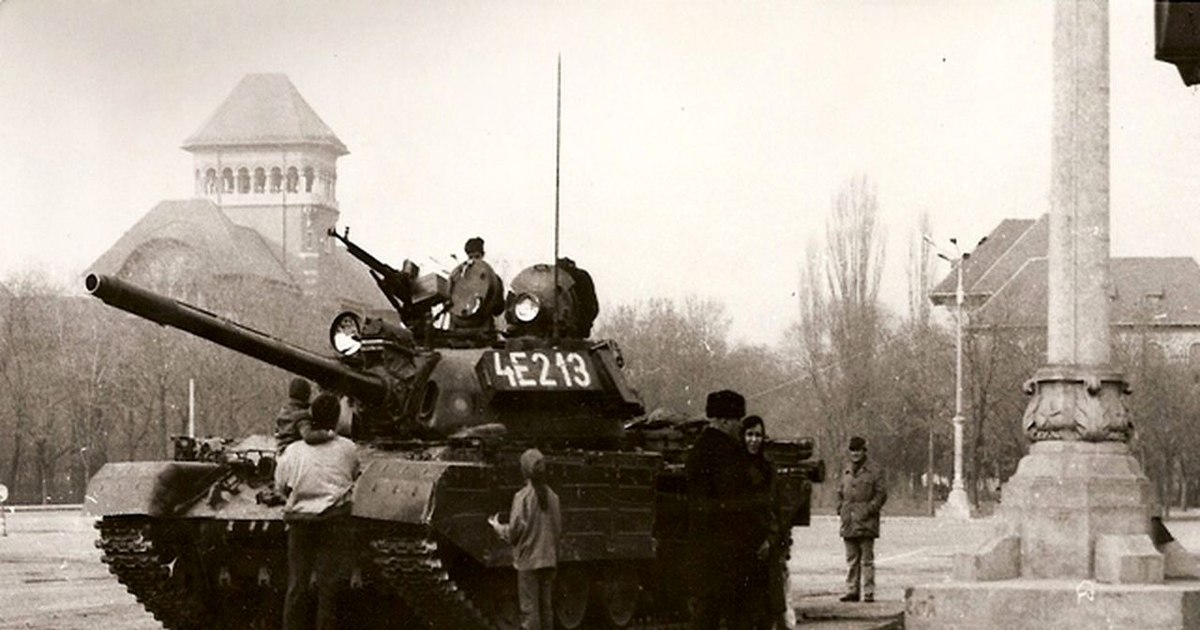
Tank at the Revolution of 1989 PHOTO shutterstock insulin
Although they occurred three decades ago and are part of Romania’s relatively recent history, the events of 1989 are still marked by controversies, mysteries, conspiracy theories and many unanswered questions.
While the riots in Timișoara were in full swing between December 16-20, 1989, troubling information appeared in Romania. First of all, the fact that the USSR was ready to intervene in Romania and even occupy the country. Security agents testified that Russian tourism had increased incredibly since the beginning of December in Romania. Tens of thousands of Russians came to visit Ceaușescu’s Romania. During the days of fire in Timișoara, Western heads of state were talking about accepting a Russian intervention in the country. In fact, the Hungarians had gathered courage and claimed Transylvania. It was an explosive situation for Romania, both internally and externally.
Over 25,000 Russian tourists in Romania in 1989
This theory, currently considered by specialists to be only a conspiracy theory, also has its origins in a series of reports indicating that tens of thousands of Soviet citizens entered Romania as tourists in 1989 and only left after one year, at the insistence of the Romanian state. It is about 25,000 Russian tourists about whom not much is known. “Illegal entries into the country have become more numerous than “flight” across the border. The security in Timișoara had informed the superiors, about two weeks before, that “Basrabian tourists” had swarmed the area under the cover of regulars. In that month, between the entrances and exits of Soviet tourists, there is a difference of about 25,000 people, many withdrawn only in the fall of 1990“, stated Lavinia Betea in “Ceaușescu and his era”.
For his part, the American historian Larry Watts, in the volume “Save me, God, from friends” says: “More than 25,000 of the 37,000 Soviet tourists who considered Romania the preferred place for visits or transit, in the two weeks before the revolution in December 1989, chose not to leave for almost a year, until October 1990, after the Romanian government officially and insistently asked them to leave the country”. Also in Larry Watts’ book it is mentioned that Ceaușescu received information regarding this unnatural influx, almost double that of the previous year. Besides, Ceaușescu complained, all these tourists were dubious because none of them were staying at any hotel and no one seemed to know where they were staying and what they were doing or what they wanted to visit. This reality is also confirmed by Petre Roman in a deposition from 1994, in which he stated that around 30,000 Russian tourists stayed in Romania over a year. These tourists were officially asked to leave in October 1990.
There are assumptions that these tourists were KGB or GRU agents sent to cause unrest in Romania and destabilize it politically. As the specialists show, all these are just assumptions, without concrete evidence, and remain in the category of folklore. However, an unanswered question remains: what were 25,000 Russian citizens looking for in Romania in December 1989, and why did they leave the country barely a year later, at the insistence of the authorities? In addition, where did they stay, if they were not registered at accommodation units, and what did they do for a year in Romania?
Was the USSR preparing to intervene in Romania?
Another rumor circulating in December 1989 was that the USSR was preparing to intervene in Romania, taking advantage of the Revolution. This idea persisted until 1990, with the departure of Russian tourists, at the insistence of the Romanian state. Romanian television, at that time, reported rumors about Russian camps on Romania’s borders. In addition, all the information from that period showed that the Russians would have started the construction of a vessel bridge at Ungheni.
That is precisely why Ion Stoian, Romania’s foreign minister, was tasked with conveying Ceaușescu’s protests against “interference in Romania’s internal affairs”. Moreover, Ceaușescu had learned that the representatives of the members of the Warsaw Treaty had been summoned to a meeting, without the participation of Romania. To all this were added the threatening telegrams of some heads of state from the West, after they had learned of the riots in Romania. “Sthe head of diplomacy informed him that threatening telegrams had arrived during the trip from Iran. The French Ministry of Foreign Affairs declares that it will look with understanding on a possible entry of the Soviets into Romania, after Stoian’s testimony“, stated Lavinia Betea in the mentioned work.
For their part, the Americans, through Secretary of State Baker, announced to Ceaușescu that they supported France’s point of view. Close behind, Szuros Matyas, the interim president of Hungary, declared that, in light of the events in Romania, it was the case for the liberation of Transylvania. Even in this case, that is, of a Russian intervention in Romania in December 1989, there is not enough evidence, and the issue is left in the rumor category. We take into account the fact that Ceaușescu was detached from reality and instead of seeing the real problems in Romania, he preferred to blame external interference. However, in this case too, a question mark remains. Why would the French and Americans have agreed to a Russian intervention in Romania in the midst of a revolution? Where did this idea come from? Have there been discussions on this at international level? All these questions can easily be combined with those related to the wave of Russian tourists in December 1989.
