
Starting next school year, twelfth grade students will have an extra hour integrated into the timetable: History of Communism in Romania, which becomes a compulsory subject. The framework plans have already been modified, and the program has been published in the Official Gazette. Therefore, there is no longer any legislative impediment in the process of implementing the new discipline.
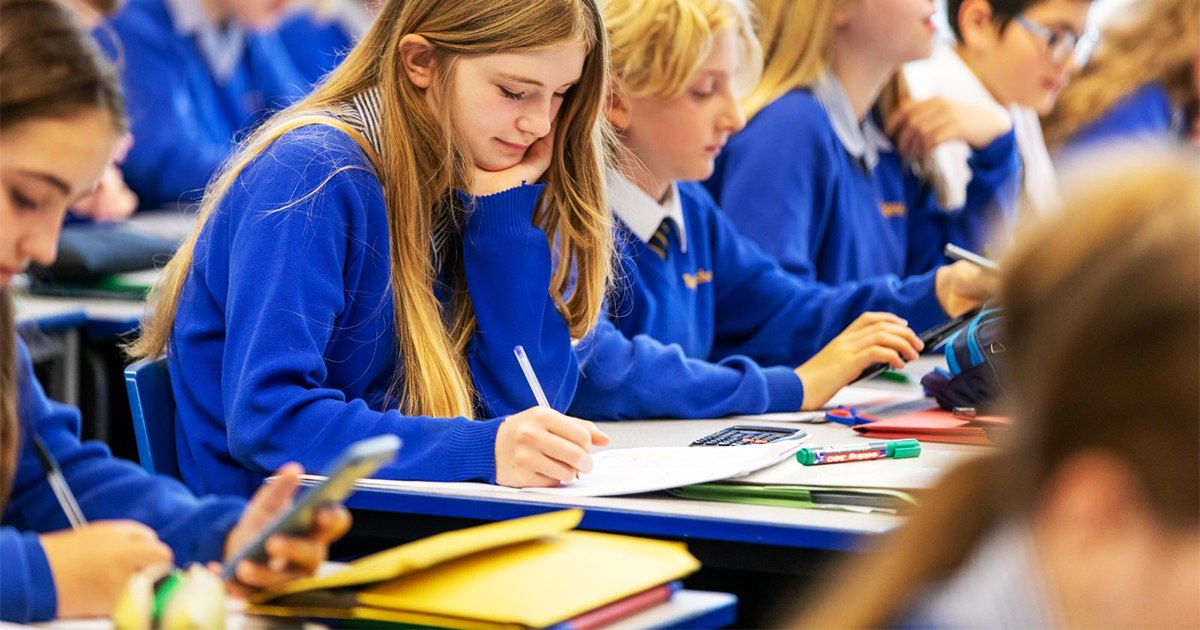
High school students will have an extra subject next year. Photo source: archive
History teacher: “It creates a false image of what was”
Specifically, according to the program, the contents that will be taught to the students are structured in 13 areas. These deal, among others, with the dynamics of the communist regime, Romania in post-war international relations, political repression, opposition and contestation forces, the economy of those times, health policies, cultural policies, the Revolution of December 1989. Students will study within these fields about propaganda , Falcons of the homeland, pioneers, about the cult of personality. They will be taught the “Warsaw Treaty”, they will be told about communist prisons and camps, labor colonies, deportations, about Security, Militia, correctional schools for minors. The children will learn who Doina Cornea was, what was broadcast on Radio Europa Liberă, but they will also learn about what decree 770 meant, which prohibited termination of pregnancy.
Analyzing closely the curriculum of the new subject, Professor Corneliu Riegler stated that this discipline is pure propaganda and has nothing to do with true History: “It is useful to study the History of Communism in depth, but not with the current syllabus. This seems to me to have been written exclusively for the purpose of propaganda, and not to really teach the students History”.
The teacher refers to the fact that this subject will teach children only what was bad during the communist period: “Or, History is not a science of evil. It is a science that must reflect in a balanced way what has happened in society. You cannot say about a historical period exclusively what was negative or positive. This is not History. Because you are doing nothing but creating a false image”.
The good deeds, hidden under the rug
The teacher explained that the good things that happened during the communist period are passed over in silence. “Absolutely nothing is mentioned about social policy, about the industrialization of the country, about the country’s electrification plan, about the fact that under Gheorghiu-Dej the construction of the Portile de Fier I dam and the Vidraru dam began. Nothing is said about the fact that Ceaușescu initiated the construction of the only nuclear power plant in Romania. Students will not learn, for example, that the communist regime built over a million homes, and today Romania ranks first in Europe in terms of the number of owners. Nothing is said about the fact that schools, kindergartens, universities and hospitals were built during the communist period. Or that in 10 years of communism, 54 kilometers of double metro line were built and 50 stations were built. I am no longer talking about the fact that under communism people were literate, and from an educational point of view Romania had one of the highest levels”, said the teacher.
Professor Riegler told us that if he agreed to teach this subject, he would follow the syllabus, but he would also teach the students what was overlooked. “The whole truth must be told, not just part of it. The curriculum can only print a trend, but in the classroom every teacher is free to present communism with everything this regime entailed: both good and bad. I, for one, will do so if I accept an extra hour of teaching per week”.
Teachers, not financially motivated. “Many will not agree to do voluntary work”
In the context where the number of History teachers is low, and many of those active in the system are poorly prepared, we may find ourselves, the teacher believes, in a situation where there will be no one to teach this subject in class. “In the Education Law there is a provision according to which teachers with degree 1 and over 25 years of experience have a two-hour reduction. If, however, they wish to take an extra hour, they are not paid for it. To get paid, they have to do two hours for free. Basically, the best teachers will be prevented from teaching this subject for financial reasons. Because few will agree to do two free hours for a paid one. Therefore, this discipline will be taught by many teachers without a degree, therefore less well trained.”
What students should know about the Revolution of December 1989
The history of communism in Romania will be covered, as is natural, including the Revolution of December 1989. But in what way the children will be told about those events, is another aspect that Professor Corneliu Riegler wanted to comment on: “The revolution of 1989 has two big flaws: first, the most important documents are still classified, the archives are not opened until 70 years later. And only 35 have passed. Therefore, the Revolution cannot be taught objectively, for lack of information. The second vice is the fact that the events are recent, very close to us in time. And we are still emotionally involved. History, as a science that judges things objectively, coldly, needs time to be interpreted correctly”.
As for the eternal question, “How much was Revolution, how much was coup d’état?” the teacher believes that the problem should be looked at from another angle: “The question would be, rather, who won in 1989? Revolution or coup? Because the Revolution implies the removal from power of a certain political regime and its replacement by another totally different one. Whereas, in 1989, the Ceaușescu regime was replaced by the Iliescu regime, a figure who also came from the ranks of communism. The same gang from the old regime remained in power. Basically, we are talking about a Mary with a different hat”.
However, we cannot deny that the change has brought many freedoms and rights that we did not have before: “Yes, a revolution took place, indisputably, but it was intertwined with a coup, because power was taken by a former communist minister: Ion Iliescu”. Let’s not forget that even Ion Iliescu’s close friends were nomenclatureists, continues the teacher: “Alexandru Bârlădeanu was a nomenclaturist. Silviu Brucan was a nomenclaturist. They were people from Gheorghiu-Dej’s former guard, dissatisfied with Ceaușescu. A revolution must bring new people to power. So said IG Dukethe one killed by the legionnaires in 1933. After 1989, the communists paraphrased the saying by saying “La vremuri noi, tot noi”.
History: “The program is a balanced one”
I also asked the opinion of a university professor of History who comes up with counter-arguments. The history of communism, from his point of view, is not propaganda. On the contrary. The curriculum is complete, and the teachers will have all the freedom in the classroom to touch and develop any event they want from that period. “Of course, any kind of educational document can be, in one form or another, criticized or criticizable”Virgiliu Șârău, professor of History at Babes-Bolyai University in Cluj-Napoca, said for “Adevărul”. “But in this program it really exists from institutions and policies to areas of social, economic or other autonomy. All processes are contained, in one form or another, there: social, educational structures, health policies, cultural policies of the regime. All this comes, in one form or another, to place a nuanced knowledge on the communist past”, mention it.
The curriculum is a didactic tool, the historian added, and based on it, the students’ learning program, textbooks and aids are built: “In any school curriculum there are some themes, sub-themes and some concepts around which those themes and sub-themes are articulated”, he also said. “I can’t ask for more from a program, of course there will be textbooks in its assignments. Other things will depend on the talent of those who will write the textbooks, then the classroom teachers will be able to do other things. No one prevents them”.
Professor Virgiliu Șărău testified that the History of Communism curriculum was thought out in a balanced way. “This process took quite a long time and was not an easy one to work out,” the historian also said.
