
Romania’s new coalition government will make a series of tax increases and ceilings on public sector salaries and pensions by emergency ordinance on Monday, in an attempt to reduce the largest budget deficit in the EU as a percentage of gross domestic product.
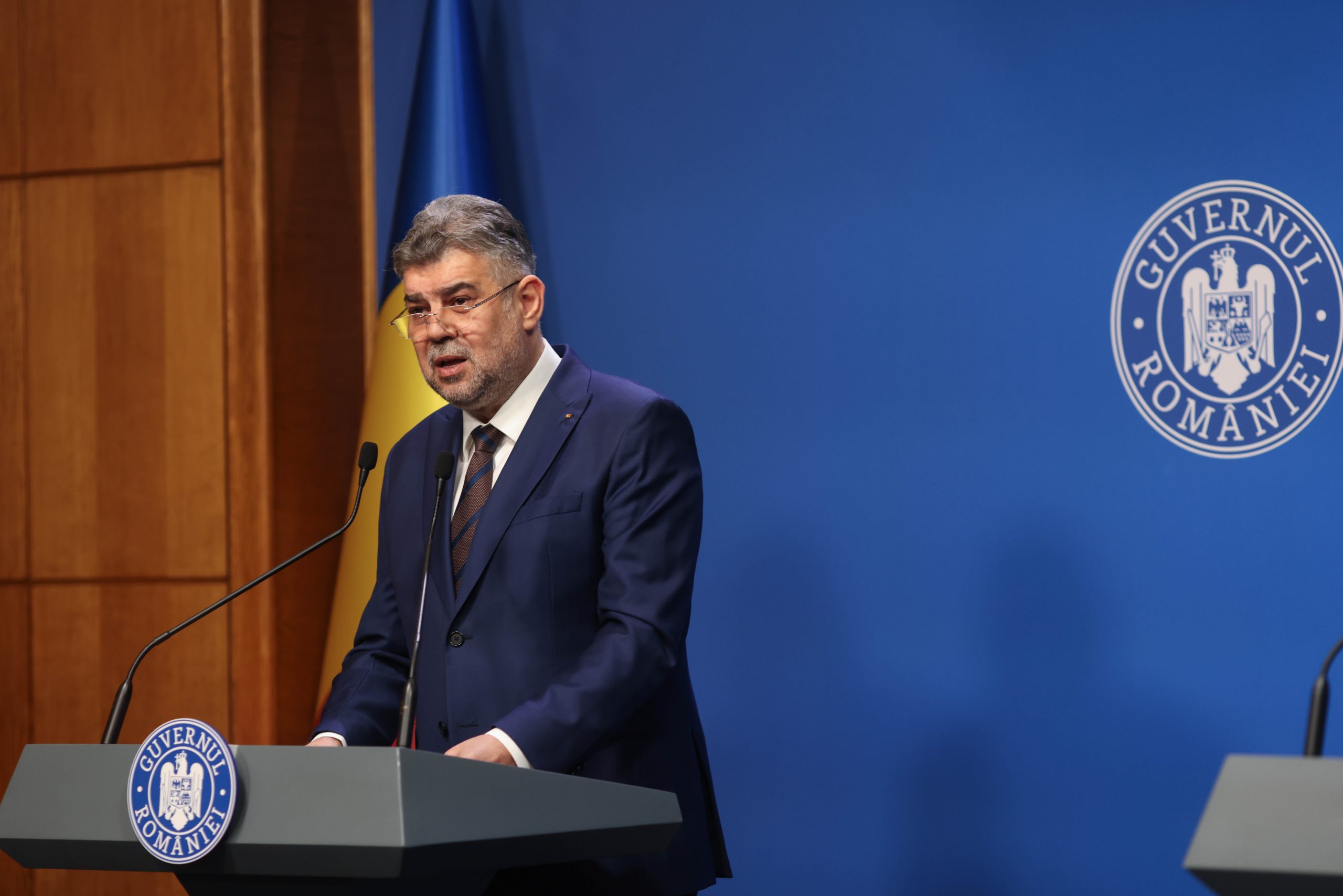
Marcel Ciolacu PHOTO: Inquam Photos
The prospect of presidential and parliamentary elections in November and December in Central Europe’s second-largest economy has triggered a spending surge that should push Romania’s 2024 budget deficit to 8.6 percent of GDP.
However, Romania is required to reduce its deficit below the EU ceiling of 3% of GDP within seven years, and the government’s emergency decree reflects its need for fiscal measures to come into effect before January, writes reuters.com.
In late October, the government presented a deficit-reduction strategy in Brussels, but did not specify what fiscal and spending measures it plans to take.
A draft emergency decree published by the Finance Ministry on Sunday shows that the government will increase tax on company dividends from 8% to 10% from January 2025. It will also lower the tax threshold for the smallest companies – those with no more than three employees and incomes below 500,000 euros ($521,350) per year – in stages in 2025 and 2026.
In addition, it will remove tax breaks and tax incentives for IT, construction, agriculture and the food industry. It will also reintroduce a 1.5% tax on the value of all company-owned buildings, from oil wells to warehouses and electricity pylons.
The ordinance will also cap public sector wages and pensions, as well as a number of subsidies. Political parties will reduce their state subsidy by a quarter compared to 2024.
The government will also establish an efficiency department tasked with reducing public sector costs by at least 1.0% of economic output in 2025.
Romania aims to reduce its deficit in steps over seven years, from 7.0% in 2025 to 2.5% in 2031.
Three consecutive polls to elect a new president and parliament in Romania, which shares the longest land border with Ukraine, descended into chaos when a little-known far-right pro-Russian politician won the first round of the presidential election in November 24. Amid suspicions of Russian interference, the supreme court annulled the election.
Rating agencies have already reacted to the country’s financial and political situation, and Fitch, for example, changed Romania’s credit outlook to negative at the beginning of this month. Fitch, Moody’s and S&P Global Ratings all have Romania at the lowest investment rating.
