
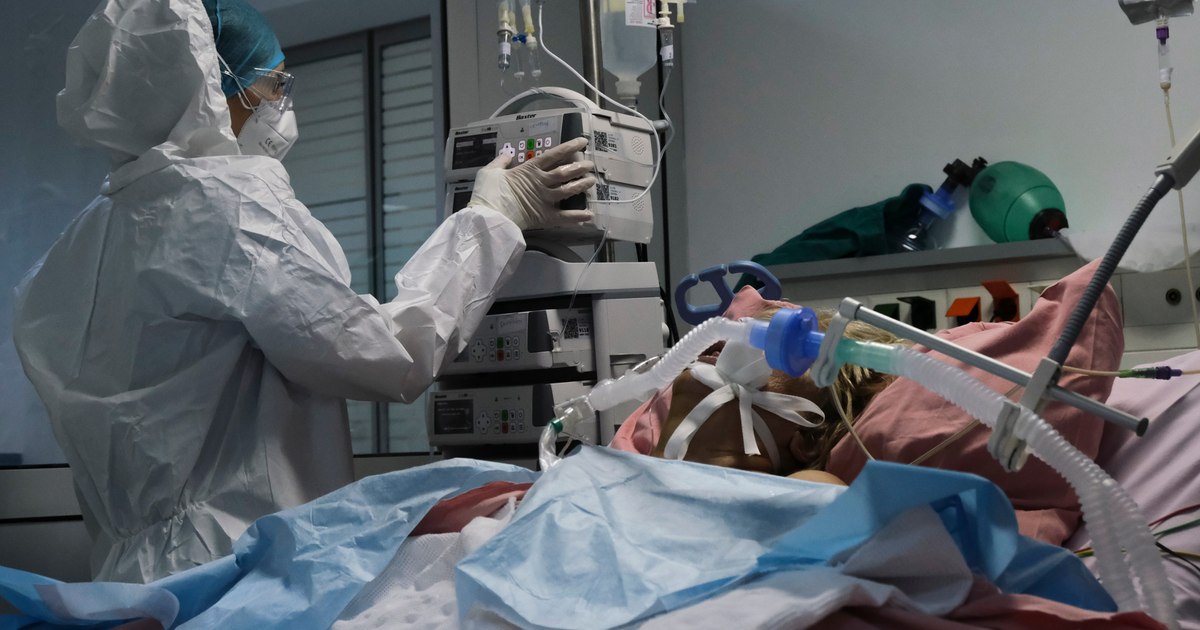
Ten surgeons from the Ploiești County Emergency Hospital are protesting against a decision made by the management against the background of the existing blockage in the intensive care unit. People are unhappy that they only have to operate on serious cases and emergencies, at the expense of those that can be postponed. But, they say, these patients also need special attention, especially since we are talking about many cancer patients.
Major blockage at the Prahova County Hospital. Doctors protest against management. Archive
“We have patients, many oncologists, whose surgery we postponed three times. We are told that there are no vacancies in intensive care. We understand the situation, but we cannot do our job. They lose sight of the fact that the people who are suffering are the people we should be making good”transmitted the representatives of the surgeons. Bogdan Nica, the manager of the hospital, told “Adevărul” that the situation will be resolved next week, when the ATI ward will be expanded with 9 more beds. “Currently, we have 39 beds. 32 are in use, 7 are reserved for special situations such as epidemics, accidents, etc.
Why are the beds in the ATI ward blocked?
Starting with the winter holidays, the manager explains the collapse of ATI, the hospital was the only medical unit that provided emergencies in the county. “We received patients including from neighboring counties. 2,400 submissions were from the beginning of the year until a few days ago. It’s huge! There were also days with 380-400 presentations at the Emergency Department, but we managed to manage the situation. And we were assaulted with extremely rich pathologies”.
The large flow of patients in ATI is also an effect of the pandemic period, says manager Bogdan Nica. “People, scared, stopped going to the doctor, and the diseases they suffered from worsened or led to complications. Then, very old and very sick patients come from the asylums who, if they are not admitted to the ATI, die. They are bedridden, quadriplegic, with senile dementia. They should be directed to palliative care centers“.
Therefore, the ATI section became blocked. “We have no more free beds. That is why we have asked surgeons to reschedule their operations for patients who can be delayed. Chronic patients for example or oncological ones. I’ll give you an example: if the latter, according to the therapeutic protocol, must be operated on within three weeks of the end of chemotherapy, why operate on them after 3 days? Or, a patient with a cholecyst, with a hernia…let’s delay them a bit and let’s take the emergency room until we can unblock ourselves in the ATI”.
Bogdan Nica asked the doctors to make a compromise until the ATI ward is expanded. “Starting from January 6, we called a company to set up this extended nine-bed area as well. But, generally speaking, because that’s what happens in the whole country, doctors from ATI do, more recently, defensive medicine. For example, even if a patient is beyond therapeutic resources, if you can keep him on noradrenaline, on a ventilator, intubated, you keep him. Guess that man will never recover from his coma. And such patients block a bed in the ATI for 3 or even 6 months”. How did we end up in such a situation? Simple. In Romania we do not have a legislation in which someone takes responsibility for these people. “We don’t have palliative care medical services. Let’s offer these patients a palliative treatment until they die. And let them die at home, quietly, with the candle on their heads like Christians. In Romania this does not happen”, explained the manager.
Doctors, few in number and fearful. “Since the Pantelimon scandal, no one assumes anything anymore”
It calls for clearer legislation and procedures. “It’s a brain-dead door. How we find it in MRI. The patient you operated on..a day, a week has passed and he is not recovering. He is 90 years old and is kept alive only by noradrenaline and a ventilator. And then let’s give him an MRI, let a committee consisting of an anesthetist, radiologist and lawyer find that he is brain dead and be disconnected from the machines. Because the Romanian law allows this. However, since the scandal at the Pantelimon hospital in Bucharest, the doctors from ATI practice defensive medicine”, says the manager.
The blockage in the ATI is therefore caused by an enormous flow of patients absorbed from the entire county and nearby areas, but also due to a health system full of hiccups. “I am no longer saying that we are in a very bad position in terms of labor force. In other words, we don’t have enough doctors. For a year and a half we have been dealing with blocked positions, then if someone stays for three months and leaves for better. It’s a nightmare. This happens here, in Dâmbovița, in Buzău, Pitesti. They all go to Bucharest”.
At the moment, in the hospital, patients are operated on according to the severity of the disease they suffer from. “But be careful. We are only talking about 10 doctors in a ward of 60 beds out of 1,500. Only 10 people who are unhappy. Because it is born in a normal maternity hospital, operated in normal neurosurgery, operated in normal orthopedics, in plastic surgery, in vascular surgery as well. There are 35 sections where the activity is not disturbed. Dissatisfactions are only in the Surgery 2 department. The doctors here come to work and operate in the emergency room,” the manager also stated.
Alexandru Rafila, empty promises
Last year, at the end of August, Minister Alexandru Rafila proposed that terminally ill patients could be moved from ATI to the palliative care compartments of the state medical units, where they could continue their treatment. “The acceptance of this interruption of treatment at ATI and its continuation in palliation does not exist at the moment, because no one over time has reached the point of social acceptance of this. My opinion as a doctor is that we need to have this debate. I challenge her as Minister of Health”the official said then. Professional societies, patient organizations and the Church should participate in the discussions, the minister said. “It is good for the Church to be part of this discussion, precisely to avoid the public interpretations that will appear related to such a situation, to understand that we are talking about a patient who no longer has the resources to recover and we are not discussing euthanasia “, Alexandru Rafila wanted to specify. The debate was supposed to take place in early September 2024, but so far nothing has been heard about such an initiative.
