
The success in the lab of the latest AI-assisted creation of proteins that do not exist in nature has the latest winner of the Nobel Prize in Chemistry, David Baker, saying that humanity is on the brink of a revolution in the treatment of diseases neglected by the big pharmaceutical companies.
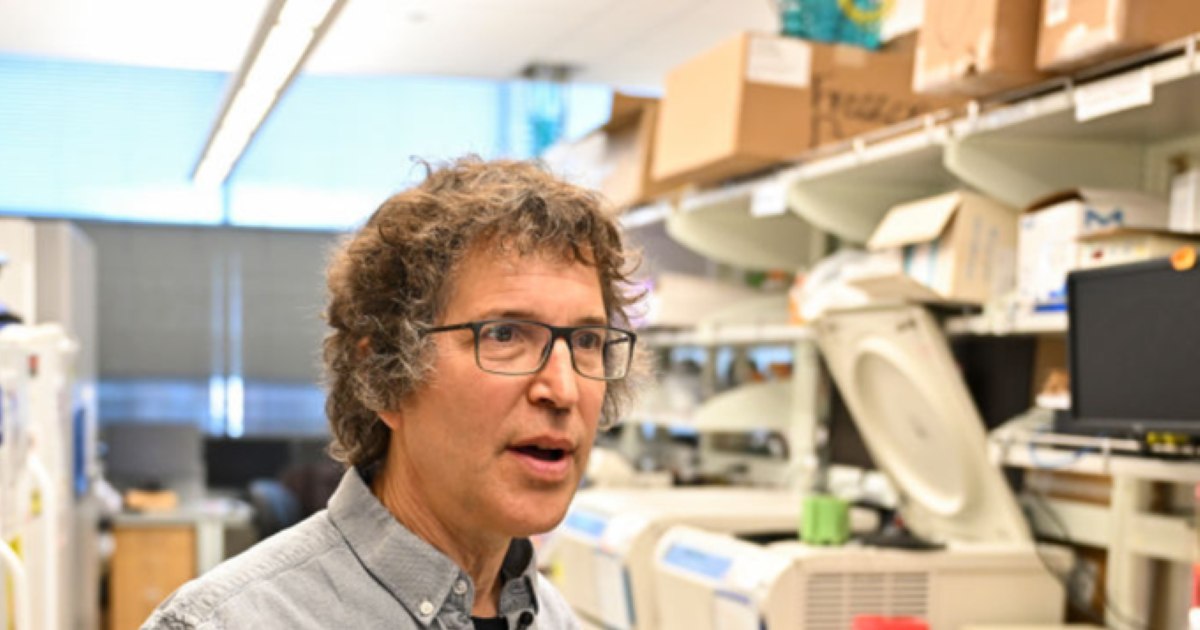
David Baker announces a revolution in protein design. Photo X/EU Commission
After a series of successful experiments by his laboratory, the American biochemist David Baker, laureate of the Nobel Prize in Chemistry in 2024, declares that the “protein design revolution” can be compared to the industrial revolution, which completely changed the world, after the introduction of the first engines with steam, or when people discovered how to work metals.
On Wednesday, his laboratory at the University of Washington, led by Mexican biochemist Susana Vázquez, announced that it had succeeded, for the first time, in creating a treatment for a disease ignored by big pharmaceutical companies.
The main studies carried out in this laboratory aim to create proteins that do not exist in nature, which could, however, save thousands of lives. A few years ago, its members unveiled the world’s “first computationally engineered protein drug”: a Covid vaccine called SKYCovione, which is already in use in the UK and South Korea. Researchers have also created some promising molecules against influenza and brain cancer, according to El Pais.
In her latest study, however, Mexican biochemist Susana Vázquez, who is in the final year of her PhD, set out to target one of the 23 tropical diseases neglected by big pharma, namely a treatment for the bite. venomous snakes, which cause over 100,000 deaths per year and three times as many amputations.
To this end, his team used RFdiffusion and ProteinMPNN, two artificial intelligence programs, that designed proteins that do not exist naturally, capable of neutralizing the deadly toxins from cobra bites, at least in computer simulations.
“My heart stopped and I had to stop to read the email. It was very interesting because some of the mice had survived 100% of the lethal doses of venom.” the 31-year-old biochemist told about the moment when she received the laboratory results.
Published Wednesday in the journal Nature, his study suggests, first, that artificial intelligence “may help democratize therapy discovery,” especially in the case of devastating neglected diseases, due to the “substantial” savings in money and resources.
“I think engineered proteins could help with many problematic diseases. The advantage of the design is that you can integrate all the necessary properties of the drug, which is very difficult to achieve with other current methods of drug discovery”, said the Nobel laureate, David Baker.
However, some scientists in the field express their skepticism regarding the “democratization” of the procedure. Among them, the Belgian biotechnologist Els Torreele, who helped found the Drugs for Neglected Diseases Initiative (DNDi), a non-profit organization that seeks new treatments for conditions that affect more than a billion people.
“The democratization of drug discovery would require access to data and high-powered computing tools to become widely available and affordable so that anyone can use them in their laboratories. I doubt this will happen anytime soon, given the high costs of data centers and computing capacity (including the carbon footprint).” said the biotechnologist.
He believes that the biggest challenge in discovering new treatments for various diseases is the huge cost of clinical trials, on thousands of human subjects, to demonstrate that an experimental treatment is safe and effective, especially in the context where the pharmaceutical industry wants maximum benefits from his investments.
